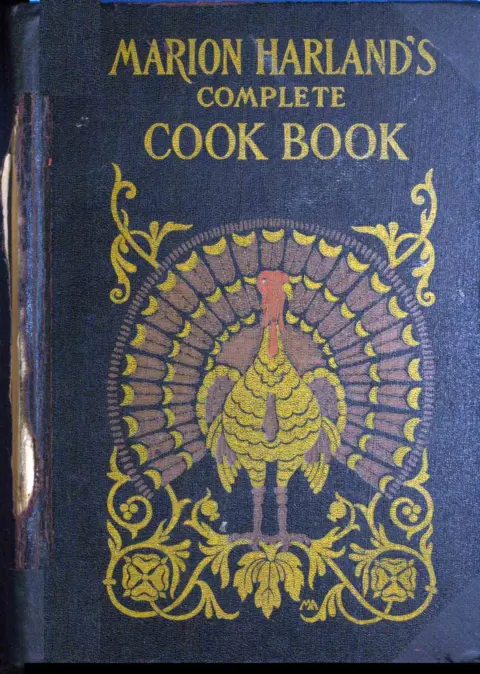
Marion Harland’s Complete Cook Book A Practical and Exhaustive Manual of Cookery and Housekeeping
Marion Harland
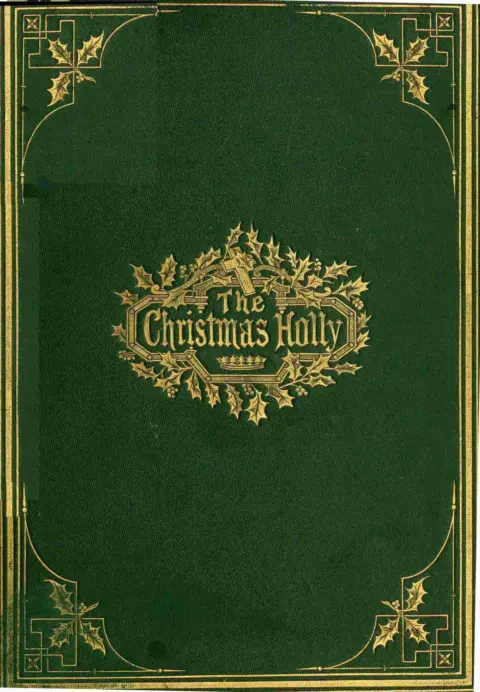
THE CLASSIC COLLECTION · 1867
"The Christmas Holly" by Marion Harland is a sentimental novel written during the late 19th century. This heartwarming tale explores themes of family life, the spirit of Christmas, and the importance of rekindling joy and love amidst daily struggles. The narrative captures the essence of holiday nostalgia while emphasizing compassion, charity, and the need for togetherness during the festive season. Set against the backdrop of a typical Christmas Eve, the story unfolds through the experiences of the Dryden family, particularly focusing on the disappointment of children Allison and Nettie, who feel neglected due to their mother's stern demeanor towards Christmas festivities. Their father's decision to secretly bring joy back into their lives leads him to impulsively shop for gifts, while the mother, too, is touched by the Christmas spirit and decides to do something special for the children. The book culminates in a joyful Christmas morning, revealing the transformative power of love and forgiveness within the family, highlighting the idea that Christmas should be a time of happiness and magical moments for children.
Introduction adapted from the source catalogue; source summaries may be automatically generated.
Free to read · English · 16,387 words · No account needed
MAKE TIME FOR A GOOD BOOK
On by default. Untick to stop anonymous reading totals. Each page counts after 10 seconds in view. How this works.
Anonymous counting is on unless you have switched it off.
“I do not approve of lady lecturers, as a general thing,” I remarked meditatively, a while since, to a gentleman, in whose presence I am somewhat prone to think aloud.
“You allude to public lectures?” said he, interrogatively, with
unnecessary emphasis.
“Of course!”
“Oh!” and he resumed the study of a very dry-looking volume.
Affecting not to observe the mischievous gleam of his eye, I resumed:--
“But I am sometimes tempted to ask the use of your lecture-room for one evening, to call together an audience from which all persons of the masculine gender shall be excluded, and, then and there, harangue my own sex upon a subject that has engrossed much of my time and thoughts for eight years past.”
“What is it--cookery or dry goods? Either topic would be popular.”
“Something more important than both put together!” I retorted. My theme
would be--
“‘The Rights of Babies and the Responsibilities of Mothers!’”
My auditor raised his eyebrows and pursed his lips very slightly--just enough to give one the impression that he would have whistled, had not politeness restrained him. Seeing that I was in nowise abashed by these discouraging manifestations, he offered an amendment to my resolution.
“Better write your discourse, instead, and have it printed.”
“But,” I objected, “what I would say would be addressed to women alone. We don’t care to let men know how unmercifully we can handle one another. Moreover, I should use great plainness of speech”--
“I think I can set your mind at rest on that point,” interrupted my companion, drily. “I don’t believe many men would read your treatise.”
Whereupon he picked up his treatise and withdrew to his sanctum, leaving me to arrange the heads of my “discourse,” or to ponder the meaning of his last equivocal observation.
And thus it came to pass, that, sitting lonely here, and arranging plans for the coming festival--the jubilee that, throughout Christendom, commemorates the birth of a little Child in the grotto of far-off Bethlehem; musing of that Child and his mother, while from the wall, the Mater Dolorosa, wondrous in beauty and in sorrow, looked down upon me--thought followed thought, and memories--sweet, tender, and full of joy, others sad, yet precious, and mingled with wistful yearning, flowed in upon me, and I have taken up my pen, not to indite a lecture or an essay, but a simple, homely, heartfelt Christmas letter to my fellow-workers in the great mission to which God has called us.
“And first, let me remark, by way of ‘beginning at the beginning,’ as old-time teachers were wont to exhort their scholars to do--that Babies have a right to be.”
Your reading position is saved on this browser. Take it to another device with a library code. Reading pages adapt to text, rather than matching a printed edition.
Marion Harland
Marion Harland
Marion Harland
Marion Harland & Virginia Terhune Van de Water
BEHIND THE BOOK
This eBook is for the use of anyone anywhere in the United States and most other parts of the world at no cost and with almost no restrictions whatsoever. You may copy it, give it away or re-use it under the terms of the Project Gutenberg License included with this eBook or online at www.gutenberg.org. If you are not located in the United States, you will have to check the laws of the country where you are located before using this eBook. Read the source licence.
The original source file, including credits and licence, is retained by this library. Request an original-format copy at no charge. Please include the book title and Project Gutenberg identifier #64117.
KEEP YOUR CURIOSITY GOING
Coulson Kernahan

Maurice Baring
Frances Wright
Cécile Tormay

Frederic Jesup Stimson

W. H. P. (William Henry Pope) Jarvis