THE CLASSIC COLLECTION✦Froebel’s GiftsCLASSIC FREE BOOKS
Froebel’s Gifts
Kate Douglas Smith Wiggin & Nora Archibald Smith
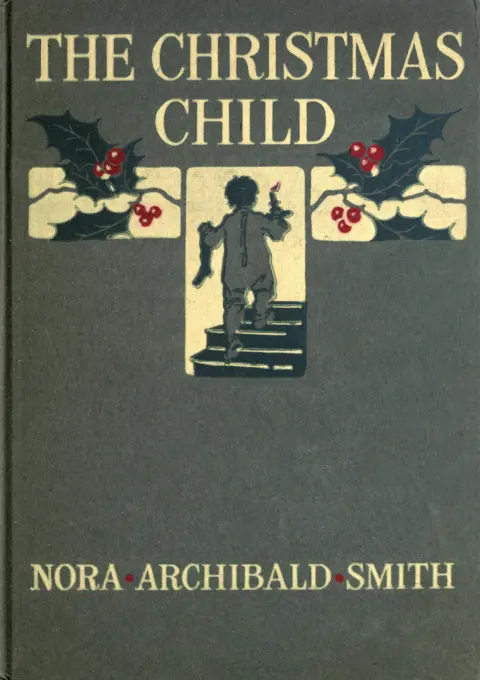
THE CLASSIC COLLECTION · 1920
The Christmas child by Nora Archibald Smith is a collection of children’s poems written in the early 20th century. It blends reverent Christmas pieces, folktales, and seasonal songs with playful animal vignettes and gentle moral lessons, all pitched to delight and guide young readers.
The opening of The Christmas child centers on Christmas, first praising the “Christmas child” as generous and kind, then staging a processional of the Magi alongside modern pilgrims, lively Santa songs, and tender Nativity scenes where animals share the Christ-night. Brief fables and legends follow—a benevolent gnome gifts forest creatures, a good fir becomes a Christmas tree, a German thief is banished to the moon, a wren warms the Holy Babe, and a “Christ-Flower” blooms where an infant was found—while child-voiced pieces revel in secret gift-giving and gently chide selfishness. The section widens to winter and New Year cheer, kindness to birds in Norway, and light, imaginative sketches (a boastful snowflake, a bustling Goose Fair, a fairy ring), keeping a warm, musical tone and clear, simple morals throughout.
Introduction adapted from the source catalogue; source summaries may be automatically generated.
Free to read · English · 17,747 words · No account needed
MAKE TIME FOR A GOOD BOOK
On by default. Untick to stop anonymous reading totals. Each page counts after 10 seconds in view. How this works.
Anonymous counting is on unless you have switched it off.
Now low she lies,
Where bull-frogs wise
Around her crown are sitting.
While cool and slim
About her brim
The silver fish are flitting.
In a garden, afar in a tropical clime,
Where the air is astir with the lily-bell’s chime,
And honey-sweet breezes from Araby blow,
There stands the green bush where the lollipops grow.
Oh, sugary lollipops,
Nectarous lollipops,
Best of all sweeties that ever did grow.
There, torrents of soda that sparkle and gleam,
Dash foaming o’er boulders of rosy ice-cream;
But neither pink ices, nor soda’s cold flow
Compare with that bush where the lollipops grow.
Oh, sugary lollipops,
Nectarous lollipops,
Best of all sweeties that ever did grow.
On lakes of clear syrup, the waffle-boats ply,
Past islands of cookies and mountains of pie,
But the wise, while the voyagers sail to and fro,
Remain by the bush where the lollipops grow.
Oh, sugary lollipops,
Nectarous lollipops,
Best of all sweeties that ever did grow.
The walls of this garden are builded of buns,
All powdered with sugar and stuck full of plums,
But sweeter than these, with its fruit hanging low,
Is that wonderful bush where the lollipops grow,
Oh, sugary lollipops,
Nectarous lollipops,
Best of all sweeties that ever did grow.
There are plenty of things that love the rain
And relish a thorough wetting,
They laugh and sing in a driving storm,
For their hearts’ delight they’re getting.
“More wet! more wet!” croaks the frog in the pond;
“More water! more water!” the flowers;
“You never can fall too long for me!”
Cries the thirsty dust to the showers;
The puddle dimples at every drop;
The yellow-billed ducks go swimming;
The leaves of the trees are clapping their hands;
With laughter the brook is brimming;
The grasses welcome the pit-a-pat,
For beauty and strength they’re gaining;
But Water-cart mopes by himself at home,
For he can’t go out when it’s raining!
(An Anecdote of Sir William Francis Patrick Napier: 1785-1860)
Twilight was falling in the English village,
The green deserted and the loiterers sped,
When down the quiet road there rang a footstep,
Martial, heroic, as in battle bred.
Musing on glories past, the gallant soldier
Savored the freshness of the evening air,
When to his ears there came a childish grieving,
A burst of sobs, a tempest of despair.
Close to the stream that rippled by the goose-green, Down in the grass there lay a flaxen head,-- And just beside the curls a broken pitcher Proclaimed the reason of the tear-drops shed.
Your reading position is saved on this browser. Take it to another device with a library code. Reading pages adapt to text, rather than matching a printed edition.
Kate Douglas Smith Wiggin & Nora Archibald Smith
Kate Douglas Smith Wiggin & Nora Archibald Smith
BEHIND THE BOOK
This eBook is for the use of anyone anywhere in the United States and most other parts of the world at no cost and with almost no restrictions whatsoever. You may copy it, give it away or re-use it under the terms of the Project Gutenberg License included with this eBook or online at www.gutenberg.org. If you are not located in the United States, you will have to check the laws of the country where you are located before using this eBook. Read the source licence.
The original source file, including credits and licence, is retained by this library. Request an original-format copy at no charge. Please include the book title and Project Gutenberg identifier #77767.
KEEP YOUR CURIOSITY GOING

Eric Mackay

Abby Morton Diaz
Helen Hunt Jackson
Edmund Gosse
Sophia Margaretta Hensley
Mary Frances Blaisdell