THE CLASSIC COLLECTION✦Froebel’s GiftsCLASSIC FREE BOOKS
Froebel’s Gifts
Kate Douglas Smith Wiggin & Nora Archibald Smith
THE CLASSIC COLLECTION · 1920
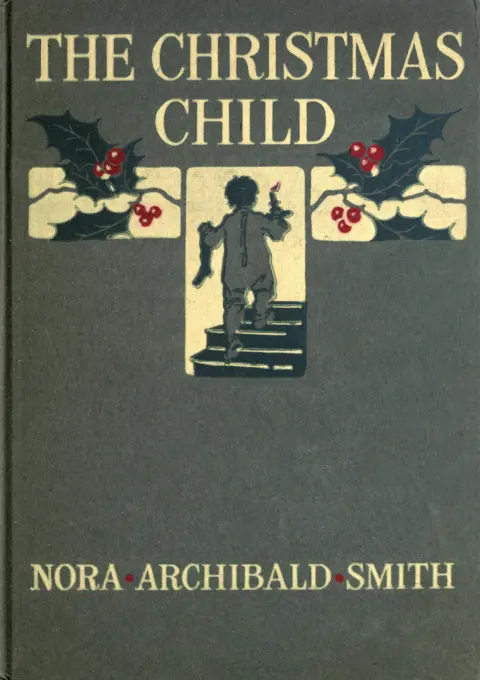
The Christmas child by Nora Archibald Smith is a collection of children’s poems written in the early 20th century. It blends reverent Christmas pieces, folktales, and seasonal songs with playful animal vignettes and gentle moral lessons, all pitched to delight and guide young readers.
The opening of The Christmas child centers on Christmas, first praising the “Christmas child” as generous and kind, then staging a processional of the Magi alongside modern pilgrims, lively Santa songs, and tender Nativity scenes where animals share the Christ-night. Brief fables and legends follow—a benevolent gnome gifts forest creatures, a good fir becomes a Christmas tree, a German thief is banished to the moon, a wren warms the Holy Babe, and a “Christ-Flower” blooms where an infant was found—while child-voiced pieces revel in secret gift-giving and gently chide selfishness. The section widens to winter and New Year cheer, kindness to birds in Norway, and light, imaginative sketches (a boastful snowflake, a bustling Goose Fair, a fairy ring), keeping a warm, musical tone and clear, simple morals throughout.
Introduction adapted from the source catalogue; source summaries may be automatically generated.
Free to read · English · 17,747 words · No account needed
MAKE TIME FOR A GOOD BOOK
On by default. Untick to stop anonymous reading totals. Each page counts after 10 seconds in view. How this works.
Anonymous counting is on unless you have switched it off.
Tall Cossacks keep watch o’er the Czarevitch,
And sentries are set at his portal;
My little one has but a single guard,--
He who keepeth all things mortal;
But nobody grudges my baby’s life
Like the Russian princeling’s, born to strife,--
So, which is the royal baby?
Three nurses, they say, has the Czarevitch,
With degrees from a royal college.
Alas, for my sweeting! He has but one,
And love is her only knowledge!
But the Queen of the Russias may not stay
With her prince, like me, for the livelong day,--
So, which is the royal baby?
[6] Written in 1905
(Adapted from Froebel)
Why is the flower’s breath so sweet?
Ah, who can tell the reason!
Perhaps the angel-children fair,
Come in the blossom season,
And with their blessed hands they touch
Each bud so small,
Each posy tall;--
To think so were no treason.
No baby eye, however bright,
May see their garments flowing,
Among the blooms they softly pass,
Rich odors round them strowing,
Ah, honey-sweet the flower they touched!
Sweet as the breeze
That rocks the trees
When apple-buds are blowing.
Sweet sleep, fleet sleep,
Come to Baby here!
With thy calm hand,
With thy cool hand,
Touch these eyelids dear.
Dream-land, gleam-land,
Ope thy golden doors.
Let these wee feet,
Let these soft feet,
Tread thy rainbow floors.
White wings, bright wings,
Baby, guard thy bed.
Angels watch thee,
Angels ward thee,
Blessings ’round thee shed.
[7] Music: Beethoven’s “Sonata Pathétique.” Opus 13.
Fivescore and forty years ago,
Fivescore and forty years,--
This land was but an infant, then,
The child of blood and tears.
To-day a mighty nation,
A hundred million souls
Are nurtured by her splendid strength,
Are mustered on her rolls.
But even in that long ago,
That time of stress and strife,
When Liberty, beset by foes,
Was battling for her life,
E’en then, they waved a standard,
They made Britannia yield;
The crosses of her patron saints
Still blazoned on its field.
But for new times, new customs;
Columbia, from her throne,
With goddess-pride demanded
A banner of her own.
The Continental Congress,
O’erheard Columbia’s call
And to fulfill her mandate
Its members gathered all.
“Resolved,” they vowed in conclave,--
So history relates.
“A proud new Flag befits the pride
Of these United States.
“Its stripes of white and crimson
Shall thirteen states unite;
The Union be denoted
By thirteen stars of white.”
They sought no novel colors;
What colors should there be
Save white for Faith and blue for Hope
And red for Liberty?
Your reading position is saved on this browser. Take it to another device with a library code. Reading pages adapt to text, rather than matching a printed edition.
Kate Douglas Smith Wiggin & Nora Archibald Smith
Kate Douglas Smith Wiggin & Nora Archibald Smith
BEHIND THE BOOK
This eBook is for the use of anyone anywhere in the United States and most other parts of the world at no cost and with almost no restrictions whatsoever. You may copy it, give it away or re-use it under the terms of the Project Gutenberg License included with this eBook or online at www.gutenberg.org. If you are not located in the United States, you will have to check the laws of the country where you are located before using this eBook. Read the source licence.
The original source file, including credits and licence, is retained by this library. Request an original-format copy at no charge. Please include the book title and Project Gutenberg identifier #77767.
KEEP YOUR CURIOSITY GOING

Eric Mackay

Abby Morton Diaz
Helen Hunt Jackson
Edmund Gosse
Sophia Margaretta Hensley
Mary Frances Blaisdell