THE CLASSIC COLLECTION✦Upon The Tree-TopsCLASSIC FREE BOOKS
Upon The Tree-Tops
Olive Thorne Miller
THE CLASSIC COLLECTION · 1899
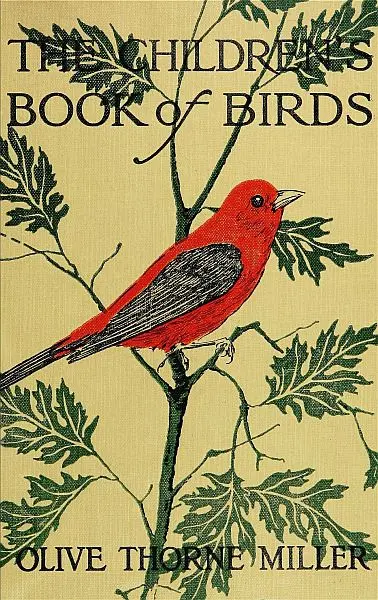
"The Children's Book of Birds" by Olive Thorne Miller is an informative publication aimed at educating young readers about birds, written during the late 19th century. The work combines content from two earlier publications by the author and seeks to inspire children to learn about the habits and lives of birds while fostering a sense of respect for these creatures. Through charming narrative and engaging illustrations, the book conveys the simple yet profound ways birds interact with their environment and each other. At the start of the book, Miller introduces the concept of birds as joyful yet unencumbered creatures that thrive without the comforts humans rely on. She emphasizes the importance of observing birds in their natural habitats to appreciate their behaviors, such as nest building and nurturing their young. The opening chapters preview topics like the arrival of spring birds and provide insight into their nesting habits, feeding, and growth. By employing relatable anecdotes and personal observations, Miller aims to cultivate a love for birds and nature in her youthful audience while advocating for kindness towards all living creatures.
Introduction adapted from the source catalogue; source summaries may be automatically generated.
Free to read · English · 70,317 words · No account needed
MAKE TIME FOR A GOOD BOOK
On by default. Untick to stop anonymous reading totals. Each page counts after 10 seconds in view. How this works.
Anonymous counting is on unless you have switched it off.
If the birds could not get any response from a call at the kitchen door, they would fly to the front of the house, perch on the piazza rail, and call till some one came out. All through nesting-time they thus called on their friends for protection, and the delight the family had over the nest and the friendly birds amply repaid them for their trouble.
The one great necessity, in both city and country, is water for drinking and bathing. It should be in a shallow dish. The rough saucer of a flower-pot is best, because the bird's feet do not slip on it, and the edge is broad and round and easy to perch on.
Next best is an earthen dish, with clean pebbles in the bottom, to prevent slipping, which frightens them. Water should never be more than two inches deep, but should always be clean, and fresh two or three times a day.
No food should be offered in summer, because we want them to get their natural food of worms and seeds.
In the winter it is different. They should have food regularly. But once used to having their wants supplied, they will depend upon it, and suffer and probably starve, if they are neglected or forgotten. So one should be very sure he will not get tired of it, before he teaches them to expect food.
To feed them safely, a shelf must be placed out of the reach of cats and bad boys. On the sill of a window is a good place, or the roof of a piazza, or a little balcony. Breakfast should be served to them at the same hour every day, and they will soon know when to come for it.
For food, they will eat any table scraps of meat, and vegetables, and bread, chopped fine, and most kinds of grain, broken up, or crushed, for the smaller birds.
But the thing they all like best of everything is raw suet, as it comes from the butcher. A large piece may be wired or nailed in place, so that it may be picked at and not displaced, or it may be chopped fine and scattered on the shelf, like other food. All birds are fond of this.
In winter they need water, and it should then, also, be fresh.
A lady living in southern Ohio, who has for several years given a breakfast to the birds every day in winter, told me that her daily guests last season were hairy and downy woodpeckers, nuthatches, white and red-breasted, one young kinglet, a pair of chickadees, tufted titmice, blue jays, juncos, cardinal grosbeaks, Carolina wrens, and sparrows.
Your reading position is saved on this browser. Take it to another device with a library code. Reading pages adapt to text, rather than matching a printed edition.
Olive Thorne Miller
Olive Thorne Miller
Olive Thorne Miller
Olive Thorne Miller
BEHIND THE BOOK
This eBook is for the use of anyone anywhere in the United States and most other parts of the world at no cost and with almost no restrictions whatsoever. You may copy it, give it away or re-use it under the terms of the Project Gutenberg License included with this eBook or online at www.gutenberg.org. If you are not located in the United States, you will have to check the laws of the country where you are located before using this eBook. Read the source licence.
The original source file, including credits and licence, is retained by this library. Request an original-format copy at no charge. Please include the book title and Project Gutenberg identifier #41141.
KEEP YOUR CURIOSITY GOING

Abby Morton Diaz
Helen Hunt Jackson
Mary Frances Blaisdell
Stuart Dodgson Collingwood

Kate Douglas Smith Wiggin
Hesba Stretton