THE CLASSIC COLLECTION✦Upon The Tree-TopsCLASSIC FREE BOOKS
Upon The Tree-Tops
Olive Thorne Miller
THE CLASSIC COLLECTION · 1899
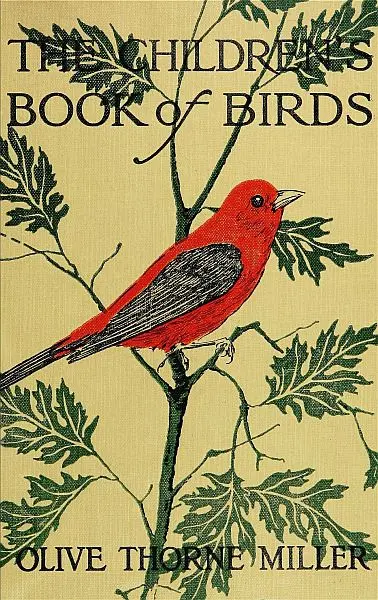
"The Children's Book of Birds" by Olive Thorne Miller is an informative publication aimed at educating young readers about birds, written during the late 19th century. The work combines content from two earlier publications by the author and seeks to inspire children to learn about the habits and lives of birds while fostering a sense of respect for these creatures. Through charming narrative and engaging illustrations, the book conveys the simple yet profound ways birds interact with their environment and each other. At the start of the book, Miller introduces the concept of birds as joyful yet unencumbered creatures that thrive without the comforts humans rely on. She emphasizes the importance of observing birds in their natural habitats to appreciate their behaviors, such as nest building and nurturing their young. The opening chapters preview topics like the arrival of spring birds and provide insight into their nesting habits, feeding, and growth. By employing relatable anecdotes and personal observations, Miller aims to cultivate a love for birds and nature in her youthful audience while advocating for kindness towards all living creatures.
Introduction adapted from the source catalogue; source summaries may be automatically generated.
Free to read · English · 70,317 words · No account needed
MAKE TIME FOR A GOOD BOOK
On by default. Untick to stop anonymous reading totals. Each page counts after 10 seconds in view. How this works.
Anonymous counting is on unless you have switched it off.
By the time that November comes in, few of them will be left. Birds who can live on seeds and winter berries, such as cedar-berries and partridge-berries, and others, often stay with us,--bluebirds, finches, and sometimes robins.
Many birds take their journey by night. Think of it! Tiny creatures, that all summer go to bed at dark, start off some night, when it seems as if they ought to be asleep, and fly all night in the dark.
When it grows light, they stop in some place where they can feed and rest. And the next night, or two or three nights later, they go on again. So they do till they reach their winter home, hundreds or thousands of miles away.
These night flyers are the timid birds, and those who live in the woods, and do not like to be seen,--thrushes, wrens, vireos, and others. Birds with strong wings, who are used to flying hours every day, and bolder birds, who do not mind being seen, take their journey by daylight.
Most of them stop now and then, a day or two at a time, to feed and rest. They fly very high, and faster than our railroad trains can go.
In the spring the birds take their second long journey, back to their
last year's home.
How they know their way on these journeys, men have been for many years trying to find out. They have found that birds travel on regular roads, or routes, that follow the rivers and the shore of the ocean. They can see much better than we can, and even in the night they can see water.
One such road, or highway, is over the harbor of New York. When the statue of Liberty was set up on an island in the harbor a few years ago, it was put in the birds' path.
Usually they fly too high to mind it; but when there is a rain or fog they come much lower, and, sad to say, many of them fly against it and are killed.
We often see strange birds in our city streets and parks, while they are passing through on their migrations, for they sometimes spend several days with us.
A sparrow, who was hurt and unable to fly, was picked up one fall and kept in a house all winter. He was not caged, and he chose for his headquarters and sleeping-place a vase that stood on a shelf.
He went with the family to the table, and made himself very much at home there. He picked out what he wanted to eat and drink, and scolded well if he did not have it.
Your reading position is saved on this browser. Take it to another device with a library code. Reading pages adapt to text, rather than matching a printed edition.
Olive Thorne Miller
Olive Thorne Miller
Olive Thorne Miller
Olive Thorne Miller
BEHIND THE BOOK
This eBook is for the use of anyone anywhere in the United States and most other parts of the world at no cost and with almost no restrictions whatsoever. You may copy it, give it away or re-use it under the terms of the Project Gutenberg License included with this eBook or online at www.gutenberg.org. If you are not located in the United States, you will have to check the laws of the country where you are located before using this eBook. Read the source licence.
The original source file, including credits and licence, is retained by this library. Request an original-format copy at no charge. Please include the book title and Project Gutenberg identifier #41141.
KEEP YOUR CURIOSITY GOING

Abby Morton Diaz
Helen Hunt Jackson
Mary Frances Blaisdell
Stuart Dodgson Collingwood

Kate Douglas Smith Wiggin
Hesba Stretton