THE CLASSIC COLLECTION✦A Christmas Carol The original manuscriptCLASSIC FREE BOOKS
A Christmas Carol The original manuscript
Charles Dickens
THE CLASSIC COLLECTION · 1925
"The Children of Dickens" by Samuel McChord Crothers is a literary collection written in the early 20th century. This book offers accessible portraits and scenes centered on the child characters who appear throughout the works of Charles Dickens, blending gentle literary commentary with retellings of memorable episodes from Dickens's novels. Rather than being a straightforward retelling or a critical analysis, it serves as both introduction and companion, showcasing the distinctive lives, personalities, and adventures of Dickensian children such as Pip, David Copperfield, Oliver Twist, and many others. Readers can expect a warm, descriptive journey through Victorian England as Dickens saw it, with a focus on childhood, family, resilience, and the quirky charm of ordinary city life. The opening of "The Children of Dickens" sets the stage by reflecting on the power of imagination in experiencing historical cities like London and Bagdad, emphasizing that Dickens’s literary genius transformed Victorian London into a place as wondrous and vivid as any fairy-tale city. The narrative introduces Dickens himself, explaining how his own childhood hardships endowed him with deep empathy for children and everyday people, and how his writing style brings both characters and settings to life for readers old and new. The stories begin with detailed introductions to several of Dickens’s most famous youthful protagonists—Pip from "Great Expectations," David Copperfield, the ever-sleepy Fat Boy from "Pickwick Papers," and orphaned Oliver Twist—highlighting their unique circumstances, interactions, and the memorable supporting characters who influence them. Through lively anecdotes and adapted passages, the opening portion paints a rich tapestry of character and place, inviting readers to step into the bustling, peculiar, and ultimately compassionate world that Dickens created for and about children.
Introduction adapted from the source catalogue; source summaries may be automatically generated.
Free to read · English · 49,862 words · No account needed
MAKE TIME FOR A GOOD BOOK
On by default. Untick to stop anonymous reading totals. Each page counts after 10 seconds in view. How this works.
Anonymous counting is on unless you have switched it off.
“It does seem a good deal,” I answered with a smile. For it was quite delightful to me to find him so pleasant. He was a twinkling-eyed, pimple-faced man, with his hair standing upright all over his head; and as he stood with one arm akimbo, holding up the glass to the light with the other hand, he looked quite friendly.
“There was a gentleman here, yesterday,” he said, “a stout gentleman, by the name of Topsawyer--perhaps you know him!”
“No,” I said, “I don’t think----”
“In breeches and gaiters, broad-brimmed hat, gray coat, speckled
choker,” said the waiter.
“No,” I said bashfully, “I haven’t the pleasure----”
“He came in here,” said the waiter, looking at the light through the tumbler, “ordered a glass of this ale--would order it--I told him not--drank it, and fell dead. It was too old for him. It oughtn’t to be drawn; that’s the fact.”
I was very much shocked to hear of this melancholy accident, and said I thought I had better have some water.
“Why you see,” said the waiter, still looking at the light through the tumbler, with one of his eyes shut up, “our people don’t like things being ordered and left. It offends ’em. But I’ll drink it, if you like. I’m used to it, and use is everything. I don’t think it’ll hurt me, if I throw my head back, and take it off quick. Shall I?”
I replied that he would much oblige me by drinking it, if he thought he could do it safely, but by no means otherwise. When he did throw his head back, and take it off quickly, I had a horrible fear, I confess, of seeing him meet the fate of the lamented Mr. Topsawyer, and fall lifeless on the carpet. But it didn’t hurt him. On the contrary, I thought he seemed the fresher for it.
“What have we got here?” he said, putting a fork into my dish. “Not
chops?”
“Chops,” I said.
“Lord bless my soul!” he exclaimed. “I didn’t know they were chops. Why, a chop’s the very thing to take off the bad effects of that beer! Ain’t it lucky?”
So he took a chop by the bone in one hand, and a potato in the other, and ate away with a very good appetite, to my extreme satisfaction. He afterwards took another chop, and another potato; and after that another chop and another potato. When he had done, he brought me a pudding, and having set it before me, seemed to ruminate, and to become absent in his mind for some moments.
Your reading position is saved on this browser. Take it to another device with a library code. Reading pages adapt to text, rather than matching a printed edition.
Charles Dickens
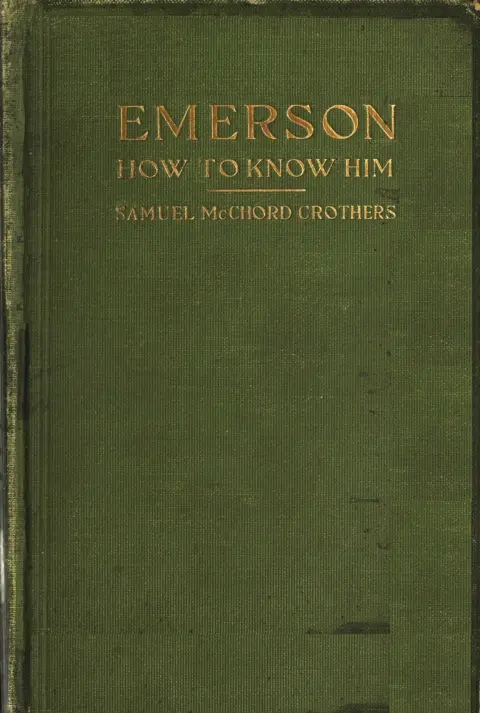
Samuel McChord Crothers
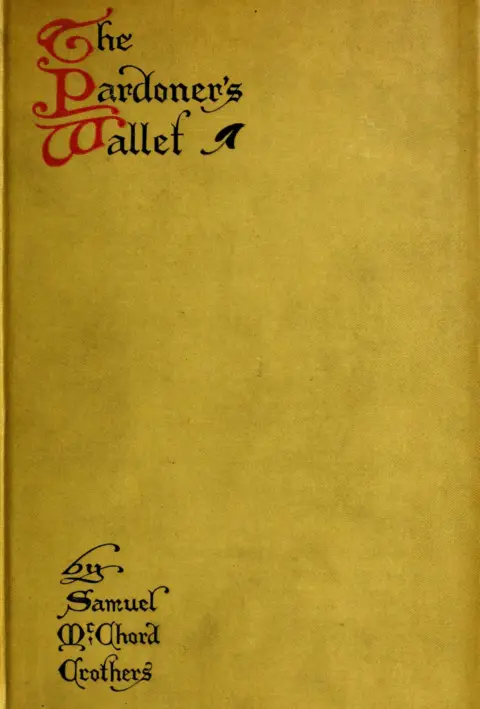
Samuel McChord Crothers

Rebecca Harding Davis & Thomas De Quincey & Charles Dickens & Nathaniel Hawthorne & Edward Bulwer Lytton, Baron Lytton & Edgar Allan Poe & Harriet Elizabeth Prescott Spofford
BEHIND THE BOOK
This eBook is for the use of anyone anywhere in the United States and most other parts of the world at no cost and with almost no restrictions whatsoever. You may copy it, give it away or re-use it under the terms of the Project Gutenberg License included with this eBook or online at www.gutenberg.org. If you are not located in the United States, you will have to check the laws of the country where you are located before using this eBook. Read the source licence.
The original source file, including credits and licence, is retained by this library. Request an original-format copy at no charge. Please include the book title and Project Gutenberg identifier #75856.
KEEP YOUR CURIOSITY GOING

David Patterson (Spirit) Hatch

David Patterson (Spirit) Hatch

David Patterson (Spirit) Hatch

Ralph Waldo Emerson

Maurice Baring

Oscar Wilde & James McNeill Whistler