THE CLASSIC COLLECTION✦An outlaw’s diary: the CommuneCLASSIC FREE BOOKS
An outlaw’s diary: the Commune
Cécile Tormay
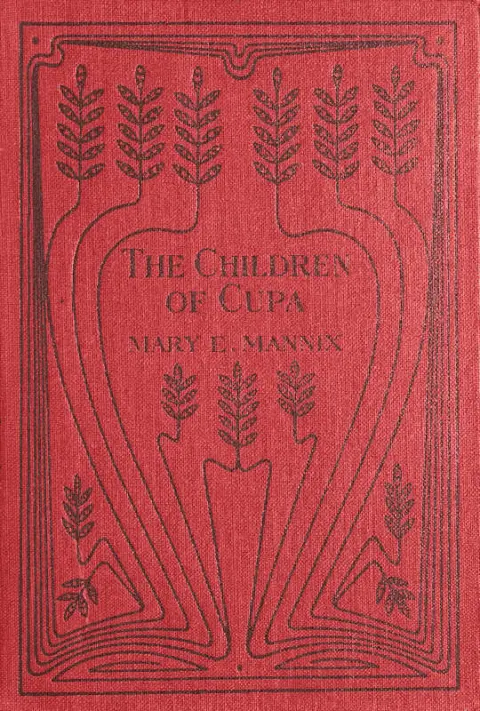
THE CLASSIC COLLECTION · 1905
"The Children of Cupa" by Mary E. Mannix is a novel written in the early 20th century. The story centers around the Page family, specifically Mrs. Page, who is recovering from illness, and her two children, Nellie and Walter, as they embark on a summer camping trip to Warner's Hot Springs in California. Alongside the family's adventures, the narrative highlights the experiences of the local Cupeño Indians, who face the injustice of being evicted from their ancestral lands. At the start of the book, the Page family discusses plans to take Mrs. Page to a healing location while navigating the complexities around the rights of the Cupeño Indians. Through dialogue among family members and their aunt, we learn about the cool springs, the camping arrangements, and the children's excitement about the idea of living in an Indian village. The conversations touch on sensitive topics like the dislocation of Native people and health, blending the themes of family bonding with cultural conflict and the historical context of land ownership in California. As the family begins their journey, the children look forward to exploring their new environment and interacting with the indigenous community, setting the stage for a rich exploration of both personal and cultural narratives.
Introduction adapted from the source catalogue; source summaries may be automatically generated.
Free to read · English · 32,835 words · No account needed
MAKE TIME FOR A GOOD BOOK
On by default. Untick to stop anonymous reading totals. Each page counts after 10 seconds in view. How this works.
Anonymous counting is on unless you have switched it off.
"A good many of them think they won't have to go, because Mr. Lummis is coming, papa," said Walter.
"That will not make any difference in one way," said their father, "though it may in another. Mr. Lummis is a true friend of the Indians. He will exert all his efforts to have them removed to a desirable place, where there will be plenty of water, fertile soil, and every other favorable condition."
"I heard a man say the other day to Captain Blacktooth that the Indians had not been here more than twenty-five years."
"And what did Cecilio answer?"
"He said, pointing to the graveyard: 'Look at our graves on the hillside. Some of those crosses crumble like ashes. Touch one, it falls to pieces in your hand. And yet there are crosses there fifty years old that have not begun to crumble or fall.'"
"What did the man say to that argument?"
"He said wood rotted very fast in this country."
"Which is not true," rejoined Mr. Page.
"Then Cecilio said, in the most scornful way: 'You can read in the reports of the lawsuit that one of the white commanders wrote more than fifty years ago that the Indians at Warner's Ranch were made to work by flogging them. Now you flog us no longer, but you do as bad, or worse. That was before I was born, yet you say we were not here twenty-five years back. You would better study the case first before you say such things.'"
"Then Cecilio went away," said Nellie, "and the man said he would like
to flog him--Cecilio."
"It was funny about Francisco, then, papa," said Walter. "He was coming with a big bucket of water, and he stumbled over that man's foot and spilled a lot."
"Was the man angry?" asked his father, with a smile.
"Oh, very!"
"And Francisco?"
"He said, 'Oh, excuse me,' and went on. When I told him he was not always so awkward as that, he laughed and said: 'Sometimes I am awkward, Walter. Sometimes I have been, and perhaps I will be again,' And he never smiled, papa--just walked along with his eyes on the ground. I am sure he did it purposely."
"Yes, I think he did," said Mr. Page.
"But you don't think it was any harm, do you?" inquired Nellie.
"No, I don't," was the reply.
"I'd have emptied the whole bucket on his head if I had been an Indian," said Walter. "Those people are too patient."
"And so you would be, my son, if you had been hunted for five hundred years as they have been," said Mr. Page.
Your reading position is saved on this browser. Take it to another device with a library code. Reading pages adapt to text, rather than matching a printed edition.
BEHIND THE BOOK
This eBook is for the use of anyone anywhere in the United States and most other parts of the world at no cost and with almost no restrictions whatsoever. You may copy it, give it away or re-use it under the terms of the Project Gutenberg License included with this eBook or online at www.gutenberg.org. If you are not located in the United States, you will have to check the laws of the country where you are located before using this eBook. Read the source licence.
The original source file, including credits and licence, is retained by this library. Request an original-format copy at no charge. Please include the book title and Project Gutenberg identifier #55852.
KEEP YOUR CURIOSITY GOING
Cécile Tormay

Moritz Busch
Coulson Kernahan
John L. Ransom

Maurice Baring
Frances Wright