THE CLASSIC COLLECTION✦A dead man’s diaryCLASSIC FREE BOOKS
A dead man’s diary
Coulson Kernahan
THE CLASSIC COLLECTION · 1907
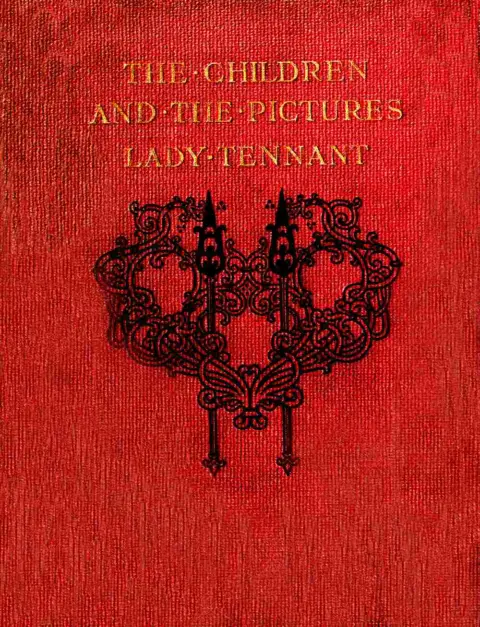
"The Children and the Pictures" by Pamela Grey is a children's novel written in the early 20th century. The narrative revolves around Clare, a young girl who embarks on an imaginative adventure involving children portrayed in paintings, including notable figures like Mrs. Inchbald and Robert Mayne. The story draws readers into a whimsical world where Clare interacts with these artistic creations, exploring themes of curiosity, imagination, and the contrast between reality and the depicted lives of the characters in art. At the start of the book, Clare wakes up in the midst of a quiet night and decides to go downstairs to find her doll, Natalie. As she moves through her house, she encounters Mrs. Inchbald—whose likeness resides in a painting—and their conversation reveals Clare's fascination with the differences between her modern life and the past. Mrs. Inchbald, initially intimidating, slowly reveals an endearing quality, leading Clare to discover other children in the pictures. The sense of whimsy and enchantment is heightened as Clare navigates between her dreams and the vivid personalities aligned with historic art, sparking a desire for exploration and connection with the painted children. This opening portion sets the stage for Clare’s adventure, intertwining her life with the fantastical realm of art and imagination.
Introduction adapted from the source catalogue; source summaries may be automatically generated.
Free to read · English · 45,078 words · No account needed
MAKE TIME FOR A GOOD BOOK
On by default. Untick to stop anonymous reading totals. Each page counts after 10 seconds in view. How this works.
Anonymous counting is on unless you have switched it off.
With a bow he finished his speech to the onlookers, and commenced with deft fingers to arrange a small trapeze. He placed a dove on it, and then attaching the upright posts so that they could not turn over, he set the bird swinging on the bar. Nothing could have exceeded the innocence of the performance, for the birds did nothing at all wonderful, or in any sense trained, but the air of the showman and the simplicity of the performance must have endeared it to any one of feeling in the crowd.
“Joli, now wilt thou attend to thy master, and place thy pink feet firmly upon the ring? Thou knowest it is but a little time, my Joli, and thou shalt be, once more, pecking the peas.”
He lifted the dove from the table, while it made every movement of revolt, but only foolish feathered revolt, swiftly quelled. Slowly round and round the bird revolved in the ring, staying there simply because it had not the wit or will to flutter out of it, and the hunchback swung the ring quicker and quicker so that the onlookers murmured applause.
Then it was Jou-Jou’s turn to be harnessed to a tiny charette made from a wooden box, painted in red and blue. Joli sat within while Jou-Jou pattered round drawing it, guided by the hunchback’s hand.
Soon Oliver heard an English voice among the spectators.
“Oh, look at those doves, Papa,” it said. “I want to stop and look.”
A very smartly dressed little girl pressed forward, brushing aside other people. She had an eager face, and looked discontented.
“What do you call the doves, boy?” she asked in French, in a sharp
voice.
“Joli and Jou-Jou, mademoiselle.”
“Who taught them to do their tricks, boy?”
“It is I who taught them, mademoiselle.”
“I want to buy them; will you tell me how much money they would cost?”
“They are not for sale, mademoiselle.”
“But if I want them?” said the little girl imperiously; “and if I give gold for them, of course they will be for sale. Here, Papa,” she cried out suddenly.
“I want these doves, please; you know you said you would give me my birthday present in advance, and I don’t want the goat-carriage now. I’m sure the little boy will be glad to get two gold pieces; we will give him one for each dove; look how ill and starved he appears! and his clothes, I never saw such tatters. You can send the doves round to the Hotel d’Angleterre, do you hear, boy? and we shall give you two, perhaps three, whole gold pieces.”
Your reading position is saved on this browser. Take it to another device with a library code. Reading pages adapt to text, rather than matching a printed edition.
BEHIND THE BOOK
This eBook is for the use of anyone anywhere in the United States and most other parts of the world at no cost and with almost no restrictions whatsoever. You may copy it, give it away or re-use it under the terms of the Project Gutenberg License included with this eBook or online at www.gutenberg.org. If you are not located in the United States, you will have to check the laws of the country where you are located before using this eBook. Read the source licence.
The original source file, including credits and licence, is retained by this library. Request an original-format copy at no charge. Please include the book title and Project Gutenberg identifier #64573.
KEEP YOUR CURIOSITY GOING
Coulson Kernahan

Maurice Baring
Frances Wright
Cécile Tormay

Frederic Jesup Stimson

W. H. P. (William Henry Pope) Jarvis