THE CLASSIC COLLECTION✦A dead man’s diaryCLASSIC FREE BOOKS
A dead man’s diary
Coulson Kernahan
THE CLASSIC COLLECTION · 1907
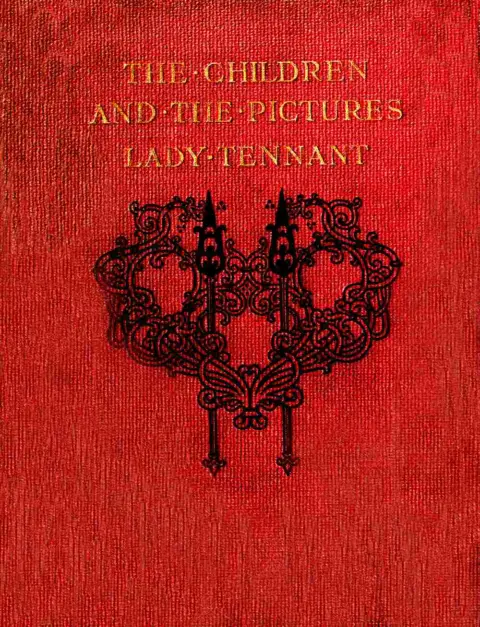
"The Children and the Pictures" by Pamela Grey is a children's novel written in the early 20th century. The narrative revolves around Clare, a young girl who embarks on an imaginative adventure involving children portrayed in paintings, including notable figures like Mrs. Inchbald and Robert Mayne. The story draws readers into a whimsical world where Clare interacts with these artistic creations, exploring themes of curiosity, imagination, and the contrast between reality and the depicted lives of the characters in art. At the start of the book, Clare wakes up in the midst of a quiet night and decides to go downstairs to find her doll, Natalie. As she moves through her house, she encounters Mrs. Inchbald—whose likeness resides in a painting—and their conversation reveals Clare's fascination with the differences between her modern life and the past. Mrs. Inchbald, initially intimidating, slowly reveals an endearing quality, leading Clare to discover other children in the pictures. The sense of whimsy and enchantment is heightened as Clare navigates between her dreams and the vivid personalities aligned with historic art, sparking a desire for exploration and connection with the painted children. This opening portion sets the stage for Clare’s adventure, intertwining her life with the fantastical realm of art and imagination.
Introduction adapted from the source catalogue; source summaries may be automatically generated.
Free to read · English · 45,078 words · No account needed
MAKE TIME FOR A GOOD BOOK
On by default. Untick to stop anonymous reading totals. Each page counts after 10 seconds in view. How this works.
Anonymous counting is on unless you have switched it off.
The village folk muttered among themselves, some turning as if about to go. Others stood in knots, appearing dissatisfied, and repeating the charge that she was a witch. But a voice here and there asserted itself, chiefly the voices of women, and these spake good.
“She gave me good yerbs, when my little maid lay dying; ay, and I went to her--she didden come to me.”
“She never put her hand to anybody else’s business, as I know on, not unless they d’ go and ask her to. It’s all sorts that go to make a world, that’s certain. She midden have our ways, and we midden have hers, but there! she be flesh and blood, and I d’ know as how she’d have hurt a body, not if a body went to leave her to herself-like.”
“Well, I know one thing,” cried a shrill voice, “she washed my baby what died o’ the plague-spots, yes, washed ’un and lay’d ’un out fine, when there wasn’t so much as one of ye who’d come nigh me, and me like to die.”
This woman thrust her way through the crowd; she was young, and her eyes were alight and eager. She went to the prostrate figure of the old woman lying upon the ground.
“Look up! look up! Granny--see the sky and the birds! Look up, poor soul, you midden die, no, no, not to-day, nor yet to-morrow; we’ve got place for more o’ the likes o’ you. You come round again, poor soul, you open your eyes. Lord! Lord! you midden die.”
She said this in a kind, comfortable murmur, her hands laid on the old woman’s brow. Now supporting her head, now chafing her listless hands, as she lay where they had left her, by the water. And the great tears of love and pity ran from her eyes, falling on her tattered garments.
Miles Coverdale waited till the last lingerer in that angry crowd had left the scene, and even after they had all dispersed, he stood lost in meditation.
“Why do the heathen so furiously rage together, and the people imagine a vain thing?” he murmured, as he turned his steps towards the Manor-house. Then the children heard the heavy oak door shut behind him, as he disappeared from their sight.
Mrs. Inchbald ceased speaking, and there was silence for a space.
Then someone asked--
“What became of the old woman?” and somebody else said,
“Did she die?”
Mrs. Inchbald replied--
“Look at the Nasmyth, and you will find the answer there, my dears.”
Your reading position is saved on this browser. Take it to another device with a library code. Reading pages adapt to text, rather than matching a printed edition.
BEHIND THE BOOK
This eBook is for the use of anyone anywhere in the United States and most other parts of the world at no cost and with almost no restrictions whatsoever. You may copy it, give it away or re-use it under the terms of the Project Gutenberg License included with this eBook or online at www.gutenberg.org. If you are not located in the United States, you will have to check the laws of the country where you are located before using this eBook. Read the source licence.
The original source file, including credits and licence, is retained by this library. Request an original-format copy at no charge. Please include the book title and Project Gutenberg identifier #64573.
KEEP YOUR CURIOSITY GOING
Coulson Kernahan

Maurice Baring
Frances Wright
Cécile Tormay

Frederic Jesup Stimson

W. H. P. (William Henry Pope) Jarvis