THE CLASSIC COLLECTION✦A dead man’s diaryCLASSIC FREE BOOKS
A dead man’s diary
Coulson Kernahan
THE CLASSIC COLLECTION · 1907
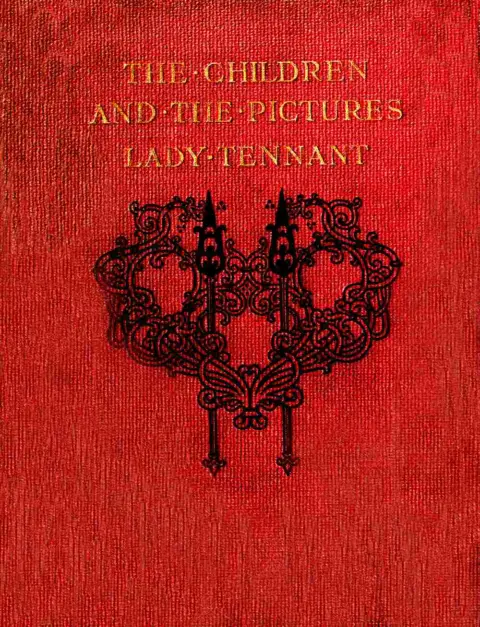
"The Children and the Pictures" by Pamela Grey is a children's novel written in the early 20th century. The narrative revolves around Clare, a young girl who embarks on an imaginative adventure involving children portrayed in paintings, including notable figures like Mrs. Inchbald and Robert Mayne. The story draws readers into a whimsical world where Clare interacts with these artistic creations, exploring themes of curiosity, imagination, and the contrast between reality and the depicted lives of the characters in art. At the start of the book, Clare wakes up in the midst of a quiet night and decides to go downstairs to find her doll, Natalie. As she moves through her house, she encounters Mrs. Inchbald—whose likeness resides in a painting—and their conversation reveals Clare's fascination with the differences between her modern life and the past. Mrs. Inchbald, initially intimidating, slowly reveals an endearing quality, leading Clare to discover other children in the pictures. The sense of whimsy and enchantment is heightened as Clare navigates between her dreams and the vivid personalities aligned with historic art, sparking a desire for exploration and connection with the painted children. This opening portion sets the stage for Clare’s adventure, intertwining her life with the fantastical realm of art and imagination.
Introduction adapted from the source catalogue; source summaries may be automatically generated.
Free to read · English · 45,078 words · No account needed
MAKE TIME FOR A GOOD BOOK
On by default. Untick to stop anonymous reading totals. Each page counts after 10 seconds in view. How this works.
Anonymous counting is on unless you have switched it off.
“O yes you shall,” said Clare, for she was warm-hearted really, for all the Scotch pebble in her eyes on occasion--“O yes, you shall. Why--we all, all like you we are all going to learn about you, Mother says so; it is only Lady Crosbie who sometimes ... bores her, you know.”
This came out rushingly, and Clare would have withdrawn it, but the spoken word is like a sped arrow, there is no calling either back. Mrs. Inchbald changed completely. Her brown eyes twinkled comfortably, and she leaned in her eagerness, right out of her chair.
“You don’t say so? Well, I agree with her. I believe I shall get on with your Mother, after all, though she does let you all victimise her, and reads such dull books. But I shouldn’t have chosen the word bore exactly. I shouldn’t say Lady Crosbie ever bored people ... dear me, O no, she’s vastly entertaining, my dear, to those she thinks worth it....”
“Well, Mother says however charming she must have been in life, it is rather tiresome, in a picture, to be looking permanently mischievous. She says, although Lady Crosbie is flitting off into such a lovely landscape, she’s not really going to know how to enjoy the country at all.”
“My dear, your Mother’s talking about something she doesn’t rightly know about, begging your pardon, if she calls that country. That’s studio, my dear, sheer studio, and a very good studio landscape it is. But all the same, your Mother’s opinion interests me; I notice she keeps the light on some, and not so often on others. I wonder what she thinks about it all.”
“O well,” said Clare, “once she’s made up her mind she’s not to have bare walls (which is what she likes best to live among), she says she likes you all, and Miss Ridge she loves. She says she knows she was a darling, and of course she loves Miss Ross, and so do we all, only we long to make her happy. And we like Lewis the actor, because he’s showing off so finely, and Bimbo longs for his sword. Robert Mayne’s got the loveliest clothes, and such a kind face, Mother says she feels he knows everything, before she’s spoken. She feels sure he’s a dear, and she says his face makes her feel bound to tell him what she’s been doing; and he’s never bored by trifles. And often when we come into the room, just for fun, Mummie says, ‘Well, we’ve come in again; it’s very windy and cold, but the crocuses are showing. I had a few things to do at Woollands, but it’s so vexing, I couldn’t find a match anywhere for the blue....’ And then she goes on, looking at him in his picture, and makes up all sorts of enjoyable nonsense, and says get away with us, she’s talking to Robert Mayne; and we love it when she’s in that mood; and say ‘Go on, go on,’ and sometimes she tells us what he says to her--but, the best of all was when....”
Your reading position is saved on this browser. Take it to another device with a library code. Reading pages adapt to text, rather than matching a printed edition.
BEHIND THE BOOK
This eBook is for the use of anyone anywhere in the United States and most other parts of the world at no cost and with almost no restrictions whatsoever. You may copy it, give it away or re-use it under the terms of the Project Gutenberg License included with this eBook or online at www.gutenberg.org. If you are not located in the United States, you will have to check the laws of the country where you are located before using this eBook. Read the source licence.
The original source file, including credits and licence, is retained by this library. Request an original-format copy at no charge. Please include the book title and Project Gutenberg identifier #64573.
KEEP YOUR CURIOSITY GOING
Coulson Kernahan

Maurice Baring
Frances Wright
Cécile Tormay

Frederic Jesup Stimson

W. H. P. (William Henry Pope) Jarvis