THE CLASSIC COLLECTION✦A dead man’s diaryCLASSIC FREE BOOKS
A dead man’s diary
Coulson Kernahan
THE CLASSIC COLLECTION · 1907
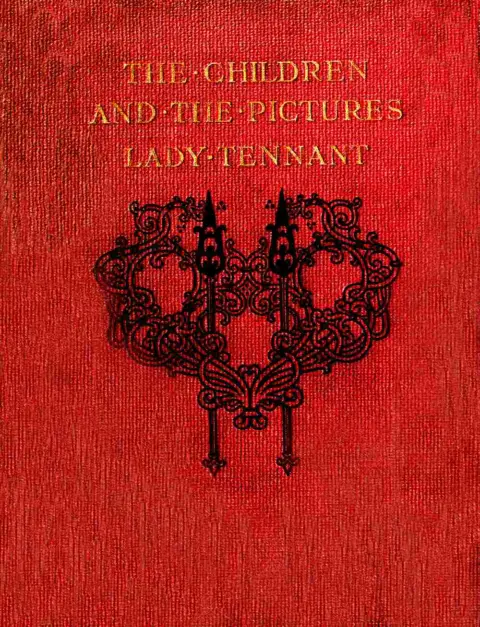
"The Children and the Pictures" by Pamela Grey is a children's novel written in the early 20th century. The narrative revolves around Clare, a young girl who embarks on an imaginative adventure involving children portrayed in paintings, including notable figures like Mrs. Inchbald and Robert Mayne. The story draws readers into a whimsical world where Clare interacts with these artistic creations, exploring themes of curiosity, imagination, and the contrast between reality and the depicted lives of the characters in art. At the start of the book, Clare wakes up in the midst of a quiet night and decides to go downstairs to find her doll, Natalie. As she moves through her house, she encounters Mrs. Inchbald—whose likeness resides in a painting—and their conversation reveals Clare's fascination with the differences between her modern life and the past. Mrs. Inchbald, initially intimidating, slowly reveals an endearing quality, leading Clare to discover other children in the pictures. The sense of whimsy and enchantment is heightened as Clare navigates between her dreams and the vivid personalities aligned with historic art, sparking a desire for exploration and connection with the painted children. This opening portion sets the stage for Clare’s adventure, intertwining her life with the fantastical realm of art and imagination.
Introduction adapted from the source catalogue; source summaries may be automatically generated.
Free to read · English · 45,078 words · No account needed
MAKE TIME FOR A GOOD BOOK
On by default. Untick to stop anonymous reading totals. Each page counts after 10 seconds in view. How this works.
Anonymous counting is on unless you have switched it off.
“O, that would be lovely,” cried the children. They are not the sort of children who look you up and down, when you suggest a plan, but they are down your throat in a minute, so to say, and you are lucky if you can finish your sentence.
“Oh, yes.” “When?” “Let’s do it to-morrow!” “Can I take Pont?” “We’ll bathe, won’t we?” “Oh come and sit down.” “What are the people called who live in the cottage?” and so on, and so on--you can imagine it.
But Miss Ridge reverted to the caravan.
“Well, we’re going to start about the 15th of April,” said Bim in reply, “and Mummie and Clare are going to cook, and Christopher and I shall be armed, of course--two petronels, a pocket-knife, a musket, and bows and arrows.”
“I’ll come too,” said Miss Ridge. “I could sweep the van out. I shall be in nobody’s way, and whenever your Mother comes round the corner, I’ll jump into the nosebag.”
But now there was a general movement towards the door, and from among many people across the room, Mrs. Inchbald beckoned.
“You must go across to the schoolroom,” she said, “the others have been in bed sometime now.”
Just at that moment a vision of Lady Crosbie flitted across the open doorway, the very incarnation of flying movement, and grace.
But Mrs. Inchbald looked only one word, and that was “bed.” It was written all over her face, and up and down it, and Clare knew quite well there was to be no story that night, and certainly no reprieve.
“You shall hear it to-morrow evening when we have a quiet time to ourselves,” said Mrs. Inchbald. And she bundled them all three, through the swing-doors, and up the stairs, and into their rooms, in a moment.
Clare crept into her bed; she felt tired all over. Passing before her eyes in charm and beauty, she saw again in recollection, Miss Hippesley, Mrs. Billington, Lady Crosbie, and Miss Ridge. Barry strutted before her, chatting in brisk self-satisfaction, and once more Miss Lavinia Fenton raised her hands and eyes.
“I wonder why Peg Woffington said Doctor Johnson had snuff on his shirt-front,” she said to herself, sleepily, “and that his linen wasn’t----” But she didn’t finish the sentence even to herself. She knew it was but a poor mind that dwells upon the weaknesses of great men.
Your reading position is saved on this browser. Take it to another device with a library code. Reading pages adapt to text, rather than matching a printed edition.
BEHIND THE BOOK
This eBook is for the use of anyone anywhere in the United States and most other parts of the world at no cost and with almost no restrictions whatsoever. You may copy it, give it away or re-use it under the terms of the Project Gutenberg License included with this eBook or online at www.gutenberg.org. If you are not located in the United States, you will have to check the laws of the country where you are located before using this eBook. Read the source licence.
The original source file, including credits and licence, is retained by this library. Request an original-format copy at no charge. Please include the book title and Project Gutenberg identifier #64573.
KEEP YOUR CURIOSITY GOING
Coulson Kernahan

Maurice Baring
Frances Wright
Cécile Tormay

Frederic Jesup Stimson

W. H. P. (William Henry Pope) Jarvis