THE CLASSIC COLLECTION✦A dead man’s diaryCLASSIC FREE BOOKS
A dead man’s diary
Coulson Kernahan
THE CLASSIC COLLECTION · 1907
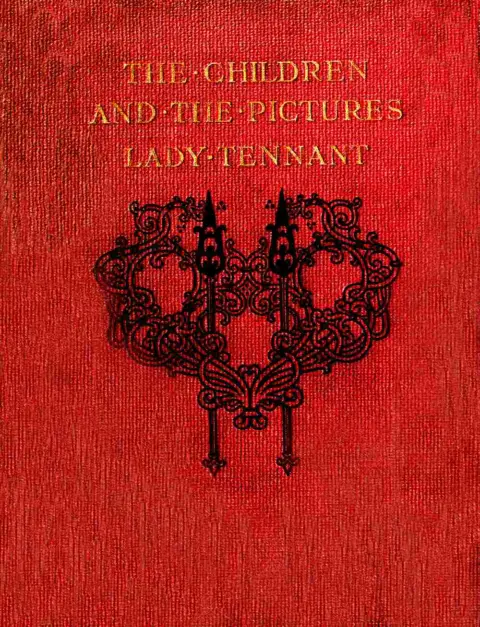
"The Children and the Pictures" by Pamela Grey is a children's novel written in the early 20th century. The narrative revolves around Clare, a young girl who embarks on an imaginative adventure involving children portrayed in paintings, including notable figures like Mrs. Inchbald and Robert Mayne. The story draws readers into a whimsical world where Clare interacts with these artistic creations, exploring themes of curiosity, imagination, and the contrast between reality and the depicted lives of the characters in art. At the start of the book, Clare wakes up in the midst of a quiet night and decides to go downstairs to find her doll, Natalie. As she moves through her house, she encounters Mrs. Inchbald—whose likeness resides in a painting—and their conversation reveals Clare's fascination with the differences between her modern life and the past. Mrs. Inchbald, initially intimidating, slowly reveals an endearing quality, leading Clare to discover other children in the pictures. The sense of whimsy and enchantment is heightened as Clare navigates between her dreams and the vivid personalities aligned with historic art, sparking a desire for exploration and connection with the painted children. This opening portion sets the stage for Clare’s adventure, intertwining her life with the fantastical realm of art and imagination.
Introduction adapted from the source catalogue; source summaries may be automatically generated.
Free to read · English · 45,078 words · No account needed
MAKE TIME FOR A GOOD BOOK
On by default. Untick to stop anonymous reading totals. Each page counts after 10 seconds in view. How this works.
Anonymous counting is on unless you have switched it off.
“A Bishop, Sir, has nothing to do at a tippling-house. It is not, indeed, immoral in him to go to a tavern, neither would it be immoral in him to whip a top in Grosvenor Square.”
Mrs. Thrale, a friend of his, once gave high praise to an
acquaintance.
“Nay, my dear lady, don’t talk so. Mr. Long’s character is very short. He is a man of genteel appearance. He fills a chair. That is all.”
He was chilled by wordy enthusiasm. He knew it to be possible to
blast by praise.
“Where there is exaggerated praise every one is set against the
character.”
This, I think, would fit some of the exponents of the gushing speech
of our modern social day.
“Sir, these are enthusiasts, by rule.”
Yet, very near the time of his decease, how humbly did this great man receive the diffident expression of regard from some person unknown to him, in which he found the sincerity he prized. “Sir, the applause of a single human being is of great consequence.”
“Depend upon it,” said he on one occasion, “if a man talks of his misfortunes, there is something in them that is not disagreeable to him. Where there is pure misery, there is no recourse to the mention of it.”
He must have loved folk of simple bearing: “Sir, he has no grimace, no gesticulation, no burst of admiration on trivial occasions. He never embraces you with an over-acted cordiality.”
Once, on hearing it observed of one of their friends that he was awkward at counting money, “Why, Sir,” he said, “I am likewise awkward at counting money; but then, Sir, the reason is plain: I have had very little money to count.”
Though he used to censure carelessness very strongly, he once owned to Boswell that, just to avoid the trouble of locking up five guineas, he had hid them so well that he had never found them since.
Talking of Gray’s Odes, which he did not care for, he said, “They are forced plants, raised in a hot-bed; they are but cucumbers, after all.” A gentleman present, unluckily for himself said, “Had they been literally cucumbers, they had been better things than odes.”
“Yes, Sir,” said Johnson, “for a hog.”
Once Johnson was in company with several clergymen, who, starting a war of wits, carried the conversation to an excess of conviviality. Johnson, whom they thought to entertain, sat moodily silent. Then bending to a friend, he said, by no means in a whisper: “This merriment of parsons is mighty offensive.”
Your reading position is saved on this browser. Take it to another device with a library code. Reading pages adapt to text, rather than matching a printed edition.
BEHIND THE BOOK
This eBook is for the use of anyone anywhere in the United States and most other parts of the world at no cost and with almost no restrictions whatsoever. You may copy it, give it away or re-use it under the terms of the Project Gutenberg License included with this eBook or online at www.gutenberg.org. If you are not located in the United States, you will have to check the laws of the country where you are located before using this eBook. Read the source licence.
The original source file, including credits and licence, is retained by this library. Request an original-format copy at no charge. Please include the book title and Project Gutenberg identifier #64573.
KEEP YOUR CURIOSITY GOING
Coulson Kernahan

Maurice Baring
Frances Wright
Cécile Tormay

Frederic Jesup Stimson

W. H. P. (William Henry Pope) Jarvis