THE CLASSIC COLLECTION✦An outlaw’s diary: the CommuneCLASSIC FREE BOOKS
An outlaw’s diary: the Commune
Cécile Tormay
THE CLASSIC COLLECTION · 1916
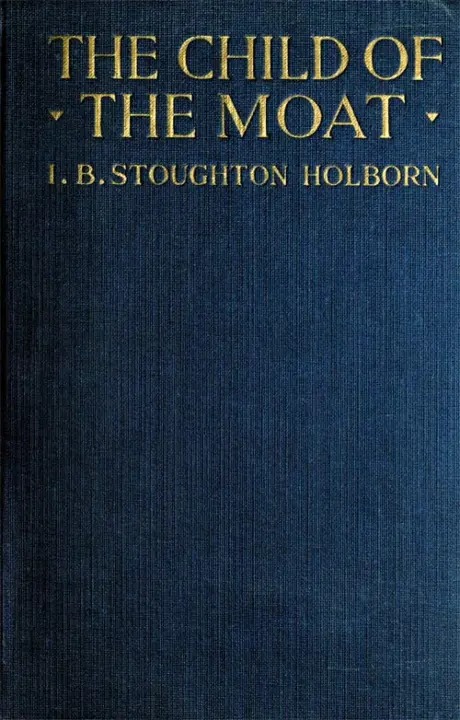
"The Child of the Moat: A Story for Girls. 1557 A.D." by I. B. Stoughton Holborn is a historical fiction novel written in the early 20th century. This captivating tale is set against the backdrop of the Reformation, showcasing themes of love and hate. The narrative likely revolves around a young girl named Aline, exploring her adventures and the challenges she faces in a world fraught with conflict and intrigue. The opening of the narrative introduces readers to Father Laurence, a parish priest troubled by the recent death of a local woman, Sarah Moulton, and the implications of her curse against a neighbor. Simultaneously, we meet the ominous figure of "Moll o’ the graves," a wicked old woman who embodies the darker themes of the story. As the plot unfolds, the tale shifts to Aline and her cousin Audry, who discover a secret book in their ancestral home that hints at hidden treasures and chambers. Their curiosity ultimately leads them on a journey of exploration, positioning Aline as a compassionate and brave character willing to risk everything for those in need, including a mysterious stranger named Ian Menstrie. This promising opening suggests a blend of gothic elements, adventure, and poignant themes regarding childhood, societal expectations, and personal sacrifice.
Introduction adapted from the source catalogue; source summaries may be automatically generated.
Free to read · English · 113,882 words · No account needed
MAKE TIME FOR A GOOD BOOK
On by default. Untick to stop anonymous reading totals. Each page counts after 10 seconds in view. How this works.
Anonymous counting is on unless you have switched it off.
“Oh, no, he works with his brain, he’s thinking,” said Aline, putting her hand to her brow with mock gravity. “He’s reckoning up his fortune. How much is it, Joseph?”
“Methinks his fortune will all be reckonings,” said Silas, “for he’ll never get any other kind.”
“Well, we’ll change the subject; there’s going to be a funeral here to-night,” Aline observed.
“No, really?” exclaimed half a dozen voices.
“Yes, it’s a terrible story and it really ought not to be known; but you’ll keep it secret I know,” she said, lowering her voice to a whisper.
As they crowded round her she went on in mysterious tones, “You know John Darley and Philip Emberlin.”
“Yes,” said Joe, rousing himself to take in the situation, “they are coming here to-night.”
“They’ve a long way to come and they are not strong,” said Aline, “and they will arrive hungry and just have to be buried, because there was nothing to eat. Yes, it’s a sad story; I’m not surprised to see the tears in your eyes, Joseph, and, in fact, in a manner of speaking you might say that you will have killed them, you and your accomplices,” she added, looking round.
A good tempered laugh greeted this last sally.
“Marry, we have much to get through. How can I help? It would be a sorry thing that Holwick should be disgraced before its guests. Give me something to do.”
There was nothing in the words, but the tone was one of dignity combined with gentleness and sympathy.
The effect was peculiar;--no one felt reproved, but felt rather as though there was full sympathy with his own point of view; yet at the same time he was conscious that he would lose his own dignity if he became querulous and allowed the honour of the house to suffer.
Aline helped for a short time and then, leaving them for a moment all cheerful and joking but working with a will, she looked into the buttery, where she saw Thomas and Edward, the seneschal, a pompous but good hearted fellow, merely talking and doing nothing.
“You are not setting us a good example,” she said laughing; “everybody else is working so hard,” and then she added in a tone that combined something of jest, something of command and something of a coaxing quality, “do try to keep things going; Master Richard would be much put about if he failed in his hospitality.”
This time there was undoubtedly a very gentle sting in the tone that pricked Edward’s vanity; yet his own conscience smote him, so that he bore no ill will.
Your reading position is saved on this browser. Take it to another device with a library code. Reading pages adapt to text, rather than matching a printed edition.
BEHIND THE BOOK
This eBook is for the use of anyone anywhere in the United States and most other parts of the world at no cost and with almost no restrictions whatsoever. You may copy it, give it away or re-use it under the terms of the Project Gutenberg License included with this eBook or online at www.gutenberg.org. If you are not located in the United States, you will have to check the laws of the country where you are located before using this eBook. Read the source licence.
The original source file, including credits and licence, is retained by this library. Request an original-format copy at no charge. Please include the book title and Project Gutenberg identifier #53281.
KEEP YOUR CURIOSITY GOING
Cécile Tormay

Moritz Busch
Coulson Kernahan
John L. Ransom

Maurice Baring
Frances Wright