THE CLASSIC COLLECTION✦The trail of the Golden HornCLASSIC FREE BOOKS
The trail of the Golden Horn
H. A. (Hiram Alfred) Cody
THE CLASSIC COLLECTION · 1913
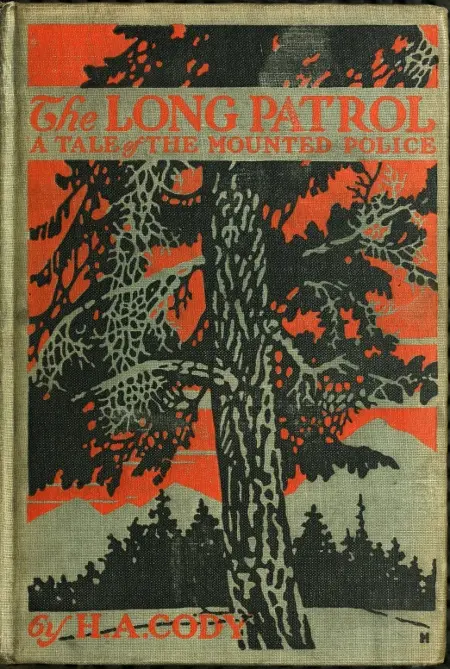
"The Chief of the Ranges: A Tale of the Yukon" by H. A. Cody is a novel written in the early 20th century. The story unfolds against the backdrop of the harsh and majestic Yukon wilderness and follows the tribulations of Klitonda, the chief of the Ayana tribe, and his daughter Owindia, who grapple with the threat posed by the brutal Chilcat tribe. The novel explores themes of bravery, cultural identity, and the profound connection between personal struggles and the wider socio-political conflicts of their time. At the start of the tale, readers are introduced to a sunlit summer afternoon along a tranquil river, where a young Owindia revels in the beauty of her surroundings. This idyllic moment is abruptly shattered as she becomes the target of a raid by Chilcat warriors, prompting a desperate escape aided by her fierce mother, who ultimately sacrifices herself to save Owindia. The narrative transitions to Klitonda, who is haunted by the loss of his wife and the oppression faced by his people from the Chilcats. As the story develops, Klitonda's determination grows to unite the Ayana tribe against their enemies, leading them on a journey filled with challenges as they seek both survival and freedom. This opening sets the stage for a gripping exploration of courage, loss, and resilience in the face of overwhelming odds.
Introduction adapted from the source catalogue; source summaries may be automatically generated.
Free to read · English · 74,313 words · No account needed
MAKE TIME FOR A GOOD BOOK
On by default. Untick to stop anonymous reading totals. Each page counts after 10 seconds in view. How this works.
Anonymous counting is on unless you have switched it off.
"Come, lads, let's welcome the squaw," said Larry Dasan. "She's gripped me heart already, an' I'm going to be the first to shake hands with her."
"Ye'll have plenty of rivals," laughed Tim Burke. "The rest of us may take a hand in this little affair too. I'd go to the devil fer a squaw like that."
Natsatt's heart beat fast, and the blood surged madly through his veins as he listened to these men. He maintained his composure, however, until they began to tip winks to one another, and to utter expressions which are not lawful to record. Then he straightened himself up, and stretched out a warning hand.
"Be careful, men," he began, "for this maiden understands the English language. And, besides, I don't think you should say such words about any woman, no matter if she is an Indian."
A loud laugh was the only response to these words. The men were not in the least disconcerted. That Owindia understood what they were saying troubled them not--they were too coarse for that.
"So you're going to stand by the squaw, are ye?" sneered Larry. "That's your game, is it? Want her for yourself, eh? Squaws ain't women--they're truck. The devil made 'em. They haven't souls. They're only made for the use of men."
"If the devil makes them, he's done a fine job on this one," responded Pete Tarquill, whereupon a laugh ensued.
"Look here, men," and Natsatt moved closer to Owindia as he spoke, "my mother was an Indian--call her a squaw if you like. But she was a woman as well, true and tender. Let me tell you this: I am a half-breed, and am not ashamed of it. Speak again as you have just spoken, or meddle with this maiden, and you will answer to me."
"Oh, ye needn't do any bluffing," Larry replied. "You've shown your true colours to-night, a combination of white an' brown, or I should say white an' red. Fine mixture, that. Father a Siwash, an' mother a ----"
The last words had scarcely left his lips ere Natsatt leaped toward him, and with a blow fair between the eyes, hurled him headlong to the ground. With an oath he endeavoured to regain his feet, only to go down again quicker than he rose.
"Got enough, eh?" Natsatt asked when at length Larry did not attempt to renew the contest. "You've been itching for trouble for some time past, and I hope you're satisfied now. Not much fun, is it?"
Then he returned to the rest of the men.
"Got any more remarks to make about Indian women?" he queried. "If so, now's the time to say them."
Your reading position is saved on this browser. Take it to another device with a library code. Reading pages adapt to text, rather than matching a printed edition.
H. A. (Hiram Alfred) Cody
H. A. (Hiram Alfred) Cody
H. A. (Hiram Alfred) Cody
H. A. (Hiram Alfred) Cody
BEHIND THE BOOK
This eBook is for the use of anyone anywhere in the United States and most other parts of the world at no cost and with almost no restrictions whatsoever. You may copy it, give it away or re-use it under the terms of the Project Gutenberg License included with this eBook or online at www.gutenberg.org. If you are not located in the United States, you will have to check the laws of the country where you are located before using this eBook. Read the source licence.
The original source file, including credits and licence, is retained by this library. Request an original-format copy at no charge. Please include the book title and Project Gutenberg identifier #43088.
KEEP YOUR CURIOSITY GOING
Coulson Kernahan

Maurice Baring
Frances Wright
Cécile Tormay

Frederic Jesup Stimson

W. H. P. (William Henry Pope) Jarvis