THE CLASSIC COLLECTION✦An outlaw’s diary: the CommuneCLASSIC FREE BOOKS
An outlaw’s diary: the Commune
Cécile Tormay
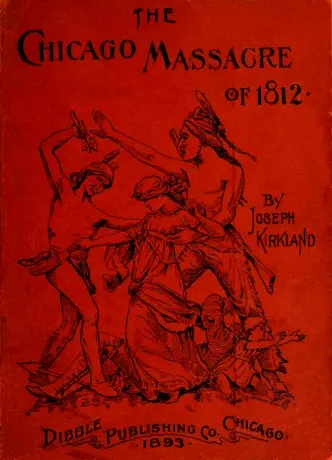
THE CLASSIC COLLECTION · 1893
"The Chicago Massacre of 1812" by Joseph Kirkland is a historical account written in the late 19th century. The book focuses on a tragic event that took place at Fort Dearborn, Chicago, detailing the massacre that resulted in the loss of many lives, including men, women, and children. Through various narratives, including those of survivors, the book aims to provide a comprehensive understanding of this pivotal moment in early Chicago history. The opening of the narrative sets the stage for the events of August 15, 1812, highlighting a seemingly peaceful morning that soon turned tragic. It introduces key figures such as Captain William Wells, who leads a group of settlers and friendly Indians in their evacuation from the fort, and reflects on their dire circumstances when ambushed by hostile forces. As tension mounts, the text hints at the looming peril and captures the emotions of the participants, particularly the young women who later recount their gripping experiences of bravery, despair, and survival. This sets a poignant tone for the historical recounting of the massacre, revealing both individual and collective struggles against the backdrop of early American frontier life.
Introduction adapted from the source catalogue; source summaries may be automatically generated.
Free to read · English · 65,206 words · No account needed
MAKE TIME FOR A GOOD BOOK
On by default. Untick to stop anonymous reading totals. Each page counts after 10 seconds in view. How this works.
Anonymous counting is on unless you have switched it off.
The savages were accompanied by an interpreter, and the newspapers of the day gave some amusing accounts of their demeanor in the studio; their mixture of docility and self-assertion, etc. It chanced that the real dispositions of the two principal models were the reverse of their assumed characters; and Kicking Bear (who, when wearing his native dress and war-paint, carried a string of six scalps as part of his outfit), was much amused at the fact that he was assigned the more humane part. "Me, good Injun!" he cried; "him bad Injun!" And he laughed loudly at the jest.
The four faces of the granite pedestal bear appropriate bas-reliefs cast in bronze. The front (south-west) shows the fight itself; the opposite side represents the train--troops, wagons, etc.--leaving the fort; one end gives the scene when Black Partridge delivered up his medal to Captain Heald, and the opposite end the death of the heroic Wells.
The various scenes bear descriptive inscriptions; and on the North-West face is the dedication, as follows:
Presented May, 1893, to the Chicago Historical Society, in Trust for the City of Chicago and for Posterity.
The group stands on the scene of the fight, just one hundred and twenty feet east of the "Massacre tree" spoken of in chapter VII, and earlier in this appendix. Its position is admirable in the artistic point of view as well as in the historical, for it occupies the eastern extremity of Eighteenth Street and the northern of Calumet Avenue; separated from Lake Michigan only by the right of way of the Illinois Central railway. The hillocks which shielded the Indians in making their attack have been leveled down, but their sandy base forms an admirable foundation for the massive pedestal, which may well keep its place, unmoved, for a thousand years.
Abbott, Dr. Lucius; 49.
Agency House; 48, 67, 79, 192.
Ah-mah-qua-zah-quah; 35, 173.
Allen, Colonel; 109.
American Fur Co.; 65, 164.
Anderson, Capt. Thomas C.; 66.
Andreas, Capt. A. T. quoted; 153, 163, 165, 167, 170, 216-218.
Andrews, Presley; 146, 150.
Arnold, Hon. I. N.; 148-149, 217.
Artaguiette; 124.
Astor's Fur Co.; 56, 65, 164.
Atwater, Major; 113, 114.
Baker, B'vt Major D.; 144.
Bates, Eli, 126.
Battles, Joe; 63.
Baxley, Virginia; 194.
Beaubien, Alex.; 121, 194.
Beaubien, J. B.; 169.
Beckwith, H. W.; 168.
Bisson, Mrs.; 45, 46.
Black Bird; 40, 180.
Black Hawk; 32.
Black Partridge; 29, 30, 44-46, 90, 104, 220.
Black Partridge Medal; 91.
Blanchard, Rufus; 67, 158-161.
Block-House; 120.
Block-House Tablet; 125, 126.
Blodgett, Hon. H. W.; 189, 192.
Bowen, Joseph; 118.
Braddock's Defeat; 61.
Bradley, Capt. H.; 144.
British and Indians; 30, 77-79.
Brock, Gen.; 78.
Bronze Group; 29, 220, 221.
Brown, Maj. Gen.; 145.
Bunker Hill, Battle of; 107.
Burgoyne, Gen.; 58, 135.
Burman (soldier); 146.
Burnett, Geo.; 146, 150.
Burns, John and family; 72, 80, 103.
Burns, Robert; 134.
Butterfield, Justin; 148.
Your reading position is saved on this browser. Take it to another device with a library code. Reading pages adapt to text, rather than matching a printed edition.
BEHIND THE BOOK
This eBook is for the use of anyone anywhere in the United States and most other parts of the world at no cost and with almost no restrictions whatsoever. You may copy it, give it away or re-use it under the terms of the Project Gutenberg License included with this eBook or online at www.gutenberg.org. If you are not located in the United States, you will have to check the laws of the country where you are located before using this eBook. Read the source licence.
The original source file, including credits and licence, is retained by this library. Request an original-format copy at no charge. Please include the book title and Project Gutenberg identifier #59624.
KEEP YOUR CURIOSITY GOING
Cécile Tormay

Moritz Busch
John L. Ransom
Frances Wright
Cécile Tormay

Mabel Potter Daggett