THE CLASSIC COLLECTION✦An outlaw’s diary: the CommuneCLASSIC FREE BOOKS
An outlaw’s diary: the Commune
Cécile Tormay
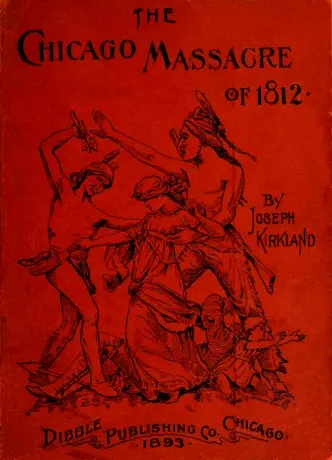
THE CLASSIC COLLECTION · 1893
"The Chicago Massacre of 1812" by Joseph Kirkland is a historical account written in the late 19th century. The book focuses on a tragic event that took place at Fort Dearborn, Chicago, detailing the massacre that resulted in the loss of many lives, including men, women, and children. Through various narratives, including those of survivors, the book aims to provide a comprehensive understanding of this pivotal moment in early Chicago history. The opening of the narrative sets the stage for the events of August 15, 1812, highlighting a seemingly peaceful morning that soon turned tragic. It introduces key figures such as Captain William Wells, who leads a group of settlers and friendly Indians in their evacuation from the fort, and reflects on their dire circumstances when ambushed by hostile forces. As tension mounts, the text hints at the looming peril and captures the emotions of the participants, particularly the young women who later recount their gripping experiences of bravery, despair, and survival. This sets a poignant tone for the historical recounting of the massacre, revealing both individual and collective struggles against the backdrop of early American frontier life.
Introduction adapted from the source catalogue; source summaries may be automatically generated.
Free to read · English · 65,206 words · No account needed
MAKE TIME FOR A GOOD BOOK
On by default. Untick to stop anonymous reading totals. Each page counts after 10 seconds in view. How this works.
Anonymous counting is on unless you have switched it off.
The subsistence department to furnish the necessary supplies of
provisions.
The Surgeon-General to supply medical officers and suitable hospital supplies for the posts to be established and reoccupied.
5. The Commanding Generals of the Eastern and Western departments are respectively charged with the execution of this order as far as relates to their respective commands.
By order of Major General Macomb, Major-General Commanding the Army.
(Signed) R. Jones, Adjutant-General.
Adjutant-General's Office, Washington, 23 Feb., 1832.
(Copy.) The headquarters of the 2nd Regiment of Infantry are transferred to Fort Niagara. Lieut. Col. Cummings, with all the officers and men composing the garrison of Madison Barracks, Sackett's Harbor, will accordingly relieve the garrison of Fort Niagara; and Major Whistler, on being relieved by Lieut.-Col. Cummings, with all the troops under his command, will repair to Fort Dearborn (Chicago, Illinois) and garrison that post.
Assistant Surgeon De Camp, now on duty at Madison Barracks, is assigned to duly at Fort Dearborn, and will accompany the troops ordered to that post. These movements will take place as soon as the navigation will permit.
By order of Major-General Macomb.
(Signed) R. Jones, Adjutant-General.
Adjutant-General's Office, Washington, Nov. 30th, 1836.
(Extract) I. The troops stationed at Fort Dearborn, Chicago, will immediately proceed to Fort Howard and join the garrison at that post. Such public property as may be left at Fort Dearborn will remain in charge of Brevt-Major Plympton, of the 5th Infantry; who will continue in command of the post until otherwise instructed.
By order of Alexander Macomb, Maj.-Gen. Com'd'g-in-Chief.
(Signed) R. Jones, Adjutant-General.
When the last fort was being demolished [1856] an old paper was found which bore internal evidence of being a survival from the first fort. How it could have survived the flames of 1812 is a mystery. Perhaps some brick bomb-proof magazine chanced to shelter it, and the builders of the new fort, finding it, laid it in a closet, where it remained, hidden and forgotten. One would like to see it to-day--if it also survived October 9, 1871!
Permission is hereby given for one gill of whiskey each: Denison,[A] Dyer,[A] Andrews,[A] Keamble (?), Burman, J. Corbin,[A] Burnett, Smith,[A] McPherson, Hamilton, Fury[A], Grumond[A] (?), Morfitt, Lynch,[A] Locker,[A] Peterson,[A] P. Corbin,[A] Van Horn,[AM] Mills.
(Signed),
November 12th, 1811.
[AM] Appear on the nuster-roll given on page 150. Several of the names recur in the Plattsburg story of the nine survivors (21 May 1814).
Your reading position is saved on this browser. Take it to another device with a library code. Reading pages adapt to text, rather than matching a printed edition.
BEHIND THE BOOK
This eBook is for the use of anyone anywhere in the United States and most other parts of the world at no cost and with almost no restrictions whatsoever. You may copy it, give it away or re-use it under the terms of the Project Gutenberg License included with this eBook or online at www.gutenberg.org. If you are not located in the United States, you will have to check the laws of the country where you are located before using this eBook. Read the source licence.
The original source file, including credits and licence, is retained by this library. Request an original-format copy at no charge. Please include the book title and Project Gutenberg identifier #59624.
KEEP YOUR CURIOSITY GOING
Cécile Tormay

Moritz Busch
John L. Ransom
Frances Wright
Cécile Tormay

Mabel Potter Daggett