THE CLASSIC COLLECTION✦Rocky ForkCLASSIC FREE BOOKS
Rocky Fork
Mary Hartwell Catherwood
THE CLASSIC COLLECTION · 1895
"The Chase of Saint-Castin and Other Stories of the French in the New World" by Mary Hartwell Catherwood is a historical fiction collection written in the late 19th century. The book explores the complexities of life among the French settlers and indigenous populations in North America, focusing on themes of culture, identity, and interpersonal relationships. The titular story introduces readers to the character of Saint-Castin, a French baron immersed in the wilderness and his interactions with the Abenaqui people, specifically with the enigmatic daughter of their chief. The beginning of the book sets a vivid scene in the April woods, where a lodge stands quietly, hinting at a hidden narrative. The opening chapters introduce two French hunters, Baron La Hontan and Saint-Castin, as they discover a lodge that appears to belong to the chief’s daughter, who is revered by her tribe. The narrative quickly infuses tension as La Hontan's curiosity prompts him to intrude on the reclusive girl’s space. Through their interactions, we begin to see the contrast between the French and indigenous cultures, layered with themes of admiration, respect, and supernatural awe, particularly as Saint-Castin grapples with his feelings for the saintly figure of the chief's daughter and the implications of their disparate worlds.
Introduction adapted from the source catalogue; source summaries may be automatically generated.
Free to read · English · 44,217 words · No account needed
MAKE TIME FOR A GOOD BOOK
On by default. Untick to stop anonymous reading totals. Each page counts after 10 seconds in view. How this works.
Anonymous counting is on unless you have switched it off.
"They are things to wear on your feet," explained Jenieve; and her red-skinned half-brothers heard her with incredulity. She had told their mother, in their presence, that she intended to buy the children some shoes when she got pay for her spinning; and they thought it meant fashions from the Fur Company's store to wear to mass, but never suspected she had set her mind on dark-looking clamps for the feet.
"You must try them on," said Jenieve, and they all stepped experimentally from the water, reluctant to submit. But Jenieve was mistress in the house. There is no appeal from a sister who is a father to you, and even a substitute for your living mother.
"You sit down first, François, and wipe your feet with this cloth."
The absurdity of wiping his feet before he turned in for the night tickled François, though he was of a strongly aboriginal cast, and he let himself grin. Jenieve helped him struggle to encompass his lithe feet with the clumsy brogans.
"You boys are living like Indians."
"We are Indians," asserted François.
"But you are French, too. You are my brothers. I want you to go to mass looking as well as anybody."
Hitherto their object in life had been to escape mass. They objected to increasing their chances of church-going. Moccasins were the natural wear of human beings, and nobody but women needed even moccasins until cold weather. The proud look of an Iroquois taking spoils disappeared from the face of the youngest, giving way to uneasy anguish. The three boys sat down to tug, Jenieve going encouragingly from one to another. François lay on his back and pushed his heels skyward. Contempt and rebellion grew also in the faces of Gabriel and Toussaint. They were the true children of François Iroquois, her mother's second husband, who had been wont to lounge about Mackinac village in dirty buckskins and a calico shirt having one red and one blue sleeve. He had also bought a tall silk hat at the Fur Company's store, and he wore the hat under his blanket when it rained. If tobacco failed him, he scraped and dried willow peelings, and called them kinnickinnick. This worthy relation had worked no increase in Jenieve's home except an increase of children. He frequently yelled around the crescent bay, brandishing his silk hat in the exaltation of rum. And when he finally fell off the wharf into deep water, and was picked out to make another mound in the Indian burying-ground, Jenieve was so fiercely elated that she was afraid to confess it to the priest. Strange matches were made on the frontier, and Indian wives were commoner than any other kind; but through the whole mortifying existence of this Indian husband Jenieve avoided the sight of him, and called her mother steadily Mama Lalotte. The girl had remained with her grandmother, while François Iroquois carried off his wife to the Indian village on a western height of the island. Her grandmother had died, and Jenieve continued to keep house on the beach, having always with her one or more of the half-breed babies, until the plunge of François Iroquois allowed her to bring them all home with their mother. There was but one farm on the island, and Jenieve had all the spinning which the sheep afforded. She was the finest spinner in that region. Her grandmother had taught her to spin with a little wheel, as they still do about Quebec. Her pay was small. There was not much money then in the country, but bills of credit on the Fur Company's store were the same as cash, and she managed to feed her mother and the Indian's family. Fish were to be had for the catching, and she could get corn-meal and vegetables for her soup pot in partial exchange for her labor. The luxuries of life on the island were air and water, and the glories of evening and morning. People who could buy them got such gorgeous clothes as were brought by the Company. But usually Jenieve felt happy enough when she put on her best red homespun bodice and petticoat for mass or to go to dances. She did wish for shoes. The ladies at the fort had shoes, with heels which clicked when they danced. Jenieve could dance better, but she always felt their eyes on her moccasins, and came to regard shoes as the chief article of one's attire.
Your reading position is saved on this browser. Take it to another device with a library code. Reading pages adapt to text, rather than matching a printed edition.
Mary Hartwell Catherwood
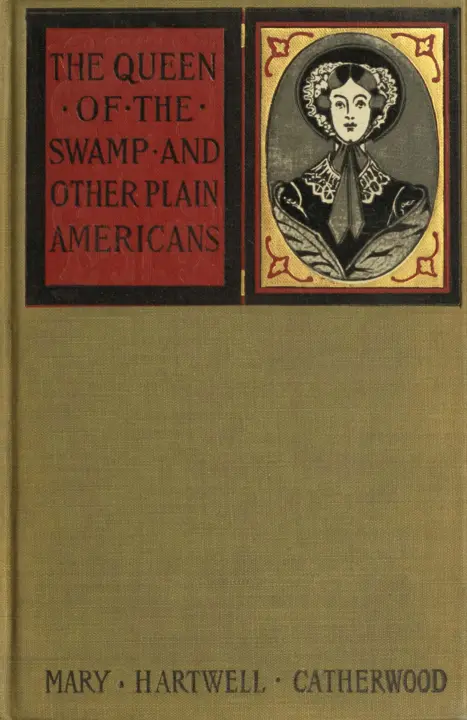
Mary Hartwell Catherwood
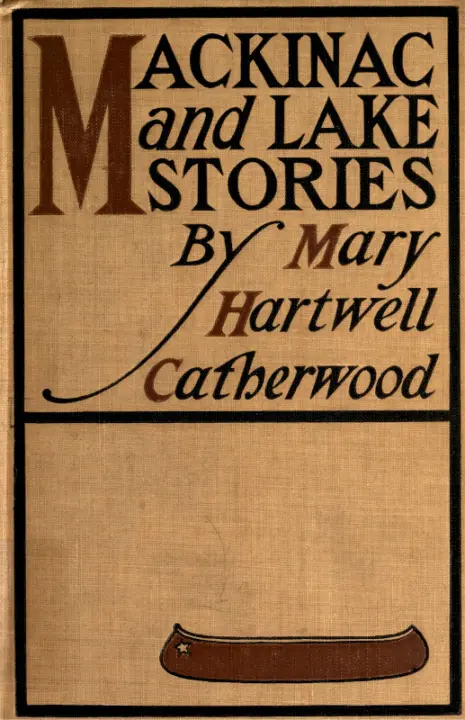
Mary Hartwell Catherwood

Mary Hartwell Catherwood
BEHIND THE BOOK
This eBook is for the use of anyone anywhere in the United States and most other parts of the world at no cost and with almost no restrictions whatsoever. You may copy it, give it away or re-use it under the terms of the Project Gutenberg License included with this eBook or online at www.gutenberg.org. If you are not located in the United States, you will have to check the laws of the country where you are located before using this eBook. Read the source licence.
The original source file, including credits and licence, is retained by this library. Request an original-format copy at no charge. Please include the book title and Project Gutenberg identifier #12199.
KEEP YOUR CURIOSITY GOING
Cécile Tormay

Moritz Busch
Coulson Kernahan
John L. Ransom

Maurice Baring
Frances Wright