THE CLASSIC COLLECTION✦English CostumeCLASSIC FREE BOOKS
English Costume
Dion Clayton Calthrop
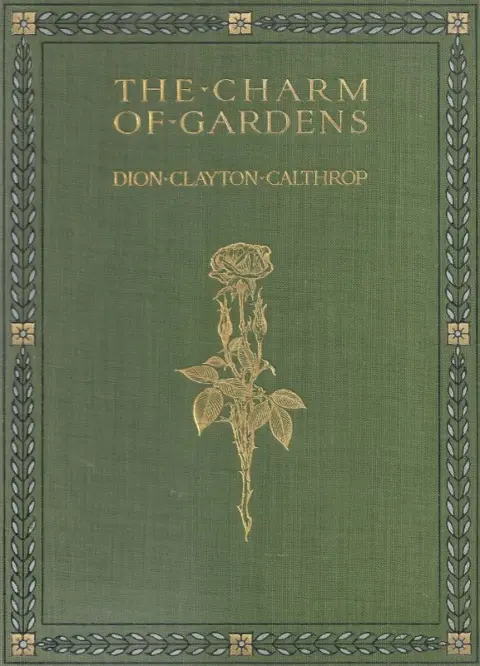
THE CLASSIC COLLECTION · 1910
"The Charm of Gardens" by Dion Clayton Calthrop is a reflective narrative on the beauty and significance of gardens, likely written in the early 20th century. The work explores the emotional and nostalgic ties people share with gardens and flowers, illustrating how they evoke memories and foster a sense of peace and connection to nature. The opening of the narrative presents a vivid description of the author's longing for the countryside and the rejuvenating power of flowers. The writer recalls a moment when the scent of Primroses brought back memories of his youth, depicting how different flowers symbolize various experiences and emotions from his life. He delves into the philosophy of gardening, expressing how tending to a garden represents more than mere cultivation—it's a way to celebrate life's seasons and weave together memories, nature, and identity.
Introduction adapted from the source catalogue; source summaries may be automatically generated.
Free to read · English · 65,832 words · No account needed
MAKE TIME FOR A GOOD BOOK
On by default. Untick to stop anonymous reading totals. Each page counts after 10 seconds in view. How this works.
Anonymous counting is on unless you have switched it off.
Now, about Bartholomew-tide, is the only secure season for removing and laying your perenial Greens, Oranges, Lemmons, Myrtils, Phillyreas, Oleanders, Jasmines, Arbutus, and other rare Shrubs, as Pome-granads, Roses, and whatever is most obnoxious to frosts, taking the shoots and branches of the past Spring and pegging them down in a very rich earth and soil perfectly consum’d, water them upon all occasions during the Summer; and by this time twelve-moneth they will be ready to remove, Transplanted in fit earth, set in the shade, and kept moderately moist, not over wet, lest the young fibers rot; after three weeks set them in some more airy place, but not in the Sun till fifteen days more; vide our Observation in April, and May, for the rest of these choice Directions.
Amaranthus, Anagallis Lusitanica, Aster Atticus, Blattaria, Spanish Bells, Bellevedere, Campanula, Clematis, Cyclamen Vernum, Datura Turtica, Eliochryson, Eryngium planum, Amethystium, Geranium Creticum and Triste, Yellow Stocks, Hieracion minus Alpestre, Tube-rose Hyacinth, Limonium, Linaria Cretica, Lychnis, Nimabile Peruvian, Yellow Millefoil, Nasturt: Ind. Yellow mountain Hearts-ease, Manacoc, Africanus Flos, Convolvulus’s, Scabious, Asphodels, Lupines, Colchicum, Lencoion, Autumnal Hyacinth, Holly-hoc, Star-wort, Heliotrop, French Mary-gold, Daisies, Geranium nocte oleus, Common Pansies, Larks-heels of all colours, Nigella, Lobello, Catch-fly, Thalaspi Creticum, Rosemary, Musk-rose, Monethly Rose, Oleanders, Spanish Jasmine, Yellow Indian Jasmine, Myrtils, Oranges, Pome-granads double and single flowers, Agnus Cactus, etc.
To be done
Gather now (if ripe) your Winter Fruits, as Apples, Pears, Plums, etc., to prevent their falling by the great Winds: Also gather your Wind-falls from day to day; do this work in dry weather.
Sow Lettuce, Radish, Spinage, Parsneps, Skirrets, etc. Cauly-flowers, Cabbage, Onions, etc. Scurvy-grass, Anis-seeds, etc.
Now you may Transplant most sorts of Esculent, or Physical plants, etc.
Also Artichocks, and Asparagus-roots.
Sow also Winter Herbs and Roots, and plant Strawberries out of the
Woods.
Towards the end, earth up your Winter plants and Sallad herbs; and plant forth your Cauly-flowers and Cabbages which were sown in August.
No longer now defer the taking of your Bees, streightening the entrances of such Hives as you leave to a small passage, and continue still your hostility against Wasps, and other robbing Insects.
Cider-making continues.
The Belle-bonne, the William, Summer Pearmain, Lordling-apple, Pear-apple, Quince-apple, Red-greening ribbed, Bloody-Pepin, Harvey, Violet-apple, etc.
Hamdens, Bergamot (first ripe), Summer Bon-crestien, Norwich, Black Worcester (baking), Green-field, Orange, Bergamot, the Queen hedge-pear, Lewes-pear (to dry excellent), Frith-pear, Arundel-pear (also to bake), Brunswick-pear, Winter Poppering, Bings-pear, Bishops-pear (baking), Diego, Emperours-pear, Cluster-pear, Messire Jean, Rowling-pear, Balsam-pear, Bezy d’Hery, etc.
Your reading position is saved on this browser. Take it to another device with a library code. Reading pages adapt to text, rather than matching a printed edition.
Dion Clayton Calthrop
BEHIND THE BOOK
This eBook is for the use of anyone anywhere in the United States and most other parts of the world at no cost and with almost no restrictions whatsoever. You may copy it, give it away or re-use it under the terms of the Project Gutenberg License included with this eBook or online at www.gutenberg.org. If you are not located in the United States, you will have to check the laws of the country where you are located before using this eBook. Read the source licence.
The original source file, including credits and licence, is retained by this library. Request an original-format copy at no charge. Please include the book title and Project Gutenberg identifier #54641.
KEEP YOUR CURIOSITY GOING

Charles G. (Charles Griffith) Ross
Hannah Webster Foster

Emily Lawless
Edwin Hamlin Carr

Charles De Lano Hine
Andrew Ure