THE CLASSIC COLLECTION✦English CostumeCLASSIC FREE BOOKS
English Costume
Dion Clayton Calthrop
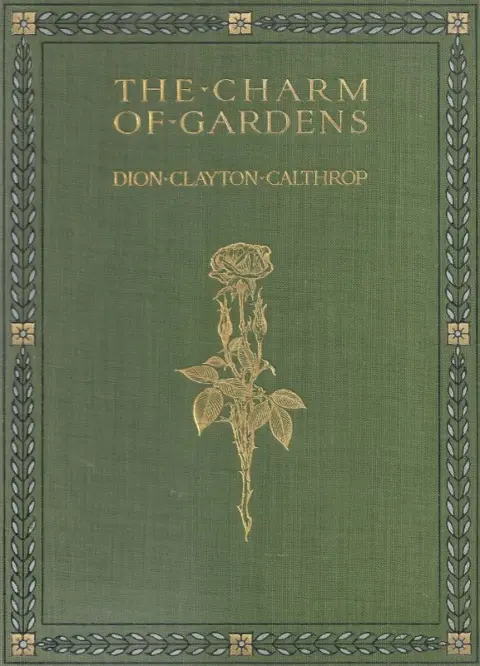
THE CLASSIC COLLECTION · 1910
"The Charm of Gardens" by Dion Clayton Calthrop is a reflective narrative on the beauty and significance of gardens, likely written in the early 20th century. The work explores the emotional and nostalgic ties people share with gardens and flowers, illustrating how they evoke memories and foster a sense of peace and connection to nature. The opening of the narrative presents a vivid description of the author's longing for the countryside and the rejuvenating power of flowers. The writer recalls a moment when the scent of Primroses brought back memories of his youth, depicting how different flowers symbolize various experiences and emotions from his life. He delves into the philosophy of gardening, expressing how tending to a garden represents more than mere cultivation—it's a way to celebrate life's seasons and weave together memories, nature, and identity.
Introduction adapted from the source catalogue; source summaries may be automatically generated.
Free to read · English · 65,832 words · No account needed
MAKE TIME FOR A GOOD BOOK
On by default. Untick to stop anonymous reading totals. Each page counts after 10 seconds in view. How this works.
Anonymous counting is on unless you have switched it off.
I understood perfectly. He was a man of soul, my tailor.
“I expect you are surprised to find I read a lot,” he went on in his artless way. “But when I was a boy I was in a book shop, before my father lost all his money, and put me out to be a tailor. My mother was a lady’s maid, and she encouraged me to read. There was a priest, Father Brown, who helped me too; it was from him I first learned to love flowers.”
“Then, as you are a Catholic, you know what to-day is,” said I.
“The twenty-ninth of August. No, sir, I’m afraid I don’t.”
“It is dedicated to one of our patron Saints—there are two for gardeners—Saint Phocas, a Greek, and Saint Fiacre, an Irishman. To-day is the day of Saint Phocas.”
The tailor crossed himself reverently.
“I’ll tell you the story if you like.” And, as he lay on his back, I told him the little legend of
“At the end of the third century there lived a certain good man called Phocas, who had a little dwelling outside the gates of the city of Sinope, in Pontus. He had a small garden in which he grew flowers and vegetables for the poor and for his own needs. Prayer, love of his labour, and care for the things he grew filled his life.”
My tailor interrupted here to ask, apologetically, what manner of garden Saint Phocas would have.
“Neat beds,” said I—for I had gone into the matter myself—“edged with box. The flowers and vegetables growing together. Violets, Leeks, Onions, with Crocuses, Narcissus, and Lilies. Then, in their season, Gladiolus, Hyacinths, Iris, Poppies, and plenty of Roses. Melons, also, and Gherkins, Peaches, Plums, Apples and Pomegranates, Olives, Almonds, Medlars, Cherries, and Pears, of which quite thirty kinds were known. In his house, on the window ledge, if he had one, he may have grown Violets and Lilies in window pots, for they did that in those days.”
“Now, isn’t that interesting?” said the tailor. “My sister will care to know that. I shouldn’t be a bit surprised to find her putting a statue of Saint Phocas over the door. She’s all for figures.”
Your reading position is saved on this browser. Take it to another device with a library code. Reading pages adapt to text, rather than matching a printed edition.
Dion Clayton Calthrop
BEHIND THE BOOK
This eBook is for the use of anyone anywhere in the United States and most other parts of the world at no cost and with almost no restrictions whatsoever. You may copy it, give it away or re-use it under the terms of the Project Gutenberg License included with this eBook or online at www.gutenberg.org. If you are not located in the United States, you will have to check the laws of the country where you are located before using this eBook. Read the source licence.
The original source file, including credits and licence, is retained by this library. Request an original-format copy at no charge. Please include the book title and Project Gutenberg identifier #54641.
KEEP YOUR CURIOSITY GOING

Charles G. (Charles Griffith) Ross
Hannah Webster Foster

Emily Lawless
Edwin Hamlin Carr

Charles De Lano Hine
Andrew Ure