THE CLASSIC COLLECTION✦English CostumeCLASSIC FREE BOOKS
English Costume
Dion Clayton Calthrop
THE CLASSIC COLLECTION · 1910
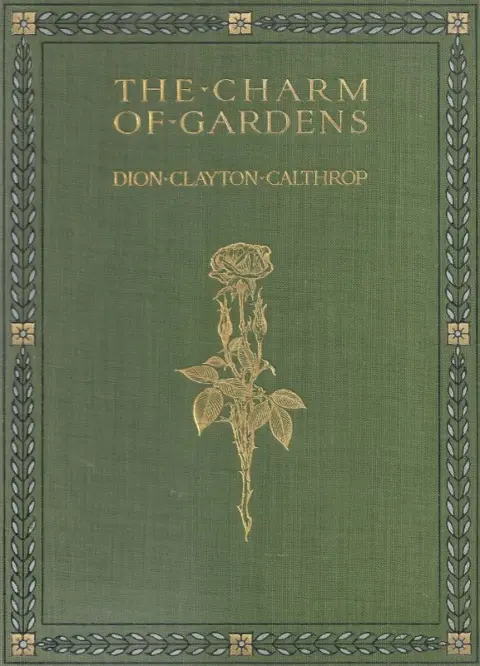
"The Charm of Gardens" by Dion Clayton Calthrop is a reflective narrative on the beauty and significance of gardens, likely written in the early 20th century. The work explores the emotional and nostalgic ties people share with gardens and flowers, illustrating how they evoke memories and foster a sense of peace and connection to nature. The opening of the narrative presents a vivid description of the author's longing for the countryside and the rejuvenating power of flowers. The writer recalls a moment when the scent of Primroses brought back memories of his youth, depicting how different flowers symbolize various experiences and emotions from his life. He delves into the philosophy of gardening, expressing how tending to a garden represents more than mere cultivation—it's a way to celebrate life's seasons and weave together memories, nature, and identity.
Introduction adapted from the source catalogue; source summaries may be automatically generated.
Free to read · English · 65,832 words · No account needed
MAKE TIME FOR A GOOD BOOK
On by default. Untick to stop anonymous reading totals. Each page counts after 10 seconds in view. How this works.
Anonymous counting is on unless you have switched it off.
Containing 24 full-page Illustrations in Colour. Large crown 8vo, cloth, gilt top. Price 6s. net (by post, 6s. 4d.)
NOTE.—Kew Gardens contain what seems the completest botanical collection in the world, handicapped as this is by a climate at the antipodes of Eden and by a soil that owes less to Nature than to patient art. Before being given up to public pleasure and instruction, this demesne was a royal country seat, especially favoured by George III in days when it would be almost as rural as now is Osborne or Sandringham. This homely king had two houses here, and began to build a more pretentious palace, a design cut short by his infirmities, but for which Kew might have usurped the place of Windsor. For nearly a century it had a close connection with the Royal Family, as the author illustrates in his story of the village and the gardens, while the artist has found most effective subjects in the rich vegetation gathered into this enclosure and in the relics of its former state.
“Mr. Martin’s drawings add much to the value of this fascinating book.”—T.P.’s Weekly.
“Mr. Martin’s pictures are charming.”—Pall Mall Gazette.
Transcriber’s note:
Headings and subheadings in the Kalendarium, pages 108-148, have been
regularised.
Variations in spelling in the Kalendarium have been retained.
Illustration captions have been regularised.
Page 21, full stop inserted after ‘light,’ “in a fluster of bright
light.”
Page 38, double quote inserted after ‘madam,’ “this is why, madam,” I
could”
Page 55, full stop inserted after ‘Head,’ “from some once lovely Head.”
Page 62, comma inserted after ‘led,’ “me, willing to be led,”
Page 62, comma inserted after ‘thread,’ “Though by a slender thread,”
Page 76, ‘Falerian’ changed to ‘Falernian,’ “sat drinking Falernian wine
poured”
Page 82, ‘glimmmering’ changed to ‘glimmering,’ “glimmering amidst their
greenery”
Page 102, ‘Orgilly’ changed to ‘or Gilly,’ “Clove Pink, or Gilly-flower,
a variety”
Page 116, ‘Minabile’ changed to ‘Mirabile,’ “Flos Africanus, Mirabile
Peruvian”
Page 126, ‘alter’ changed to ‘after,’ “Ranunculus’s after rain (if it
come”
Page 129, ‘Paterre’ changed to ‘Parterre,’ “In the Parterre, and Flower”
Page 133, ‘Michaemas’ changed to ‘Michaelmas,’ “Malacoton, which lasts till Michaelmas”
Page 134, ‘Candi-tufts’ changed to ‘Candy-tufts,’ “Larks-heel, Candy-tufts, Iron-colour’d”
Page 139, ‘Cand-tufts’ changed to ‘Candy-tufts,’ “Delphinium, Nigella,
Candy-tufts”
Page 144, comma inserted after ‘Cabbages,’ “Parsneps, Turneps, Cabbages,
Cauly-flowers”
Page 151, colon struck after ‘GARDENS,’ “TOWN GARDENS”
Page 163, ‘that’ changed to ‘than,’ “more beautiful than the Almond
tree”
Page 176, ‘wheelrights’ changed to ‘wheelwright’s,’ “into the wheelwright’s saw-pit”
Page 186, ‘Aglantine’ changed to ‘Eglantine,’ “was crowned with
Eglantine”
Page 206, full stop inserted after ‘grass,’ “crickets in the grass. But
in”
Your reading position is saved on this browser. Take it to another device with a library code. Reading pages adapt to text, rather than matching a printed edition.
Dion Clayton Calthrop
BEHIND THE BOOK
This eBook is for the use of anyone anywhere in the United States and most other parts of the world at no cost and with almost no restrictions whatsoever. You may copy it, give it away or re-use it under the terms of the Project Gutenberg License included with this eBook or online at www.gutenberg.org. If you are not located in the United States, you will have to check the laws of the country where you are located before using this eBook. Read the source licence.
The original source file, including credits and licence, is retained by this library. Request an original-format copy at no charge. Please include the book title and Project Gutenberg identifier #54641.
KEEP YOUR CURIOSITY GOING

Charles G. (Charles Griffith) Ross
Hannah Webster Foster

Emily Lawless
Edwin Hamlin Carr

Charles De Lano Hine
Andrew Ure