THE CLASSIC COLLECTION✦English CostumeCLASSIC FREE BOOKS
English Costume
Dion Clayton Calthrop
THE CLASSIC COLLECTION · 1910
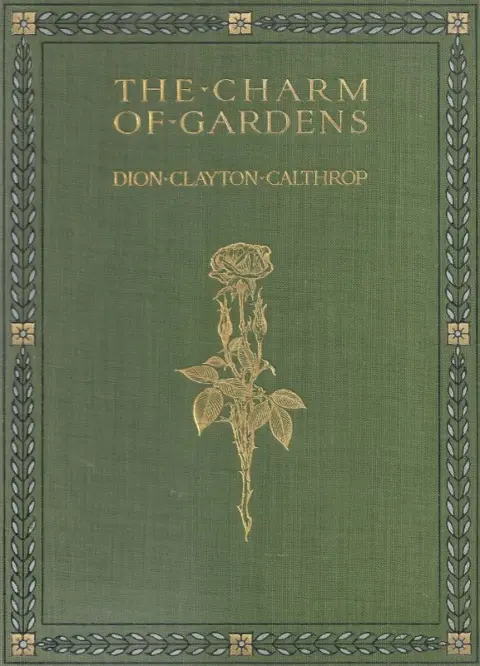
"The Charm of Gardens" by Dion Clayton Calthrop is a reflective narrative on the beauty and significance of gardens, likely written in the early 20th century. The work explores the emotional and nostalgic ties people share with gardens and flowers, illustrating how they evoke memories and foster a sense of peace and connection to nature. The opening of the narrative presents a vivid description of the author's longing for the countryside and the rejuvenating power of flowers. The writer recalls a moment when the scent of Primroses brought back memories of his youth, depicting how different flowers symbolize various experiences and emotions from his life. He delves into the philosophy of gardening, expressing how tending to a garden represents more than mere cultivation—it's a way to celebrate life's seasons and weave together memories, nature, and identity.
Introduction adapted from the source catalogue; source summaries may be automatically generated.
Free to read · English · 65,832 words · No account needed
MAKE TIME FOR A GOOD BOOK
On by default. Untick to stop anonymous reading totals. Each page counts after 10 seconds in view. How this works.
Anonymous counting is on unless you have switched it off.
That sign is for the shepherd and the traveller by night, since no ordinary being is expected to watch for rainbows by night to the detriment of his night’s rest and his morning temper. But the shepherd must keep a keen eye to such signs, and marks, day and night, all the little movements of Nature, to learn her whims. As for instance, the signs of bad weather to come:
That swallows will fly low and swiftly when the upper air is charged with moisture for then insects fly low also.
That the cricket will sing sharply.
This last, of course, in wet countries, for in dry places, as in meadows under southern mountains, there is a perfect orchestra of rasping crickets in the grass. But in the north, on the most silent and golden days, they say that the chirrup of a cricket foretells rain. Just as they say:
As hedgehogs do foresee evening storms
So wise men are for fortune still prepared.
This they say, because the story runs that a hedgehog builds a nest with the opening made to face the mildest quarter thereabout, and the back to the most prevalent wind.
Again, and this a sign everybody knows:
That distant hills look near.
As indeed they do before rain, and many times one hears—“such a place is too clear to-day”—or, “One can see such a land much too well,” and this means near rain.
Like the swallows so do rooks change their flight before rain, and so, also, do plover, for it is noticed:
That rooks will glide low on the wind, and drop quickly. And plover fly in shape almost as a kite and will not rise high, one or two of the flock being posted sentinels at the tail of the kite formation.
Then, if the shepherd is near to a dew-pit, or any water meadow, or passing by a roadside ditch he will notice:
That toads will walk out across the road. And frogs will change colour before a storm, losing their bright green and turning to a dun brown.
To all of these signs with their significance of coming rain your shepherd will give a proper prominence in his mind, marking one, and then searching for another until he is certain. His first clue on any hilly ground is:
That sheep will not wander into the uplands but keep browsing in
the plain.
Having taken note of this he turns to plants, particularly to his own weather glass, the Scarlet Pimpernel, as he sees:
That the Pimpernel closes her eye. That the down will fly from off the dandelion, the colts-foot, and from thistles though there be no wind.
Your reading position is saved on this browser. Take it to another device with a library code. Reading pages adapt to text, rather than matching a printed edition.
Dion Clayton Calthrop
BEHIND THE BOOK
This eBook is for the use of anyone anywhere in the United States and most other parts of the world at no cost and with almost no restrictions whatsoever. You may copy it, give it away or re-use it under the terms of the Project Gutenberg License included with this eBook or online at www.gutenberg.org. If you are not located in the United States, you will have to check the laws of the country where you are located before using this eBook. Read the source licence.
The original source file, including credits and licence, is retained by this library. Request an original-format copy at no charge. Please include the book title and Project Gutenberg identifier #54641.
KEEP YOUR CURIOSITY GOING

Charles G. (Charles Griffith) Ross
Hannah Webster Foster

Emily Lawless
Edwin Hamlin Carr

Charles De Lano Hine
Andrew Ure