THE CLASSIC COLLECTION✦English CostumeCLASSIC FREE BOOKS
English Costume
Dion Clayton Calthrop
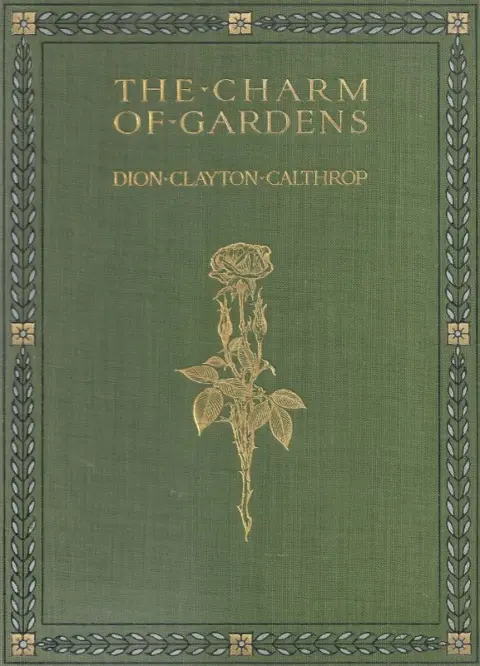
THE CLASSIC COLLECTION · 1910
"The Charm of Gardens" by Dion Clayton Calthrop is a reflective narrative on the beauty and significance of gardens, likely written in the early 20th century. The work explores the emotional and nostalgic ties people share with gardens and flowers, illustrating how they evoke memories and foster a sense of peace and connection to nature. The opening of the narrative presents a vivid description of the author's longing for the countryside and the rejuvenating power of flowers. The writer recalls a moment when the scent of Primroses brought back memories of his youth, depicting how different flowers symbolize various experiences and emotions from his life. He delves into the philosophy of gardening, expressing how tending to a garden represents more than mere cultivation—it's a way to celebrate life's seasons and weave together memories, nature, and identity.
Introduction adapted from the source catalogue; source summaries may be automatically generated.
Free to read · English · 65,832 words · No account needed
MAKE TIME FOR A GOOD BOOK
On by default. Untick to stop anonymous reading totals. Each page counts after 10 seconds in view. How this works.
Anonymous counting is on unless you have switched it off.
Take it more broadly in the true Olympian spirit. Take it that a house and garden is an Olympus to each man and woman who is happy, and you will see that your heaven for all its head in the clouds has its feet upon the earth. Then what do the flowers mean? Lilies with pale faces like a procession of nuns. Roses all queens of regal beauty. Violets to whom the thrushes sing, deny it if you dare. Majestic Peonies. The plants of soft and courtly wisdom, Thyme, Rosemary, Myrtle. Lavender, the House-dame, prim, neat, beloved of bees and butterflies, Quakerishly dressed in grey with a touch of unsectarian colour, yet vaguely an ecclesiastical purple; rather slim, with full skirts, with the suggestion that Cowslips are her bunches of keys, and the Dandelion her clock.
One could go on for ever.
And then the gardener, like those half-immortals who worked for the gods, or some like a god of old, even, with god-like grumbles, and god-like simplicity.
They are a strange race, these gardeners, given to unexpected meals, and
sudden appearances.
“Walter!”
And after that, from some fragrant bush, or waving forest of Asparagus, a bronzed man stands erect, as if he had sprung from the bowels of the earth, where he had been contemplating the mysteries of human weakness.
And how amazed they are with us and our foibles and follies. We remonstrate—a question of weeds, perhaps,—and are listened to with incredulous wonder.
“Weeds!” says the being, “weeds!”
He emerges more completely from the bush, showing a hand occupied with a lot of little twigs, and a knife rather like himself to look at—not too sharp.
As if a voice from the unknown had wafted over the desert, he stands in wonder, looking reproachfully at those who have interrupted his toil.
“The weather makes them grow.” Of course it does. We knew that. We did not come here to call Walter to ask him what made weeds grow, but to know why he had not weeded, at our special request, the Carnation border.
From a cavernous pocket in a much-mended pair of trousers of a shape never designed by mortal hands, he produces a quantity of felt strips, and some wall nails.
We repeat our original suggestion, that the Carnation border is choked
with weeds.
“So it be!”
Then, after the great being has taken observations of the sky, causing him to screw up one eye and wag his head sagely as if he had communication with the unseen powers, he admits that he has been watering the greenhouse.
“The Vines take a deal o’time about now.”
Your reading position is saved on this browser. Take it to another device with a library code. Reading pages adapt to text, rather than matching a printed edition.
Dion Clayton Calthrop
BEHIND THE BOOK
This eBook is for the use of anyone anywhere in the United States and most other parts of the world at no cost and with almost no restrictions whatsoever. You may copy it, give it away or re-use it under the terms of the Project Gutenberg License included with this eBook or online at www.gutenberg.org. If you are not located in the United States, you will have to check the laws of the country where you are located before using this eBook. Read the source licence.
The original source file, including credits and licence, is retained by this library. Request an original-format copy at no charge. Please include the book title and Project Gutenberg identifier #54641.
KEEP YOUR CURIOSITY GOING

Charles G. (Charles Griffith) Ross
Hannah Webster Foster

Emily Lawless
Edwin Hamlin Carr

Charles De Lano Hine
Andrew Ure