THE CLASSIC COLLECTION✦The art of fictionCLASSIC FREE BOOKS
The art of fiction
Walter Besant
THE CLASSIC COLLECTION · 1898
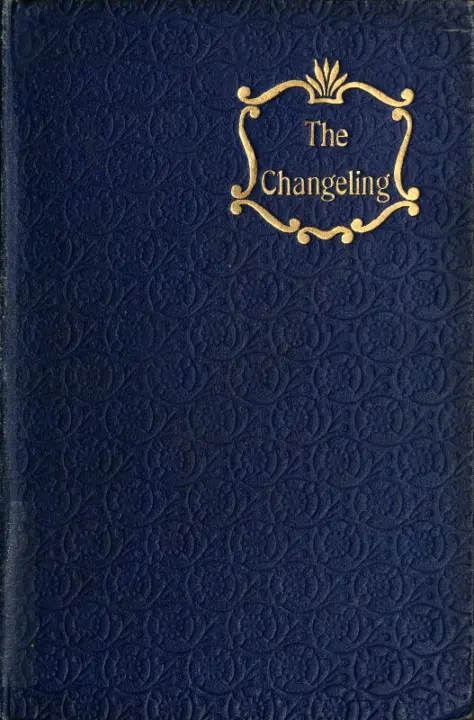
"The Changeling" by Walter Besant is a novel written in the late 19th century. The narrative revolves around themes of identity and the consequences of choices surrounding adoption and substitution of children, particularly focusing on a young mother seeking a solution to her grief after the loss of her son. The story unfolds with a prominent lady who is driven by desperation to adopt a child, leading to a complex web of emotions and moral dilemmas. The opening of the novel introduces us to a doctor who assists a young lady in adopting a child, as she is grieving her own deceased son. The scene is filled with tension as the lady expresses her sympathy for the child's biological mother, revealing the emotional weight of her decisions. The dialogue between the doctor and the lady hints at deeper themes of heredity and the unknown consequences of her actions. As the narrative progresses, it is clear this seemingly clandestine transaction sets off a chain of events that intertwines their lives irrevocably, setting the stage for explorations of familial bonds, identity, and societal expectations.
Introduction adapted from the source catalogue; source summaries may be automatically generated.
Free to read · English · 84,769 words · No account needed
MAKE TIME FOR A GOOD BOOK
On by default. Untick to stop anonymous reading totals. Each page counts after 10 seconds in view. How this works.
Anonymous counting is on unless you have switched it off.
"We all dine together," she said--"my friends and I at our table, my servants below; we are one family. My ancestors"--her cousins sat on each side of her--"dined in this fashion. There is something in humanity which makes those friends who break bread together."
"It is like a picnic five hundred years back," said Humphrey. "I have heard talk, all my life, about this place. My father always intended to visit it, but at last grew too old."
Hilarie watched her two guests. The taller, Humphrey, had the manners of society; he seemed to be what the world, justly jealous, allows to be a gentleman. Yet he had a certain coldness of manner, and he accepted the beauty of this ancient place without surprise or enthusiasm.
"What are you by profession, Cousin Humphrey?" she asked.
"Nothing, as yet; I have been travelling since I left Cambridge." He laid his card before her--"Sir Humphrey Woodroffe."
"You have the title from your father. I hope you will create new
distinctions for yourself."
"I suppose," he said coldly, "that I shall go into the House. My people seem to want it. There are too many cads in the House, but it seems that we cannot get through the world without encountering cads." He looked through his hostess, so to speak, and upon the third cousin, perhaps accidentally.
"You certainly cannot," observed the third. "For instance, I am
sitting with you at luncheon."
"You will play something presently, Dick, won't you?"
Molly, sitting on the other side of the table, saw a quick flush upon her friend's cheek, and hastened to avert further danger. One may be a cad, but some cads are sensitive to an openly avowed contempt for cads.
Dick laughed. "All right, Molly. What shall I play? Something serious, befitting the place? Luncheon is over--I will play now, if you like." He looked down the hall. "That, I suppose, is the musicians' loft?"
"That is the musicians' gallery. It is a late addition--Elizabethan, I
believe."
"The musicians' gallery? Well, Miss Woodroffe, I am the music. Let me play you something in return for the fine ancestors you have given me, and for your gracious hospitality."
He took up his violin-case, to which he had clung with fidelity, marched down the hall, climbed up into the gallery, and began to tune his fiddle.
"Hilarie," Molly said, "Dick plays in the most lovely way possible. He carries you quite out of yourself. That is why everybody loves him so."
However, the artist, standing up alone in the gallery, struck a chord,
and began to play.
Your reading position is saved on this browser. Take it to another device with a library code. Reading pages adapt to text, rather than matching a printed edition.
Walter Besant
Walter Besant

Walter Besant

Walter Besant
BEHIND THE BOOK
This eBook is for the use of anyone anywhere in the United States and most other parts of the world at no cost and with almost no restrictions whatsoever. You may copy it, give it away or re-use it under the terms of the Project Gutenberg License included with this eBook or online at www.gutenberg.org. If you are not located in the United States, you will have to check the laws of the country where you are located before using this eBook. Read the source licence.
The original source file, including credits and licence, is retained by this library. Request an original-format copy at no charge. Please include the book title and Project Gutenberg identifier #49035.
KEEP YOUR CURIOSITY GOING
Coulson Kernahan

Maurice Baring
Frances Wright
Cécile Tormay

Frederic Jesup Stimson

W. H. P. (William Henry Pope) Jarvis