THE CLASSIC COLLECTION✦The art of fictionCLASSIC FREE BOOKS
The art of fiction
Walter Besant
THE CLASSIC COLLECTION · 1898
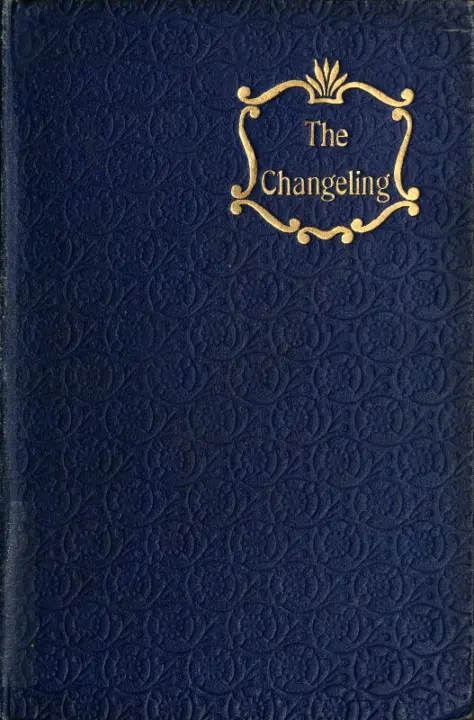
"The Changeling" by Walter Besant is a novel written in the late 19th century. The narrative revolves around themes of identity and the consequences of choices surrounding adoption and substitution of children, particularly focusing on a young mother seeking a solution to her grief after the loss of her son. The story unfolds with a prominent lady who is driven by desperation to adopt a child, leading to a complex web of emotions and moral dilemmas. The opening of the novel introduces us to a doctor who assists a young lady in adopting a child, as she is grieving her own deceased son. The scene is filled with tension as the lady expresses her sympathy for the child's biological mother, revealing the emotional weight of her decisions. The dialogue between the doctor and the lady hints at deeper themes of heredity and the unknown consequences of her actions. As the narrative progresses, it is clear this seemingly clandestine transaction sets off a chain of events that intertwines their lives irrevocably, setting the stage for explorations of familial bonds, identity, and societal expectations.
Introduction adapted from the source catalogue; source summaries may be automatically generated.
Free to read · English · 84,769 words · No account needed
MAKE TIME FOR A GOOD BOOK
On by default. Untick to stop anonymous reading totals. Each page counts after 10 seconds in view. How this works.
Anonymous counting is on unless you have switched it off.
"I did. Perhaps it may be worth your while to listen. Perhaps not. If it is, you may take your elbow off the shelf, and try not to look as if you were gazing at a chipmunk in a cage. Understand, sir that I will receive neither your pity nor your contempt. If you do not change your manner, I will show you, by a highly practical method, that you have made a mistake."
There was something in the man's eyes which compelled obedience. Besides, although he was forty years older than the other, there was a toughness about his build which might be formidable.
Humphrey instantly changed both his look and his attitude, and took a
chair.
"You may go on," he said sulkily, "as soon as you please."
"When I heard about you, sir, in connection with the little transaction we know of, I began to inquire secretly whether we were wise to go on. 'If he turns out unworthy,' I said, 'we'd better stop where we are, and take no further steps in the matter.'"
"I shall probably understand as we go along," said Humphrey. "At
present----"
"You will understand, presently. I can't say, sir, that the character I have obtained of you is encouraging."
"Kind, however, of people to give one a character at all." He threw back his head into his hands, and stretched out his legs, and looked up into the ceiling.
"I don't understand," John Haveril replied, "the talk that says one thing and means another. I like plain and straightforward things. However, I hear of you that you gamble and drink, and that you run after dancing-girls; and that you believe, like many young Englishmen of fortune, that you belong to a separate caste, and not to the world, like common people."
"Unfortunately, Mr. Haveril, we have to belong to the world. I assure you that I would much rather not."
"You've got to. However, we did go on; I have not told the person chiefly interested all I'd heard about you, nor the half. We've now brought our business to an end. That is, we've proved up to the hilt what was at first only a suspicion."
"Again, I dare say I shall understand you presently."
"The question is, whether you know the secret. 'If,' I said, 'he does know the secret, and still carries on the pretence, the chap isn't worthy of our notice. Let's wipe our feet on him, and go on our way.'"
"Wipe--your--feet? You like plain and straightforward things, Mr. Haveril. Surely it is a poetical and an imaginative case--'wipe your feet'--upon--a--'chap.'"
Your reading position is saved on this browser. Take it to another device with a library code. Reading pages adapt to text, rather than matching a printed edition.
Walter Besant
Walter Besant

Walter Besant

Walter Besant
BEHIND THE BOOK
This eBook is for the use of anyone anywhere in the United States and most other parts of the world at no cost and with almost no restrictions whatsoever. You may copy it, give it away or re-use it under the terms of the Project Gutenberg License included with this eBook or online at www.gutenberg.org. If you are not located in the United States, you will have to check the laws of the country where you are located before using this eBook. Read the source licence.
The original source file, including credits and licence, is retained by this library. Request an original-format copy at no charge. Please include the book title and Project Gutenberg identifier #49035.
KEEP YOUR CURIOSITY GOING
Coulson Kernahan

Maurice Baring
Frances Wright
Cécile Tormay

Frederic Jesup Stimson

W. H. P. (William Henry Pope) Jarvis