
Lucia in London
E. F. (Edward Frederic) Benson
THE CLASSIC COLLECTION · 1904
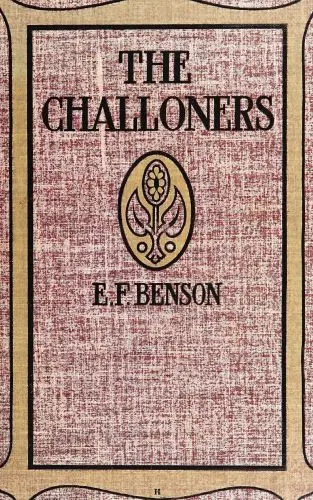
"The Challoners" by E. F. Benson is a novel written in the early 20th century. The story revolves around the Challoner family, focusing particularly on the experiences and perspectives of Helen and her brother Martin as they navigate their lives entangled with familial expectations, societal norms, and their own desires. The narrative hints at greater themes of duty, love, the conflict between individual aspirations and family obligations, as well as the delicate balance between artistic inclinations and moral responsibilities. The opening of the book introduces readers to Helen Challoner, who is enjoying a serene moment in the garden while reading "The Mill on the Floss," a choice that reflects her more liberal views compared to those of her strict father, the Reverend Sidney Challoner. This scene sets the foundation for the dynamic between the siblings, particularly highlighting Helen's frustration with her restricted life in a vicarage characterized by stringent moral expectations. As they discuss literature and their conflicting aspirations, their playful exchanges reveal deeper tensions within the family, particularly between Martin's artistic inclinations and their father's stern principles. The interaction also elicits hints about the father's struggle to balance discipline with love in a changing world, making it clear that this relationship will unfold as a pivotal element of the story.
Introduction adapted from the source catalogue; source summaries may be automatically generated.
Free to read · English · 96,939 words · No account needed
MAKE TIME FOR A GOOD BOOK
On by default. Untick to stop anonymous reading totals. Each page counts after 10 seconds in view. How this works.
Anonymous counting is on unless you have switched it off.
She sat quite still for a moment, the book lying in her lap, looking with misty, unseeing eyes over the great stretch of open land and sky in front of her. In the immediate foreground lay the croquet-lawn, with disjected mallets and aimless balls scattered about, while slowly across it, like some silent tide, the shadows grew and lengthened. Beyond, at the top of a grassy bank still in sunlight, ran a terraced walk bordered deeply with tall herbacious plants; farther out of sight behind the border were a few fields, water meadows of the chalk-stream, and beyond again and above rose the splendid and austere line of Hampshire downs, tanned with this month of English summer to a russet mellowness. A sky of untarnished blue held a slip of pale and crescent moon, and the splendour and the unutterable sadness of evening, of a day gone, brooded a sweet, regretful presence over everything.
Suddenly the girl sat up.
“Martin!” she cried, “Martin!”
“Well?” asked a very lazy voice from a hammock between two trees at the
end of the lawn.
“Come here. Oh, do come. I can’t shout.”
The hammock-ropes wheezed and creaked, and a tall, loose-limbed boy, looking not much more than twenty, strolled over to where she sat.
“I’ve won my bet,” he said; “so pay up, Helen. I said the end would make you cry. You are crying, you know. I count that crying.”
“I know. I’ll pay all right,” she said. “I almost wish it had been
more.”
“So do I,” said Martin. “That’s easily arranged then.”
Helen paid no attention to this.
“Oh, Martin, those two coming together like that at the end. And that
beast, that beast----“
“Stephen?”
“Yes, among others. But Tom particularly. They none of them knew, they none of them guessed what she, what Maggie was. Oh, oh! How horribly sad, and how horribly beautiful--like, like this evening.”
Martin took out his cigarette-case.
“For you?” he asked.
“No; you gave me one which I haven’t--I don’t know where it is. Oh, it’s smoking itself on the grass. Oh, my goodness! Anyhow, Maggie lived; that is the point. Dreadful people, dreadful circumstances, all that one would think would make living impossible, surrounded her. But she managed it. And what am I to do, please?”
Martin laughed.
“I wonder if you know how like you that is,” he said.
“What is?”
Your reading position is saved on this browser. Take it to another device with a library code. Reading pages adapt to text, rather than matching a printed edition.
E. F. (Edward Frederic) Benson

E. F. (Edward Frederic) Benson

E. F. (Edward Frederic) Benson

E. F. (Edward Frederic) Benson
BEHIND THE BOOK
This eBook is for the use of anyone anywhere in the United States and most other parts of the world at no cost and with almost no restrictions whatsoever. You may copy it, give it away or re-use it under the terms of the Project Gutenberg License included with this eBook or online at www.gutenberg.org. If you are not located in the United States, you will have to check the laws of the country where you are located before using this eBook. Read the source licence.
The original source file, including credits and licence, is retained by this library. Request an original-format copy at no charge. Please include the book title and Project Gutenberg identifier #57002.
KEEP YOUR CURIOSITY GOING
Coulson Kernahan

Maurice Baring
Frances Wright
Cécile Tormay

Frederic Jesup Stimson

W. H. P. (William Henry Pope) Jarvis