THE CLASSIC COLLECTION✦Tales of the uneasyCLASSIC FREE BOOKS
Tales of the uneasy
Violet Hunt
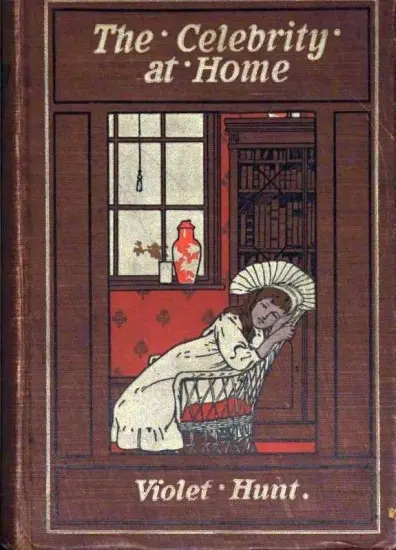
THE CLASSIC COLLECTION · 1904
"The Celebrity at Home" by Violet Hunt is a fictional narrative written in the early 20th century. The story revolves around the unconventional life of the Taylor family, exploring their domestic dynamics and the humorous, sometimes painful, truths about fame, family, and childhood. The narrative perspective is particularly engaging as it is told through the eyes of a young girl named Tempe, who aspires to document her life with the honest and refreshing candor of a budding author. The opening of the book introduces us to Tempe, a sharp-witted child who feels her childhood is not nearly as blissful as it ought to be. Through her reflections, we gain insight into her family: her father, George, is an author with a complicated relationship with his wife and children, while her sister, Ariadne, embodies a more traditional, genteel femininity. Tempe portrays her dissatisfaction with the constraints imposed by adulthood, her observations of her family’s social standing, and her aspirations for a freer, more expressive life. As she begins to document her thoughts with aspirations of becoming a writer, Tempe’s unique voice sets a tone filled with both levity and sincerity, inviting readers to explore the complexities of the Edwardian family life alongside her.
Introduction adapted from the source catalogue; source summaries may be automatically generated.
Free to read · English · 81,075 words · No account needed
MAKE TIME FOR A GOOD BOOK
On by default. Untick to stop anonymous reading totals. Each page counts after 10 seconds in view. How this works.
Anonymous counting is on unless you have switched it off.
"None of my brother-in-law's things do!" Aunt Gerty went on calmly. "He is a prize wrecker--of women and magazines!"
Mrs. Mander looked startled, and Mother tried to change the
conversation.
"Oh, he's a law unto himself, my brother-in-law is," went on Aunt Gerty. "But I don't think he'll convert Miss Mander to his views."
"I hope not," said Mrs. Mander, "for I notice that if you make a law unto yourself, you generally have to make a society unto yourself too! At least as far as women are concerned."
"People will always let you go your own way," said Mother; "but the point is, will they come with you--join with you in a pleasant walk?"
"Well," said Mrs. Mander, "my daughter is the most headstrong of young women. I can't control her, or you may be sure I should not have allowed her to undertake this post of secretary to Mr. Vero-Taylor."
"I gathered as much," said Mother, not offended a bit. "But I will look after her well!" She does; she gives her cod-liver oil every day to make her fat, and breakfast in bed once a week.
Christina says Lady Scilly is a female Mecænas! Ben says she a minx. Ben hates her, because she makes a fool of George, and he says Ariadne is a cad to accept her old dresses and wear them, and go out with her, but then, what is Ariadne to do? She likes to go to parties, and Mother won't go anywhere, she is quite obstinate about that. I must say that George doesn't try to persuade her much. You see, he isn't used to having a wife, socially speaking, after going about as a bachelor all those years!
George agreed to have a party here, to please Lady Scilly, but Christina is quite sure that the idea had occurred to him already, for why should he build a house for purposes of advertisement, and then hide it under a bushel? A successful party is more good than fifty interviews, so she says, and sells an edition. She knows a great deal about geniuses. She says the hermit-plan would not suit George. I asked her what the hermit-plan was. She said she had known an artist, who took a lovely old house in the suburbs of London, and lived there, and never went out; anybody who cared must come out to see him, and then it was not so easy, for his Sundays were only for a select few--very selected. He only gave tea and bread-and-butter--very little butter--and no table-cloth--plain living, and high prices, for his pictures cost a lot, though he pretended he did not care if he sold them or not; in fact, it cut him to the heart to see any of them go out into the great cold brutal world, and he never exhibited in exhibitions, but in an empty room in his own house. He said, in fun, I suppose, that if the Academy were to elect him to be an R.A., he should put the matter into the hands of his solicitors. The end of that man was, she said, that he did become a Royal Academician, quite against his will, and princes and princesses of the blood used to come and have tea with him, without a table-cloth. But that would not do for George, for he isn't at all hermit-like, and he can make epigrams! They say that is his forte. I hate them myself, I think they are rude, and only a clever way of hurting people's feelings so that they can't complain, but then, of course, the family gets them in the rough; epigrams, like charity, begin at home.
Your reading position is saved on this browser. Take it to another device with a library code. Reading pages adapt to text, rather than matching a printed edition.
BEHIND THE BOOK
This eBook is for the use of anyone anywhere in the United States and most other parts of the world at no cost and with almost no restrictions whatsoever. You may copy it, give it away or re-use it under the terms of the Project Gutenberg License included with this eBook or online at www.gutenberg.org. If you are not located in the United States, you will have to check the laws of the country where you are located before using this eBook. Read the source licence.
The original source file, including credits and licence, is retained by this library. Request an original-format copy at no charge. Please include the book title and Project Gutenberg identifier #41556.
KEEP YOUR CURIOSITY GOING
Coulson Kernahan

Maurice Baring
Frances Wright
Cécile Tormay

Frederic Jesup Stimson

W. H. P. (William Henry Pope) Jarvis