THE CLASSIC COLLECTION✦An outlaw’s diary: the CommuneCLASSIC FREE BOOKS
An outlaw’s diary: the Commune
Cécile Tormay
THE CLASSIC COLLECTION · 1844
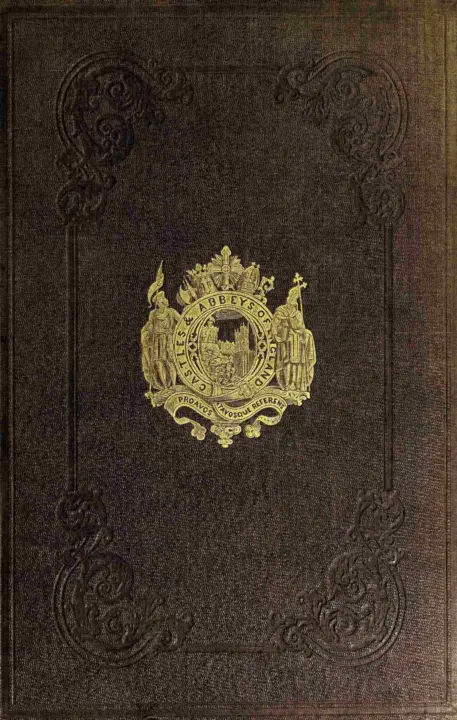
"The Castles and Abbeys of England; Vol. 1 of 2" by William Beattie is a historical account written in the early 19th century. The work explores the significance and history of England's castles and abbeys, serving as monumental pillars within the nation's narrative. Beattie likely seeks to evoke a sense of patriotism and nostalgia for the architectural and cultural heritage embodied in these structures. At the start of the book, the author emphasizes the enduring interest that England's castles and abbeys hold due to their historical significance, beauty, and the legacies of the individuals associated with them. Beattie describes how these edifices symbolize patriotism, piety, and social life, presenting them not only as military strongholds but also as centers of culture and community celebrations. He introduces the Castle of Arundel, highlighting its ancient lineage and the notable figures connected to its history, setting the stage for a deeper exploration of various significant locations throughout England in subsequent chapters.
Introduction adapted from the source catalogue; source summaries may be automatically generated.
Free to read · English · 150,641 words · No account needed
MAKE TIME FOR A GOOD BOOK
On by default. Untick to stop anonymous reading totals. Each page counts after 10 seconds in view. How this works.
Anonymous counting is on unless you have switched it off.
{*} His late Majesty William IV., while Duke of Clarence.
{**} The late Duchess-Countess of Sutherland.
[2] Asser de Ælfred. rebus. gestis, fol. 23.; Athelmo vero fratris mei filio, &c.--Appendix to this vol. p. 331.
[3] Ibid.--Camden, 308. 230. See the original in Append. to this
volume, p. 331.
[4] Ingulph. folio 510.--Hardyng, p. 229.--Simeon Dunelmensis,
184.--Hovedon, fol. 254.
[5] Caraccioli, p. 5.--Dallaway.--Archit. in England.--Forty-nine Castles are enumerated in Domesday Book, that of Arundel only, as existing in the reigns of Edward the Confessor, p. 269. The Castle of Arundel dates perhaps its true origin from that monarch, King Alfred.--p. 316.
[6] Camden, 229-30. Fama vero tota est ex Castro, quod Saxonico imperio flouit. See Append. p. 331.
[7] Wilhelm. Gemitens, f. 686. Ingentes possessiones habuit in diversis
regionibus Normanniæ.
[8] Dugd. Bar. 1. 26.--Camden, p. 86. “Normanni.” Primam Normannorum aciem ducebant Rogerus Montegomericus et Guil. Fitzosberne.
[9] Ord. Vitalis De Gul. primo. Excerp. p. 208-254. A Wilhelmo rege Anglorum Comitatus Arundelliæ, et Salopesberiæ dono accepit.
Ao. Dni. 1071. Rogerus de Montegomerici, Comes Arundel, fuit pacificè seizit’, &c. Inprimis de Castro Arundell, forest’ Warren’ hundr’ et aliis libert’ spectant’ ad Honorem Castri, &c. Tierney, 1. 14.
[10] Dallaway’s Rape of Arundel.--Hist. of Sussex.
[11] Estimated at 57·460 acres. Hist. of Arundel, p. 21.
[12] Honour, in this sense, means a superior Seignory to which other lordships and manors owe suit and service, and which itself holds only of the Sovereign.--Feudal Syst.
[13] Orderic, 522.--Excerpt. p. 254.--App. 332.
[14] Order. Vitalis, 708. monachile seema devotus suscepit, etc.--v.
also Dugd. Bar. i, 28.
[15] Girald. Cambrens. Itinerar. p. 194.--Dugd. Bar.
[16] Polyd. Virgil, f. 173.--Hovedon, f. 268.--Speed, 445.--Grafton, i. 177.--Tierney, i. 158.--Append. to this Volume, p. 332.
[17] History of Arundel, i. 15. Orderic Vitalis, p. 708.
[18] Chalmers’ Caledonia, vol i. 572--4. Anno 1158. “Ego Milcolumbus, rex, confirmavi, Waltero, filio Alain (Fitzalan), Dapifero meo, et heredibus suis, in feodo et hereditate, senescalliam meam ... ita bene et plenarie, sicut Rex David senescalliam suam ei dedit.” In consequence of this grant, Richard Fitzalan, Earl of Arundel, sold the stewardship as an hereditary possession in 1336 to Edward the Third. Sec Dugd. Bar. i. 314.--Append. to this Vol. p. 334.
[19] Mem. Howard Family--Descent of the Earldom, in Tierney’s Hist. and Antiq. of Arundel, vol. i.
[20] See Appendix to this vol. p. 338, also Ellis’s Metrical Romances,
vol. ii. p. 245.
[21] Castrum Harundel T. R. E. reddebᵈᵉ qoda molⁱⁿᵒ XL. solⁱᵈ. et de iiibus conuviis (conviviis?) XX solⁱᵈ. et de uno pasticio XX solⁱᵈ. etc. etc.--Domesday Survey, quoted by Tierney.
Your reading position is saved on this browser. Take it to another device with a library code. Reading pages adapt to text, rather than matching a printed edition.
BEHIND THE BOOK
This eBook is for the use of anyone anywhere in the United States and most other parts of the world at no cost and with almost no restrictions whatsoever. You may copy it, give it away or re-use it under the terms of the Project Gutenberg License included with this eBook or online at www.gutenberg.org. If you are not located in the United States, you will have to check the laws of the country where you are located before using this eBook. Read the source licence.
The original source file, including credits and licence, is retained by this library. Request an original-format copy at no charge. Please include the book title and Project Gutenberg identifier #63088.
KEEP YOUR CURIOSITY GOING
Cécile Tormay

Moritz Busch
John L. Ransom
Frances Wright
Cécile Tormay

Mabel Potter Daggett