THE CLASSIC COLLECTION✦On the Trail of Grant and LeeCLASSIC FREE BOOKS
On the Trail of Grant and Lee
Frederick Trevor Hill
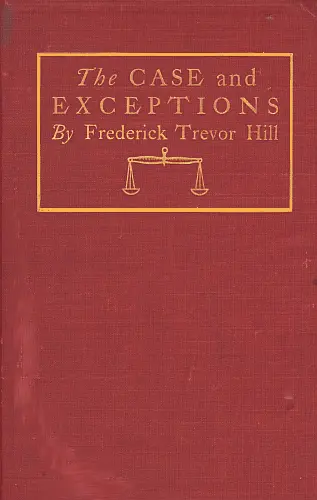
THE CLASSIC COLLECTION · 1900
"The Case and Exceptions: Stories of Counsel and Clients" by Frederick Trevor Hill is a collection of legal-themed short stories written in the late 19th century. The book centers on the intricacies of the law, exploring the relationships and conflicts between various lawyers and their clients. Through a series of narratives, it delves into the moral dilemmas, passionate defenses, and unforeseen consequences faced by legal practitioners in their pursuit of justice. At the start of the collection, a lawyer is in the courtroom, awaiting the jury's verdict on a case that has been a source of immense personal strain for him. He reflects on his deep friendship with his client, Godfrey Warren, who is on trial for the murder of a man who harmed his beloved dog, Fantine. The lawyer grapples with his sense of failure in representing Warren and is tormented by the thought of his friend's fate being decided by indifferent jurors. This opening sets a tone of emotional intensity and legal complexity, laying the groundwork for a profound examination of the human experience within the legal system.
Introduction adapted from the source catalogue; source summaries may be automatically generated.
Free to read · English · 43,637 words · No account needed
MAKE TIME FOR A GOOD BOOK
On by default. Untick to stop anonymous reading totals. Each page counts after 10 seconds in view. How this works.
Anonymous counting is on unless you have switched it off.
To Grafton the case was indeed important. It involved all he had in the world. It had seemed a simple case to him when he first brought it to his attorney, but matters had not gone smoothly from the start. Delay and postponement were followed by more delay and further postponement.
"The defendants were putting up a stiff fight," his attorney told him. What about? Well, they had "demurred," or "counterclaimed," or "made a motion," or "appealed,"--had done some of these things, or all of them--goodness knows just what--it was not very clear.
Why couldn't his case be tried? Well, they were "stayed by appeal," or "enjoined pending a motion," or were "stricken off the calendar." Some of these things, or all of them, had happened. "But the fact was," his attorney told him, "the defendant's Counsel stood in too well with the Court--he really ought to retain Mr. Harter."
So Mr. Harter was retained, and the case bristled with nice legal points and pretty questions of practice, to the utter amazement of Grafton, who blindly stumbled along in the ruck of the legal battle, hopelessly confused and growing daily more and more anxious, like the suitor in Jarndyce vs. Jarndyce.
But such a case as Jarndyce vs. Jarndyce could never happen in New York, because, as any lawyer can tell you, there is no Court of Chancery, or anything like----
Well, there is no Court of Chancery.
The argument of Mr. Coates was ably sustained, and Mr. Harter's reply was so masterly that Col. Partridge said in his rejoinder that nothing but his knowledge of the law kept him from being persuaded.
The Court laughed, and the officials laughed, and the listening Bar laughed. Everyone laughed except Grafton, who had no sense of humour, anyway.
But at last it was over.
"Well, Mr. Grafton, I hope you are satisfied--I feel sure his Honour was with us.... Holden, hand up your brief.... It was very good, Sir.... Mr. Grafton, this is young Mr. Holden of our office who wrote the brief for you on the motion to-day--and wrote it well, too."
Holden blushed like a school-girl as he shook Mr. Grafton's hand. It was no small thing to be praised by Mr. Harter at any time, but about "Grafton vs. The Milling Companies," it was positive distinction.
Mr. Harter was right about the Court being with him, for the plaintiff
won that motion.
He was right again in the two appeals which followed the decision. He was right on several other like occasions and won no less than six different motions and five appeals by the end of the next three years.
But the case didn't get to trial.
Your reading position is saved on this browser. Take it to another device with a library code. Reading pages adapt to text, rather than matching a printed edition.
BEHIND THE BOOK
This eBook is for the use of anyone anywhere in the United States and most other parts of the world at no cost and with almost no restrictions whatsoever. You may copy it, give it away or re-use it under the terms of the Project Gutenberg License included with this eBook or online at www.gutenberg.org. If you are not located in the United States, you will have to check the laws of the country where you are located before using this eBook. Read the source licence.
The original source file, including credits and licence, is retained by this library. Request an original-format copy at no charge. Please include the book title and Project Gutenberg identifier #32221.
KEEP YOUR CURIOSITY GOING

Herman W. Mudgett
James Holbrook

William Le Queux

Edgar Wallace
Hilaire Belloc
Marie Belloc Lowndes