THE CLASSIC COLLECTION✦The Oriel WindowCLASSIC FREE BOOKS
The Oriel Window
Mrs. Molesworth
THE CLASSIC COLLECTION · 1895
"The Carved Lions" by Mrs. Molesworth is a novel likely written in the late 19th century. The story is narrated by a young girl named Geraldine, who reflects on her childhood and the shift in her family’s circumstances. The book explores themes of nostalgia, childhood innocence, and the impending changes that arise as Geraldine is faced with new challenges and experiences. At the start of the narrative, Geraldine reminisces about her simpler days growing up with her brother Haddie in a less-than-ideal environment, yet filled with loving parents and whimsical adventures. The pivotal moment comes when Geraldine learns they will face a significant change, as her father has been offered a job abroad that might separate the family. The opening chapters introduce the characters and establish their relationships, particularly the bond between Geraldine and Haddie, as well as their love for the carved lions at a local furniture shop, which symbolizes their childhood innocence and imagination. This sense of wonder is juxtaposed against the harsh reality of their situation, setting the stage for the trials and growth that Geraldine will experience in the story.
Introduction adapted from the source catalogue; source summaries may be automatically generated.
Free to read · English · 47,766 words · No account needed
MAKE TIME FOR A GOOD BOOK
On by default. Untick to stop anonymous reading totals. Each page counts after 10 seconds in view. How this works.
Anonymous counting is on unless you have switched it off.
"Do you not see Miss Ledbury?" said Miss Aspinall sharply. I felt my cheeks get red, and I turned back towards the door to make my curtsey.
"I--I forgot," I said, and before Miss Aspinall had time to speak again, the old lady held out her hand.
"You must try to be more thoughtful," she said, but her voice was gentle. "Now give me your book," she went on, "I want to hear your French verses myself."
I handed her the book, which was open at the place. I felt very glad I had learnt the poetry so well, as I wished to please Miss Ledbury.
"Begin, my dear," she said.
I did so, repeating the six or eight verses without any mistake or
hesitation.
Miss Ledbury seemed pleased and relieved.
"Very well said--now, my dear child, that shows that you can learn well
when you try."
"Of course she can," said Miss Aspinall.
"But more important than learning your lessons well," continued Miss Ledbury, "is to be perfectly truthful and honest. What has distressed me, Geraldine, has been to hear that when--as may happen to any child--you have forgotten a lesson, or learnt it imperfectly, instead of at once owning your fault, you have tried to screen yourself behind insincere excuses. That was the case about these very verses, was it not, Miss Aspinall?" (Miss Ledbury always called her niece "Miss Aspinall" before any of us.)
"It was," replied Miss Aspinall. "Miss Broom will tell you all the particulars," and as she spoke Miss Broom came in.
Miss Ledbury turned to her.
"I wish you to state exactly what you have had to complain of in Geraldine Le Marchant," she said. And Miss Broom, with a far from amiable expression, repeated the whole--my carelessness and ill-prepared lessons for some time past, the frequent excuses I made, saying that she had not told me what she certainly had told me, my forgetting my French poetry altogether, and persisting in denying that it had been given out.
I did not hear clearly all she said, but she raised her voice at the end, and I caught her last words. I felt again a sort of fury at her, and I gave up all idea of confiding in Miss Ledbury, or of trying to please any one.
Miss Ledbury seemed nervous.
"Geraldine has said her French poetry perfectly," she said. "I think she has taken pains to learn it well."
"It is some time since she has said any lesson perfectly to me, I am sorry to say," snapped Miss Broom.
Miss Ledbury handed her the book.
"You can judge for yourself," she said. "Repeat the verses to Miss
Broom, Geraldine."
Your reading position is saved on this browser. Take it to another device with a library code. Reading pages adapt to text, rather than matching a printed edition.
Mrs. Molesworth
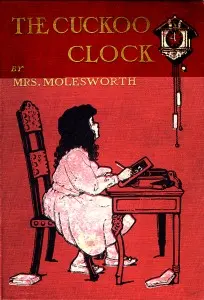
Mrs. Molesworth
BEHIND THE BOOK
This eBook is for the use of anyone anywhere in the United States and most other parts of the world at no cost and with almost no restrictions whatsoever. You may copy it, give it away or re-use it under the terms of the Project Gutenberg License included with this eBook or online at www.gutenberg.org. If you are not located in the United States, you will have to check the laws of the country where you are located before using this eBook. Read the source licence.
The original source file, including credits and licence, is retained by this library. Request an original-format copy at no charge. Please include the book title and Project Gutenberg identifier #39549.
KEEP YOUR CURIOSITY GOING
Coulson Kernahan

Maurice Baring
Frances Wright
Cécile Tormay
Francis Greenleaf Allinson & Anne C. E. (Anne Crosby Emery) Allinson

Frederic Jesup Stimson