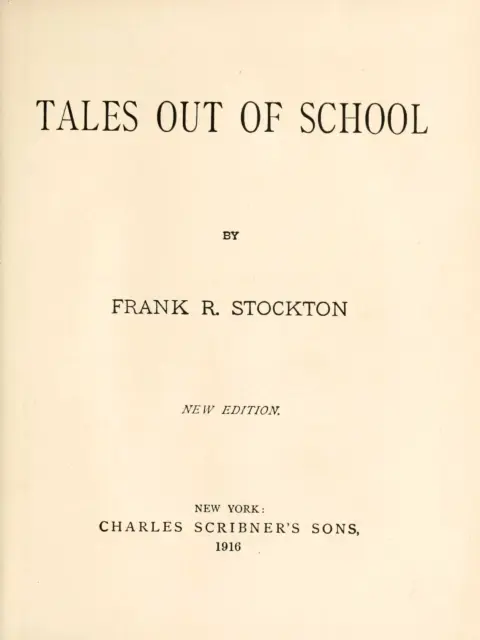
Pomona’s Travels A Series of Letters to the Mistress of Rudder Grange from her Former Handmaiden
Frank R. Stockton
THE CLASSIC COLLECTION · 1903
"The Captain's Toll-Gate" by Frank R. Stockton is a novel written in the early 20th century. The story centers around Captain John Asher, a former merchant sailor who runs a toll-gate, and his niece, Olive Asher, who has recently come to live with him. The tale explores themes of hospitality, community dynamics, and the contrast between Olive's worldly upbringing and her new, simpler life at the toll-gate, as she navigates her relationships with various local characters. At the start of the novel, we are introduced to a picturesque setting characterized by a well-kept road and toll-gate, where Olive is enthusiastically observing the approaching travelers. The narrative introduces Olive as she engages with her surroundings, showcasing her adventurous spirit and curiosity about the world. A notable interaction unfolds when she encounters Miss Maria Port, revealing local social dynamics and Olive's strong-willed character as she insists on the necessity of toll payments. The opening chapters establish Olive's charm and the nuances of her new life with her uncle while hinting at further developments, including her interactions with intriguing locals and the complexities of her background.
Introduction adapted from the source catalogue; source summaries may be automatically generated.
Free to read · English · 98,521 words · No account needed
MAKE TIME FOR A GOOD BOOK
On by default. Untick to stop anonymous reading totals. Each page counts after 10 seconds in view. How this works.
Anonymous counting is on unless you have switched it off.
"Of course not," he answered; "if I had known I am sure I would have felt that I ought not to come. But I didn't know, and so you see I am as innocent as a butterfly. More innocent, in fact, for that little wagwings knows where he ought not to go, and he goes there all the same."
Captain Asher was still at the boat, making some practical suggestions to her owner; who, being not yet forty, had many things to learn about the sails and rigging of a catboat.
"Mr. Locker," said Olive, looking at him very intently, "did you come here to renew any of your previous performances?"
"As a serenader?" said he. "Oh, no! But perhaps you mean as a
love-maker?"
"That is it," said Olive.
Mr. Locker took off his hat, and rubbed his head. "No," said he, "I didn't; but I wish I could say I did. But that's impossible. I presume I am right in assuming this impossibility?"
"Entirely," said Olive.
"And, furthermore, I truly didn't know you were here. I think you may rest satisfied that that flame is out, although--By the way, I believe I could make some verses on that subject containing these lines:
"'I do not want the flame,
I better like the coal--'
meaning, of course, that I hope our friendship may continue."
She smiled. "There are no objections to that," she said.
"Perhaps not, perhaps not," he said, clutching his chin with his hand; "but some other lines come into my head. Of course, he didn't want the coal to go out.
"'He blew too hard,
The flame revived.'"
"That will do! That will do!" cried Olive. "I don't want any more of
that poem."
"And the result of it all," said he, "is only a burnt match."
"Nothing but a bit of charcoal," added Olive.
At this moment up came the captain. Olive had told him all about Mr. Locker, and he was not glad to see him. Olive noticed this, and she spoke quickly. "Here's Mr. Locker, uncle; he has dropped down quite accidentally at this place."
"Oh" said the captain incredulously.
"You know he used to like me too much. But he knows me better now."
"Charming frankness of friendship!" said Locker.
"And as I like him very much, I am glad he is here," continued Olive.
The young man bowed in gratitude, but Olive's words embarrassed him somewhat, and he did not know exactly what would be suitable for him to say. So he took refuge in a change of subject. "Captain," said he, "can you fish?"
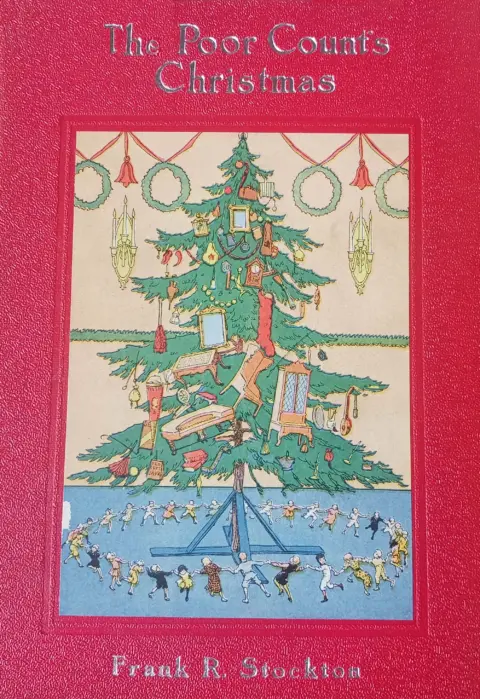
Your reading position is saved on this browser. Take it to another device with a library code. Reading pages adapt to text, rather than matching a printed edition.
Frank R. Stockton

Frank R. Stockton

Frank R. Stockton
Frank R. Stockton
BEHIND THE BOOK
This eBook is for the use of anyone anywhere in the United States and most other parts of the world at no cost and with almost no restrictions whatsoever. You may copy it, give it away or re-use it under the terms of the Project Gutenberg License included with this eBook or online at www.gutenberg.org. If you are not located in the United States, you will have to check the laws of the country where you are located before using this eBook. Read the source licence.
The original source file, including credits and licence, is retained by this library. Request an original-format copy at no charge. Please include the book title and Project Gutenberg identifier #13356.
KEEP YOUR CURIOSITY GOING
Wilfrid Scawen Blunt

E. W. (Edgar Watson) Howe
Coulson Kernahan

Maurice Baring
Frances Wright