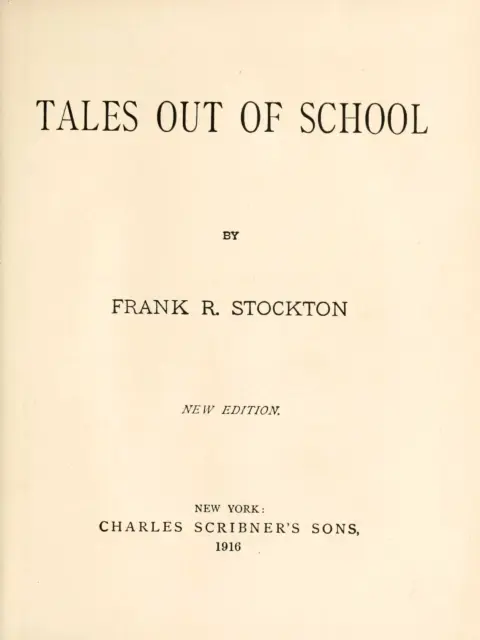
Pomona’s Travels A Series of Letters to the Mistress of Rudder Grange from her Former Handmaiden
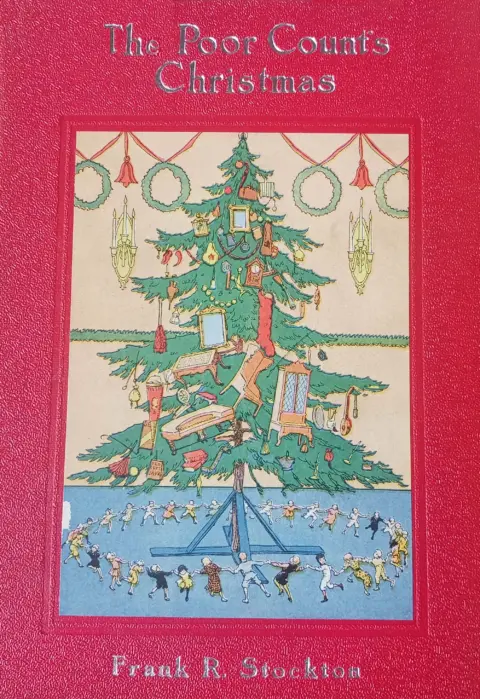
Frank R. Stockton
THE CLASSIC COLLECTION · 1903
"The Captain's Toll-Gate" by Frank R. Stockton is a novel written in the early 20th century. The story centers around Captain John Asher, a former merchant sailor who runs a toll-gate, and his niece, Olive Asher, who has recently come to live with him. The tale explores themes of hospitality, community dynamics, and the contrast between Olive's worldly upbringing and her new, simpler life at the toll-gate, as she navigates her relationships with various local characters. At the start of the novel, we are introduced to a picturesque setting characterized by a well-kept road and toll-gate, where Olive is enthusiastically observing the approaching travelers. The narrative introduces Olive as she engages with her surroundings, showcasing her adventurous spirit and curiosity about the world. A notable interaction unfolds when she encounters Miss Maria Port, revealing local social dynamics and Olive's strong-willed character as she insists on the necessity of toll payments. The opening chapters establish Olive's charm and the nuances of her new life with her uncle while hinting at further developments, including her interactions with intriguing locals and the complexities of her background.
Introduction adapted from the source catalogue; source summaries may be automatically generated.
Free to read · English · 98,521 words · No account needed
MAKE TIME FOR A GOOD BOOK
On by default. Untick to stop anonymous reading totals. Each page counts after 10 seconds in view. How this works.
Anonymous counting is on unless you have switched it off.
"That settles it," said Mr. Tom Easterfield; "your conscience, my dear, has not been trained to carry loads, and I shall not help to put one on it. Hemphill is a good man, but we must rule him out."
"Yes," said she, "Olive is a great deal more than good. He must be
ruled out."
"But I can't send him away this afternoon," Tom continued. "That would put them both on their mettle, and, ten to one, he would considerately announce his engagement before he left."
"No," said she. "Olive is very sharp, and would resent that. But now
that you are here I feel safe from any immediate rashness on their
part."
"You are right," said Mr. Tom. "My very coming will give them pause. And now I want to see the girl."
"What for?" asked Mrs. Easterfield.
"I want to get acquainted with her. I don't know her yet, and I can't talk to her if I don't know her."
"Are you going to talk to her about Hemphill?"
"Yes, for one thing," he answered.
"Well," said she, "you will have to be very circumspect. She is both
alert, and sensitive."
"Oh, I'll be circumspect enough," he replied. "You may trust me for
that."
It was not long after this that Mrs. Easterfield, being engaged in some hospitable duties, sent Olive to show Mr. Tom the garden, and it was rather a slight to that abode of beauty that the tour of the rose-lined paths occupied but a very few minutes, when Mr. Easterfield became tired, and desired to sit down. Having seated themselves on Mrs. Easterfield's favorite bench, Olive looked up at her companion, and asked:
"Well, sir, what is it you brought me here to say to me?"
Mr. Tom laughed, and so did she.
"If it is anything about the gentlemen who are paying their addresses to me, you may as well begin at once, for that will save time, and really an introduction is not necessary."
Mr. Easterfield's admiration for this young lady, which had been steadily growing, was not decreased by this remark. "This girl," said he to himself, "deserves a nimble-witted husband. Hemphill would never do for her. It seems to me," he said aloud, "that we are already well enough acquainted for me to proceed with the remarks which you have correctly assumed I came here to make."
"Yes," said she, "I have always thought that some people are born to become acquainted, and when they meet they instantly perceive the fact, and the thing is accomplished. They can then proceed."
"Very well," said he, "we will proceed."
Your reading position is saved on this browser. Take it to another device with a library code. Reading pages adapt to text, rather than matching a printed edition.
Frank R. Stockton

Frank R. Stockton

Frank R. Stockton
Frank R. Stockton
BEHIND THE BOOK
This eBook is for the use of anyone anywhere in the United States and most other parts of the world at no cost and with almost no restrictions whatsoever. You may copy it, give it away or re-use it under the terms of the Project Gutenberg License included with this eBook or online at www.gutenberg.org. If you are not located in the United States, you will have to check the laws of the country where you are located before using this eBook. Read the source licence.
The original source file, including credits and licence, is retained by this library. Request an original-format copy at no charge. Please include the book title and Project Gutenberg identifier #13356.
KEEP YOUR CURIOSITY GOING
Wilfrid Scawen Blunt

E. W. (Edgar Watson) Howe
Coulson Kernahan

Maurice Baring
Frances Wright