THE CLASSIC COLLECTION✦Karl GrierCLASSIC FREE BOOKS
Karl Grier
Louis Tracy
THE CLASSIC COLLECTION · 1906
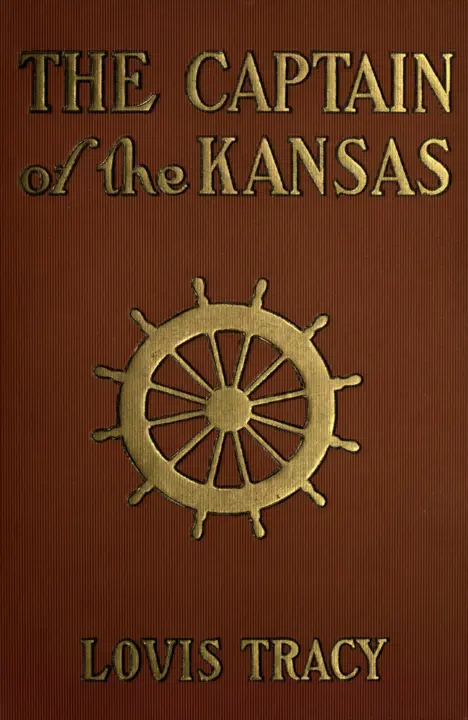
"The Captain of the Kansas" by Louis Tracy is a novel written in the early 20th century. The story centers around a perilous sea voyage, led by Captain Courtenay of the ship "Kansas", as it navigates the treacherous waters between South America and London. The tale features the dynamic relationships among passengers, including the bold heiress Isobel Baring and her friend Elsie Maxwell, who find themselves amidst unexpected dangers and romantic entanglements. At the start of the narrative, the passengers aboard the "Kansas" indulge in light conversation and create a cheerful atmosphere as the ship sails through the Pacific. Isobel expresses excitement about the voyage, while Elsie shows concern about potential storms. However, their carefree demeanor quickly shifts as tension builds; a commotion erupts when a Chilean stowaway attempts to attack a crew member, leading to a pistol fired by Captain Courtenay. As the ship faces increasing danger from the elements and the possibility of disaster, characters grapple with fear and uncertainty, showcasing their vulnerabilities and strength in the face of crisis. The opening portion effectively sets the stage for both interpersonal conflicts and the looming threat of nature's fury.
Introduction adapted from the source catalogue; source summaries may be automatically generated.
Free to read · English · 83,571 words · No account needed
MAKE TIME FOR A GOOD BOOK
On by default. Untick to stop anonymous reading totals. Each page counts after 10 seconds in view. How this works.
Anonymous counting is on unless you have switched it off.
“I was very ill,” was the response; but, after a stare of surprise, he joined in the resultant laugh quite good-naturedly.
“It is a standing joke that my countrymen are poor sailors,” he protested, “and that is strange, don’t you think, seeing that France has the second largest navy in the world?”
“Console yourself, monsieur,” said Christobal. “Three great sea-captains, Nelson, Cook, and, it is said, Columbus himself, always paid tribute to Neptune. And, if I am not mistaken,” he added, glancing through the port windows, “we shall all have our stamina tested before twenty-four hours have passed.”
Heads were turned and necks craned to see what had induced this unexpected prophecy. Behind the distant coast-line the inner giants of the Andes threw heavenward their rugged outlines, with many a peak and glacier glinting in vivid colors against a sky so clear and blue that they seemed strangely near.
“Yes, this wonderful atmosphere of ours is enchanting,” said the doctor, when assailed by a chorus of doubts. “But it carries its deceptive smiles too far. The very beauty of the Cordillera is a sign of storm. I am sorry to be a croaker; yet we are running into a gale.”
“I shall ask the captain,” pouted Isobel, rising.
The Count twisted his mustache. He knew that both ladies were in the forbidden territory of the bridge when the fracas occurred.
“You, perhaps, are a good sailor?” said he, addressing Elsie.
“I am afraid to boast,” she answered. “I have been in what was called a Number Eight gale, whatever that may mean, and weathered it splendidly, but I am older now.”
“It cannot have been long ago, seeing that you recall it so exactly.”
“It was six years ago, and I was seventeen then,” said Elsie, her eyes wandering to the purple and gold of the far-off mountains.
“But you are English. You are therefore at home on the rolling deep,” murmured Monsieur de Poincilit, confidentially. She did not endeavor to interpret his expressive glance, though he seemed to convey more than he said.
“Not so much at home at sea as you are in my language,” she replied, and she turned to Dr. Christobal, whom she had already known slightly in Valparaiso.
“Are you coming on deck?” she inquired. “I am sure you are a mine of information on Chile, and I want to extract some of the ore while the land is still visible. It is already assuming the semblance of a dream.”
“You are not saying a last farewell to Valparaiso, I hope?” said her elderly companion, as they quitted the salon.
Your reading position is saved on this browser. Take it to another device with a library code. Reading pages adapt to text, rather than matching a printed edition.
Louis Tracy
Louis Tracy
Louis Tracy
Louis Tracy
BEHIND THE BOOK
This eBook is for the use of anyone anywhere in the United States and most other parts of the world at no cost and with almost no restrictions whatsoever. You may copy it, give it away or re-use it under the terms of the Project Gutenberg License included with this eBook or online at www.gutenberg.org. If you are not located in the United States, you will have to check the laws of the country where you are located before using this eBook. Read the source licence.
The original source file, including credits and licence, is retained by this library. Request an original-format copy at no charge. Please include the book title and Project Gutenberg identifier #19649.
KEEP YOUR CURIOSITY GOING
Coulson Kernahan

Maurice Baring
Frances Wright
Cécile Tormay

Frederic Jesup Stimson

W. H. P. (William Henry Pope) Jarvis