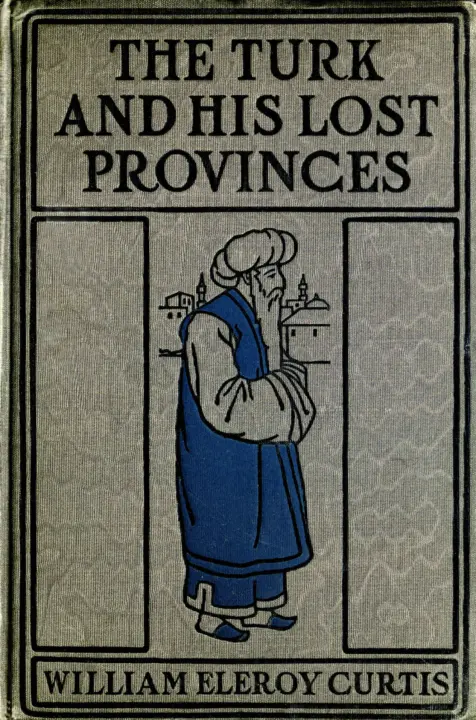
The Turk and his lost provinces
William Eleroy Curtis
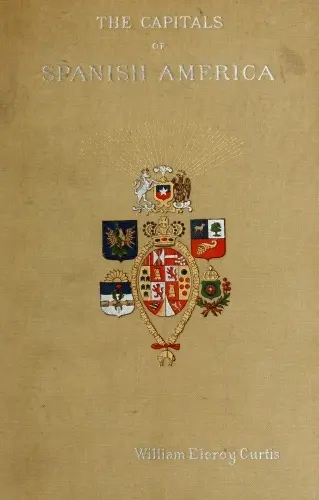
THE CLASSIC COLLECTION · 1888
"The Capitals of Spanish America" by William Eleroy Curtis is a historical account written in the late 19th century. The work explores various cities that serve as capitals in Spanish America, providing insights into their history, culture, and political climate during that period. The book is particularly focused on Mexico City, contrasting its ancient traditions and modern influences. At the start of the book, the author delves into the complexities of life in Mexico City, highlighting the stark juxtaposition between ancient customs and modern advancements. He observes how indigenous practices persist amidst the introduction of new technologies and ideas, culminating in a unique social fabric where the old and the new coexist. The narrative paints a vivid picture of the city's landscape, its people, and the political dynamics under President Porfirio Diaz, setting the stage for a deeper exploration of other capitals across Spanish America.
Introduction adapted from the source catalogue; source summaries may be automatically generated.
Free to read · English · 176,291 words · No account needed
MAKE TIME FOR A GOOD BOOK
On by default. Untick to stop anonymous reading totals. Each page counts after 10 seconds in view. How this works.
Anonymous counting is on unless you have switched it off.
Patagonia, capital of, 536;
Fenton, Doctor, in, 537;
fur-bearing animals in, 539;
Indians of, 530;
ostrich-hunting in, 538, 540;
partition of, 528;
ranchmen in, 534;
Roca’s (General) Indian campaign in, 533;
Sterling, Bishop, in, 521;
Taylor’s (Wm.) adventure with cannibals in, 525.
Peonage, Nicaraguan, 150.
Peru, Andes railway in, 407;
army of Chili in, 392;
capture of by Caceres, 395;
cause of the late war in, 434;
coca plant in, 448;
Congress of, 388;
“deck trading” in, 347;
desert of, 417;
iodine, how made in, 434;
mines of, 362;
nitrate of soda deposits in, 430;
petroleum in, 344;
Pizarro’s plunder in, 431;
railroads in, 346, 401;
rain never falls in, 387;
saltpetre, how made in, 433;
shoes of natives of, 484;
soldiers of, 352;
war with Chili, its, 388;
water in, 436.
Peruvian bark, supply of, 446;
deserts, water in, 436.
Petropolis, palace of, Brazil, 684.
Pichincha Volcano, Ecuador, 323.
Pierola, Don Nicolas, 396.
Pizarro, 304, 325, 326, 344, 362.
Plate River, the, 543, 581, 630.
Poncho, the, 505, 577.
Popocatepetl Mountain, Mexico, 42.
Potosi, silver-mines of, 445.
Prado, President of Peru, 398.
Puerto Cabello, Venezuela, 295.
Pulpit, a miraculous, 228.
Puna, island of, 344.
Puno, town of, 438.
Punta Arenas, railroad to, 211;
Taylor’s journey to, 527.
Quinine, discovery of in Peru, 446.
Quito, age of, 325;
architecture of, 332;
business perfidy in, 335;
climate of, 333;
earthquakes in, 324;
journey to, 309, 318;
manufacturing in, 337;
monks of, 332;
no newspapers in, 340;
schools in, 340;
volcanoes near, 323.
Rabonas of Peru, 348.
Railway, Interoceanic, in Honduras, 118.
Rain never falls in Peru, 387.
Religion and politics in Mexico, 3, 17.
Rio de Janeiro, bay of, 660;
filth of, 662;
horse-cars of, 668;
hotels of, 673;
social customs in, 670;
streets of, 664;
theatres of, 672;
women of, 670.
Rio de la Plata, the, 630.
Robinson Crusoe’s Island, 451.
Roca, General, Indian campaign of in Patagonia, 533;
President of Argentine Republic, 568.
Rosas, the tyrant, 549, 572.
Rubber-gathering in Nicaragua, 146.
Rubio, Romero, 32.
Ruins in Guatemala, 67;
of old Spanish forts in Venezuela, 259.
Sabanilla, port of, 232.
Sailors, superstitious, 544.
Saint, a preserved, 229;
Martin, tomb of, 566;
the only American, 358.
San José, city of, 203;
merchants of, 204;
transportation of freight to, 199;
volcanoes around, 200.
San Salvador, area of, 175;
attempt to join the United States, its, 176;
balsam coast of, 192;
capital of, 178;
Christmas in, 184;
conscription in, 110;
destruction of, 192;
earthquakes in, 187, 192;
Government of, 178;
homes of the people of, 180;
landing in, 171;
patriotism of the people of, 183;
peculiar customs of, 181-183, 193;
political history of, 176;
political organization of, 178;
Romanism in, 177, 183;
social condition in, 181;
suffrage in, 178;
volcanoes of, 179;
women of, 181, 187.
Santa Anna, widow of, 13.
Santiago, Alameda of, 466;
Catholicism in, 493;
church catastrophe in, 496;
Church struggles in, 493;
climate of, 464;
coal-mines at, 488;
Cousino, Donna Isadora, Crœsus of, 487;
cuaca dance in, 469;
earthquakes in, 483, 499;
Exposition buildings in, 470;
farming in, 489, 502;
home for foundlings in, 463;
horseback riding in, 503;
hotels of, 472;
journey from Buenos Ayres to, 506, 510;
Liberal party in, 493;
marriage in, 494;
men of Irish descent in, 475;
nomenclature peculiar to, 483;
opera-house in, 470;
peonage in, 503;
plunder from Peru in, 471;
political struggle in, 493;
Presidential election in, 495;
Protestantism in, 496;
railroad facilities of, 464, 481;
railroad from to Buenos Ayres, 510;
Santa Lucia Park in, 467;
“Señor May” in, 499;
shops of, 465;
superstition in, 499;
women of, 458, 461, 472, 484, 498.
Your reading position is saved on this browser. Take it to another device with a library code. Reading pages adapt to text, rather than matching a printed edition.
William Eleroy Curtis
William Eleroy Curtis
William Eleroy Curtis
William Eleroy Curtis
BEHIND THE BOOK
This eBook is for the use of anyone anywhere in the United States and most other parts of the world at no cost and with almost no restrictions whatsoever. You may copy it, give it away or re-use it under the terms of the Project Gutenberg License included with this eBook or online at www.gutenberg.org. If you are not located in the United States, you will have to check the laws of the country where you are located before using this eBook. Read the source licence.
The original source file, including credits and licence, is retained by this library. Request an original-format copy at no charge. Please include the book title and Project Gutenberg identifier #50298.
KEEP YOUR CURIOSITY GOING
Wilfrid Scawen Blunt
Wilfrid Scawen Blunt

E. W. (Edgar Watson) Howe
Cécile Tormay

Moritz Busch
John L. Ransom