THE CLASSIC COLLECTION✦The Star of IndiaCLASSIC FREE BOOKS
The Star of India
Edward Sylvester Ellis
THE CLASSIC COLLECTION · 1893
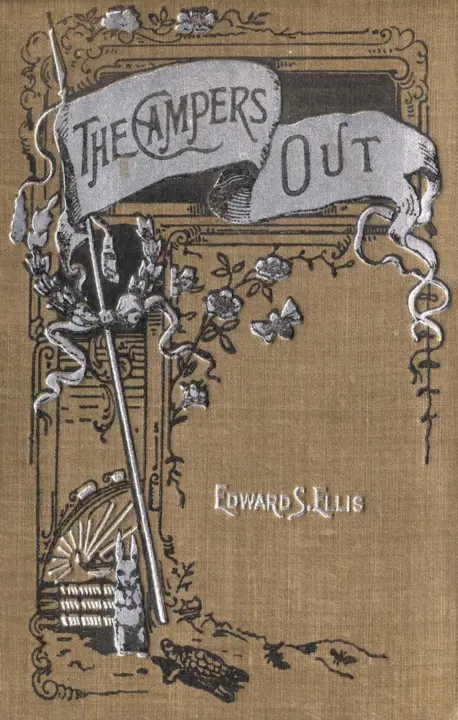
"The Campers Out; Or, The Right Path and the Wrong" by Edward Sylvester Ellis is a fiction novel written in the late 19th century. The story centers on a group of boys—Jim McGovern, Tom Wagstaff, and Billy Waylett—who concoct a mischievous scheme to run away for adventure in the West, driven by wild dreams of hunting Native Americans and grizzly bears. As they get caught up in their plans, their actions lead to unintended consequences that put them in precarious situations. The opening portion of the book introduces us to the boys' instigating plot while they are still in school. Jim receives a secret note from Tom, urging him to meet at the crossroads for a serious matter regarding their dissatisfaction with school and a bold plan to become "Indian slayers." As the story progresses, the boys share their questionable methods of gathering funds for this adventure, revealing their mischievous nature and the naivete that comes with youth. This sets the stage for their antics, which ultimately lead to a personal crisis, involving petty theft and the complexities of their moral decisions. The brief opening serves to capture the enthusiasm and recklessness of childhood while foreshadowing the trouble that lies ahead.
Introduction adapted from the source catalogue; source summaries may be automatically generated.
Free to read · English · 60,024 words · No account needed
MAKE TIME FOR A GOOD BOOK
On by default. Untick to stop anonymous reading totals. Each page counts after 10 seconds in view. How this works.
Anonymous counting is on unless you have switched it off.
“It’s a piece of woods we pass through afore we reach Piketon; it jines the woods where you tell me Bob Budd has put up the tent, but it curves round and reaches the hills on t’other side.”
The words of the driver deeply interested all three of the passengers. The knowledge that, though in the State of Pennsylvania, and in a section fairly well settled, they were in danger of being “held up” in the most approved style of the wild West was enough to startle any one.
“Tell us all about it,” persisted Wagstaff, lighting a new cigarette, and leaning forward to catch the reply.
“There isn’t much to tell,” replied the driver; “’cept there’s a holler close to t’other side of Black Bear Swamp, and three times in the past week, when I was passing, I’ve seen a tall, slim man moving around among the trees and watching me, tryin’ at the same time to keep me from seeing him.”
“But if he was a robber—”
“Who said he was a robber?” demanded Lenman, turning and looking
sharply at the young man.
“You said he was a suspicious character, and what else could he be?”
demanded Wagstaff.
“Perhaps a tramp, but I’ll admit I have thought it likely he was a man looking for a chance to rob the stage.” “Why didn’t he do it then?”
“It happened that on each of the times I hadn’t a single passenger
with me.”
“And now you’ve got three,” remarked McGovern. “Well, I hope he will attack us to-night.”
“What’ll you do if he does?” asked the New Englander.
“Don’t you see we’ve each got a rifle? Beside that, Tom and I carry a Smith & Wesson apiece, and all our weapons are loaded; that fellow won’t have time to call out for us to give up our valuables before he’ll be filled as full of holes as a sieve.”
“My gracious! you wouldn’t do that, would you?”
“Just give us a chance, that’s all,” said Wagstaff, with a shake of
his head.
Had the young men been watching Durrell and the driver at that moment, they would have seen a singular look pass between the two. It might have meant nothing, and it might have signified a good deal. No words were spoken, but the expression of their faces, to say the least, was peculiar.
“I should have said,” continued the driver, “that the chap may have learned something about that box, which was expected at Belmar, and which I was to take to Piketon with me.”
“What box?” asked Wagstaff.
Your reading position is saved on this browser. Take it to another device with a library code. Reading pages adapt to text, rather than matching a printed edition.
Edward Sylvester Ellis
Edward Sylvester Ellis
Edward Sylvester Ellis
Edward Sylvester Ellis
BEHIND THE BOOK
This eBook is for the use of anyone anywhere in the United States and most other parts of the world at no cost and with almost no restrictions whatsoever. You may copy it, give it away or re-use it under the terms of the Project Gutenberg License included with this eBook or online at www.gutenberg.org. If you are not located in the United States, you will have to check the laws of the country where you are located before using this eBook. Read the source licence.
The original source file, including credits and licence, is retained by this library. Request an original-format copy at no charge. Please include the book title and Project Gutenberg identifier #42504.
KEEP YOUR CURIOSITY GOING
Coulson Kernahan

Maurice Baring
Frances Wright
Cécile Tormay

Frederic Jesup Stimson

W. H. P. (William Henry Pope) Jarvis