THE CLASSIC COLLECTION✦The Star of IndiaCLASSIC FREE BOOKS
The Star of India
Edward Sylvester Ellis
THE CLASSIC COLLECTION · 1893
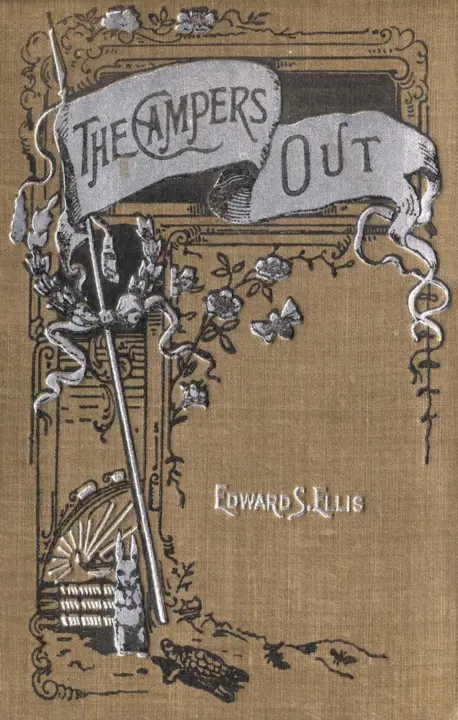
"The Campers Out; Or, The Right Path and the Wrong" by Edward Sylvester Ellis is a fiction novel written in the late 19th century. The story centers on a group of boys—Jim McGovern, Tom Wagstaff, and Billy Waylett—who concoct a mischievous scheme to run away for adventure in the West, driven by wild dreams of hunting Native Americans and grizzly bears. As they get caught up in their plans, their actions lead to unintended consequences that put them in precarious situations. The opening portion of the book introduces us to the boys' instigating plot while they are still in school. Jim receives a secret note from Tom, urging him to meet at the crossroads for a serious matter regarding their dissatisfaction with school and a bold plan to become "Indian slayers." As the story progresses, the boys share their questionable methods of gathering funds for this adventure, revealing their mischievous nature and the naivete that comes with youth. This sets the stage for their antics, which ultimately lead to a personal crisis, involving petty theft and the complexities of their moral decisions. The brief opening serves to capture the enthusiasm and recklessness of childhood while foreshadowing the trouble that lies ahead.
Introduction adapted from the source catalogue; source summaries may be automatically generated.
Free to read · English · 60,024 words · No account needed
MAKE TIME FOR A GOOD BOOK
On by default. Untick to stop anonymous reading totals. Each page counts after 10 seconds in view. How this works.
Anonymous counting is on unless you have switched it off.
“That’s queer talk for you, Jim; you didn’t think much about the feelings of your folks when you and Tom run away from home.”
“I trust I am a different person from what I was then,” said Jim, his
face flushing.
Bob looked at him curiously, but did not speak the thought which came into his mind at that moment.
“Well,” said he, with a sigh, “if you insist so strongly, why, I’ll do
it.”
“When?”
“In the course of a day or two.”
“I want you to do it now, while I am in this room.”
“But where’s the hurry, Jim?” asked Bob, impatiently; “I don’t see why things need be rushed in the style you want.”
“Do it to oblige me, Bob, and then I have something to say to you which is of importance and which will please you.”
“Let me hear it now,” said Bob, brightening up with expectancy.
“You sha’n’t hear a word till after the letter is written.”
The task was distasteful to young Budd, and he held off for awhile longer, but Jim would not let up. He was determined that the letter should be written in his presence and before he went away.
Seeing there was no escape, Bob turned to the stand containing writing material, and addressed a brief note to his uncle, giving him the important information that he had not suffered the slightest inconvenience from the flood that drowned one of his companions and came mighty near carrying off the other.
The main portion of the letter was taken up with an emphatic request of his uncle and aunt not to give the slightest hint of what they had learned until they heard further from him.
This letter was sealed and directed.
“Let me have it,” said Jim.
“What for?”
“I will drop it in the letter box as I go out.”
“Well, you beat the bugs,” laughed Bob, passing the missive over to him; “now, what have you to tell me?”
It may be added that Bob Budd’s letter promptly reached the astounded Captain, who found it hard to keep the joyful news to himself, but he managed to do so, as did his wife, who went into hysterics when the news was first broken to her.
But, as a means of averting suspicion, the Captain immediately doubled the reward offered for the recovery of the body of his nephew. He smiled grimly as he did so, and looked upon the matter as a capital joke; but then some people do entertain peculiar ideas as to what constitutes a joke.
Your reading position is saved on this browser. Take it to another device with a library code. Reading pages adapt to text, rather than matching a printed edition.
Edward Sylvester Ellis
Edward Sylvester Ellis
Edward Sylvester Ellis
Edward Sylvester Ellis
BEHIND THE BOOK
This eBook is for the use of anyone anywhere in the United States and most other parts of the world at no cost and with almost no restrictions whatsoever. You may copy it, give it away or re-use it under the terms of the Project Gutenberg License included with this eBook or online at www.gutenberg.org. If you are not located in the United States, you will have to check the laws of the country where you are located before using this eBook. Read the source licence.
The original source file, including credits and licence, is retained by this library. Request an original-format copy at no charge. Please include the book title and Project Gutenberg identifier #42504.
KEEP YOUR CURIOSITY GOING
Coulson Kernahan

Maurice Baring
Frances Wright
Cécile Tormay

Frederic Jesup Stimson

W. H. P. (William Henry Pope) Jarvis