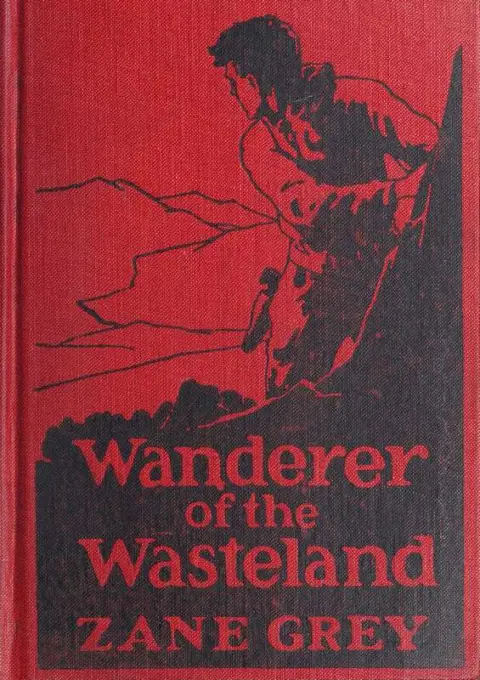
Wanderer of the Wasteland
Zane Grey
THE CLASSIC COLLECTION · 1921
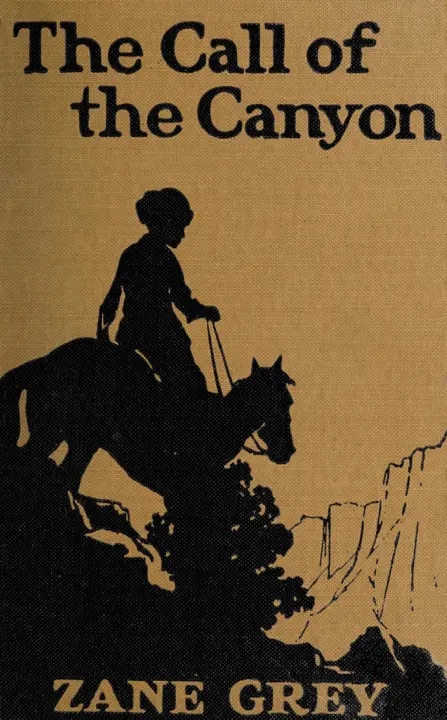
"The Call of the Canyon" by Zane Grey is a novel written in the early 20th century, capturing the essence of the American West following World War I. The story revolves around Carley Burch, a young woman from New York, who is drawn to the West by a letter from her fiancé, Glenn Kilbourne, who has returned from the war profoundly changed. The narrative explores themes of love, transformation, and the stark contrast between urban and rugged natural life through Carley's journey as she seeks to understand and reconnect with Glenn in his new world. At the start of the novel, Carley reflects on Glenn's haunting letter as she rides on a train toward Arizona, revealing her uncertainty and desire to find him. The opening details her memories of their last moments together before the war and her efforts to comprehend the deep changes Glenn has undergone. After arriving in Flagstaff and embarking on a challenging journey to reach Glenn's remote cabin, Carley grapples with the unfamiliarity of her surroundings, the harsh conditions of the West, and her inner anxieties about their relationship. As she meets Glenn, who has transformed into a rugged figure embodying the West's strength and harsh realities, the complexity of their love unfolds, hinting at the challenges that lie ahead for both as they navigate their altered lives.
Introduction adapted from the source catalogue; source summaries may be automatically generated.
Free to read · English · 74,985 words · No account needed
MAKE TIME FOR A GOOD BOOK
On by default. Untick to stop anonymous reading totals. Each page counts after 10 seconds in view. How this works.
Anonymous counting is on unless you have switched it off.
“Well, all eyes?” he bantered, suddenly staring at her. “Didn’t I say I’d surprise you?”
“Don’t mind me. This is about the happiest and most bewildered moment—of my life,” replied Carley.
Returning to the table, Glenn dug at something in a large red can. He paused a moment to eye Carley.
“Girl, do you know how to make biscuits?” he queried.
“I might have known in my school days, but I’ve forgotten,” she
replied.
“Can you make apple pie?” he demanded, imperiously.
“No,” rejoined Carley.
“How do you expect to please your husband?”
“Why—by marrying him, I suppose,” answered Carley, as if weighing a
problem.
“That has been the universal feminine point of view for a good many years,” replied Glenn, flourishing a flour-whitened hand. “But it never served the women of the Revolution or the pioneers. And they were the builders of the nation. It will never serve the wives of the future, if we are to survive.”
“Glenn, you rave!” ejaculated Carley, not knowing whether to laugh or be grave. “You were talking of humble housewifely things.”
“Precisely. The humble things that were the foundation of the great nation of Americans. I meant work and children.”
Carley could only stare at him. The look he flashed at her, the sudden intensity and passion of his ringing words, were as if he gave her a glimpse into the very depths of him. He might have begun in fun, but he had finished otherwise. She felt that she really did not know this man. Had he arraigned her in judgment? A flush, seemingly hot and cold, passed over her. Then it relieved her to see that he had returned to his task.
He mixed the shortening with the flour, and, adding water, he began a thorough kneading. When the consistency of the mixture appeared to satisfy him he took a handful of it, rolled it into a ball, patted and flattened it into a biscuit, and dropped it into the oven he had set aside on the hot coals. Swiftly he shaped eight or ten other biscuits and dropped them as the first. Then he put the heavy iron lid on the pot, and with a rude shovel, improvised from a flattened tin can, he shoveled red coals out of the fire, and covered the lid with them. His next move was to pare and slice potatoes, placing these aside in a pan. A small black coffee-pot half full of water, was set on a glowing part of the fire. Then he brought into use a huge, heavy knife, a murderous-looking implement it appeared to Carley, with which he cut slices of ham. These he dropped into the second pot, which he left uncovered. Next he removed the flour sack and other inpedimenta from the table, and proceeded to set places for two—blue-enamel plate and cup, with plain, substantial-looking knives, forks, and spoons. He went outside, to return presently carrying a small crock of butter. Evidently he had kept the butter in or near the spring. It looked dewy and cold and hard. After that he peeped under the lid of the pot which contained the biscuits. The other pot was sizzling and smoking, giving forth a delicious savory odor that affected Carley most agreeably. The coffee-pot had begun to steam. With a long fork Glenn turned the slices of ham and stood a moment watching them. Next he placed cans of three sizes upon the table; and these Carley conjectured contained sugar, salt, and pepper. Carley might not have been present, for all the attention he paid to her. Again he peeped at the biscuits. At the edge of the hot embers he placed a tin plate, upon which he carefully deposited the slices of ham. Carley had not needed sight of them to know she was hungry; they made her simply ravenous. That done, he poured the pan of sliced potatoes into the pot. Carley judged the heat of that pot to be extreme. Next he removed the lid from the other pot, exposing biscuits slightly browned; and evidently satisfied with these, he removed them from the coals. He stirred the slices of potatoes round and round; he emptied two heaping tablespoonfuls of coffee into the coffee-pot.
Your reading position is saved on this browser. Take it to another device with a library code. Reading pages adapt to text, rather than matching a printed edition.
Zane Grey
Zane Grey
Zane Grey
Zane Grey
BEHIND THE BOOK
This eBook is for the use of anyone anywhere in the United States and most other parts of the world at no cost and with almost no restrictions whatsoever. You may copy it, give it away or re-use it under the terms of the Project Gutenberg License included with this eBook or online at www.gutenberg.org. If you are not located in the United States, you will have to check the laws of the country where you are located before using this eBook. Read the source licence.
The original source file, including credits and licence, is retained by this library. Request an original-format copy at no charge. Please include the book title and Project Gutenberg identifier #1881.
KEEP YOUR CURIOSITY GOING
Coulson Kernahan

Maurice Baring
Frances Wright
Cécile Tormay

Frederic Jesup Stimson

W. H. P. (William Henry Pope) Jarvis