THE CLASSIC COLLECTION✦Half a dozen boysCLASSIC FREE BOOKS
Half a dozen boys
Anna Chapin Ray
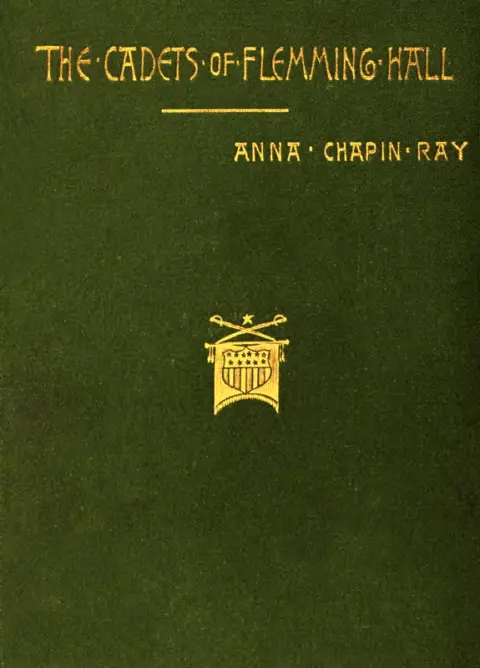
THE CLASSIC COLLECTION · 1892
"The Cadets of Flemming Hall" by Anna Chapin Ray is a novel written in the late 19th century. The book explores the life of boys at a military and classical school, focusing on the experiences of the new cadet, Leon Arnold, and his interactions with fellow students and teachers. It delves into themes of camaraderie, discipline, and the challenges of growing up within a structured environment. At the start of the story, we are introduced to Flemming Hall and its energetic atmosphere as Leon Arnold arrives to join his older brother Harry at the school. Leon is immediately welcomed by Harry's friends, who are lively and eager to make him feel at home, while we get a glimpse of the school's dynamics, the importance of military drills, and the challenges posed by a new teacher. The narrative establishes key characters, particularly highlighting the contrasting personalities of the boys and their relationships within the school setting, setting the stage for Leon's adventures and struggles as he navigates his new life at Flemming.
Introduction adapted from the source catalogue; source summaries may be automatically generated.
Free to read · English · 64,772 words · No account needed
MAKE TIME FOR A GOOD BOOK
On by default. Untick to stop anonymous reading totals. Each page counts after 10 seconds in view. How this works.
Anonymous counting is on unless you have switched it off.
“I haven’t so very much to do, after all; only a few sulphur experiments,” remarked Lieutenant Wilde, with a laugh, as he began setting out an array of flasks and beakers and rubber and glass tubes, on the long, broad desk which ran across one side of the room. “I’m afraid, if the truth were told, Campbell, I wanted your company more than I did your help, this afternoon. Still, you may light the gas there, if you will.”
Stanley did so, and then stood watching his teacher as he scientifically linked together his flasks and tubes, now mixing innocent-looking substances with a practised hand, now applying the flame to this compound, or adding a few drops of acid to that.
“There,” he said, after looking closely at one of them for a moment; “that will begin to work now. Bring up a couple of stools, Stanley; we may as well make ourselves comfortable, for all we can do at present is to watch this. I wanted to see that they were all in order for next time, and not have them fail me, as my chlorine experiment did. Do you know,” he added, with an anxious frown; “I am a little suspicious of some of these last chemicals.”
“Why?” asked Stanley, as he seated himself astride his lofty stool.
“They don’t act just right, and I’m not at all sure that they are pure. Still, they came from the same house that always supplies us, and they must be good.” And Lieutenant Wilde bent his head, to look more closely at the bubbling mixture.
“What if they aren’t pure?” inquired Stanley.
“Oh, they may explode; that’s the worst they can do,” said Lieutenant Wilde, laughing at the boy’s dismayed face and involuntary motion away from the desk. “You needn’t worry, Campbell,” he added reassuringly; “I think these are probably all they ought to be.”
“I wonder how I’d like to be a chemist,” remarked Stanley thoughtfully.
“You have rather a gift for it,” responded Lieutenant Wilde, resting one elbow on the desk, while he twirled his glasses by their bows, in the other hand.
“I’m afraid I haven’t much gift for anything,” said Stanley, and there was a little tone of regret in his voice, as he went on, “I wish I could get at things as quick as Max does. It seems as if he knew everything, without studying it at all. He’s an awfully bright fellow, Lieutenant Wilde.”
“Yes,” assented Lieutenant Wilde absently. He was mentally weighing the two boys, as unlike as boys could be.
Your reading position is saved on this browser. Take it to another device with a library code. Reading pages adapt to text, rather than matching a printed edition.
Anna Chapin Ray
Anna Chapin Ray
Anna Chapin Ray
Anna Chapin Ray
BEHIND THE BOOK
This eBook is for the use of anyone anywhere in the United States and most other parts of the world at no cost and with almost no restrictions whatsoever. You may copy it, give it away or re-use it under the terms of the Project Gutenberg License included with this eBook or online at www.gutenberg.org. If you are not located in the United States, you will have to check the laws of the country where you are located before using this eBook. Read the source licence.
The original source file, including credits and licence, is retained by this library. Request an original-format copy at no charge. Please include the book title and Project Gutenberg identifier #59005.
KEEP YOUR CURIOSITY GOING
Coulson Kernahan

Maurice Baring
Frances Wright
Cécile Tormay

Frederic Jesup Stimson

W. H. P. (William Henry Pope) Jarvis