THE CLASSIC COLLECTION✦Half a dozen boysCLASSIC FREE BOOKS
Half a dozen boys
Anna Chapin Ray
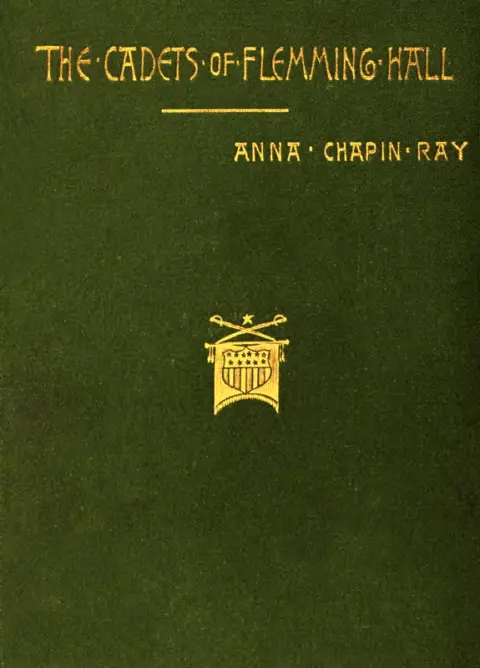
THE CLASSIC COLLECTION · 1892
"The Cadets of Flemming Hall" by Anna Chapin Ray is a novel written in the late 19th century. The book explores the life of boys at a military and classical school, focusing on the experiences of the new cadet, Leon Arnold, and his interactions with fellow students and teachers. It delves into themes of camaraderie, discipline, and the challenges of growing up within a structured environment. At the start of the story, we are introduced to Flemming Hall and its energetic atmosphere as Leon Arnold arrives to join his older brother Harry at the school. Leon is immediately welcomed by Harry's friends, who are lively and eager to make him feel at home, while we get a glimpse of the school's dynamics, the importance of military drills, and the challenges posed by a new teacher. The narrative establishes key characters, particularly highlighting the contrasting personalities of the boys and their relationships within the school setting, setting the stage for Leon's adventures and struggles as he navigates his new life at Flemming.
Introduction adapted from the source catalogue; source summaries may be automatically generated.
Free to read · English · 64,772 words · No account needed
MAKE TIME FOR A GOOD BOOK
On by default. Untick to stop anonymous reading totals. Each page counts after 10 seconds in view. How this works.
Anonymous counting is on unless you have switched it off.
“Well,” he went on; “we knocked at this blue door, and by and by we heard a man say ‘come in,’ and we went in and there was Jerry. He sat there smoking a pipe made out of a corn cob, and mending a hole in his boot with a piece of string. There were ever so many funny things there, fish-poles and box-traps and snares—”
“What’s that?” interposed Gyp.
“Oh, things to catch birds in,” explained Leon lucidly. Then he continued, “And there were some cages on the wall, some with birds in, and some with squirrels, and one had a snake. And there was a great black crow hopping around on the floor, and three dogs, one yellow, and one white, and one black and yellow. And—and—and—” Leon hesitated.
“What did you do then?” demanded Gyp.
“We stayed a little while, and then we came home again.”
“Is that all?” asked the child, and there was a scornful ring to her
tone.
“I’m afraid it is,” replied Leon meekly.
“Well, I don’t think that’s much of a story,” remarked Gyp, with a frankness of criticism which would have done credit to a professional reviewer.
“You tell me one now, Gyp,” suggested Leon, feeling that his attempt at story-telling had resulted in dismal failure.
“Well, I will,” said Gyp, with perfect readiness.
Curling up one foot under her, she turned so that she could face Leon. When she was settled to her liking, she began her tale which she emphasized now and then by nodding her head, or smacking her lips, with an air of relishing the gloomy details.
“Well, once, ever ’n ever so long ago, there was a duck and a squan, and one day they were sitting on the bank in the sun to dry their feet, and the duck said, ‘I love you; do you love me?’ and the squan said, ‘No, I won’t,’ and the duck said, ‘I’ll make you.’ So he ran at the squan, and the squan ran away and jumped into the lake. The duck ran after her and, first thing he knew, he had tumbled in, right head first over heels. They began swimming round and round after each other, and pretty soon the squan was tired, so she turned into a crocodile with great, long teeth and claw-nails, and climbed out on the bank. Then the duck turned himself into another crocodile and went out after her; but when he found her, she wasn’t there, for she made herself back into a squan and was clear off in the water. You see, she was quicker ’n he was. He didn’t stop to change, but went after her, fast as he could go, and when he came up to her, he pulled out the carving-knife and cut her into four pieces. ‘There,’ he said, ‘now I’ve killed you; that’s too bad.’ But the pieces sank down to the bottom and when they hit the mud down there, they all grew together again, so she could swim up. She came up, just as quick, and pulled the carving-knife out of his hand, and she took the carving-knife, and stuck the points in and made little dents all over him. So he died, and the squan pulled three pink feathers out of his tail, to show she’d killed him, and then she went home to her little chickens. But she forgot the carving-knife, and when she saw her chickens, she was so glad, that she dropped the carving-knife right down on top of them and cut all their heads off, and so they were dead as could be, every one of them; and when she knew they were dead and she had killed them, she felt so badly that she went right off and was drowned, and that’s all there is about them.”
Your reading position is saved on this browser. Take it to another device with a library code. Reading pages adapt to text, rather than matching a printed edition.
Anna Chapin Ray
Anna Chapin Ray
Anna Chapin Ray

Anna Chapin Ray
BEHIND THE BOOK
This eBook is for the use of anyone anywhere in the United States and most other parts of the world at no cost and with almost no restrictions whatsoever. You may copy it, give it away or re-use it under the terms of the Project Gutenberg License included with this eBook or online at www.gutenberg.org. If you are not located in the United States, you will have to check the laws of the country where you are located before using this eBook. Read the source licence.
The original source file, including credits and licence, is retained by this library. Request an original-format copy at no charge. Please include the book title and Project Gutenberg identifier #59005.
KEEP YOUR CURIOSITY GOING
Coulson Kernahan

Maurice Baring
Frances Wright
Cécile Tormay

Frederic Jesup Stimson

W. H. P. (William Henry Pope) Jarvis