THE CLASSIC COLLECTION✦Sunshine and snowCLASSIC FREE BOOKS
Sunshine and snow
Harold Bindloss
THE CLASSIC COLLECTION · 1918
"The Buccaneer Farmer" by Harold Bindloss is a novel written in the late 19th century. The story centers on Osborn, a country gentleman struggling to manage his estate and the challenges posed by greedy tenants and the burden of a complicated financial situation. The book explores themes of pride, familial duty, and the intricacies of rural life, as he navigates the expectations of both his family and his tenants. The opening of "The Buccaneer Farmer" introduces Osborn in his library, frustrated by mounting bills and the affairs of his estate that intrude on his leisure time. This chapter sets the stage for his character, revealing his overbearing nature and the tension within his family regarding their financial situation. His interactions with his son Gerald, who is caught between familial expectations and personal ambition, highlight the generational conflicts at play. As Osborn engages with his tenants, particularly regarding their struggles against a monopolistic coal merchant, the dynamics of power, economic hardship, and social duty begin to unfold, hinting at the larger conflicts that will arise throughout the novel.
Introduction adapted from the source catalogue; source summaries may be automatically generated.
Free to read · English · 98,129 words · No account needed
MAKE TIME FOR A GOOD BOOK
On by default. Untick to stop anonymous reading totals. Each page counts after 10 seconds in view. How this works.
Anonymous counting is on unless you have switched it off.
"I don't think I'm an exacting landlord," he remarked. "In fact, since I ask for nothing but a little give-and-take, it's annoying when people spoil my sport. Dowthwaite made himself unpleasant about his broken wall, the Askews turned the grouse back, and then I found the Allerby cottage children, ransacking Redmire Wood when the pheasants were going to roost."
Grace, who stood close by with Thorn, indicated the smooth gravel and the low, wide-topped wall on which red geraniums grew.
"This," she said, "is a great improvement on the old grass bank. The wide steps and broad slate coping have an artistic effect. However, you can't often get the things you like without paying."
"Very true, but rather trite," Osborn agreed. "I don't see how it
applies."
"Well, I'm really sympathetic about your spoiled day, but it looks as if all your disappointments sprang from the same cause."
"Ah!" said Osborn, sharply; "I suppose you mean the coal yards' lease?"
"I think I mean Bell's greediness. If he didn't charge so much for his coal, Askew would not have cut the peat, and the children would not have been sent to gather wood. Then Dowthwaite might not have grumbled about his wall; he feels the farmers have not been treated justly, and I imagine he blames you."
Osborn knitted his brows. "Then it's an example of the fellow's wrong-headed attitude! He and one or two others are treated better than they deserve, and would not be satisfied with anything I did. If you had to manage the estate, pay extortionate taxes, and make the unnecessary repairs the farmers demand, it would be interesting to see the line you would take."
"Perhaps the right line isn't easy," Grace admitted. "Still, if I wanted a guide, there's the motto of our county town: 'Be just and fear not.'"
Osborn looked at her with indignant surprise, and then shrugged
scornfully. Thorn smiled.
"It's an excellent motto; but they chose it some time since. One imagines
it's out of date now."
Grace colored and moved away, feeling embarrassed. She had made herself ridiculous, and perhaps sentiment such as she had indulged was cheap; but it hurt to feel that she, so to speak, stood alone. Although she had, no doubt, been imprudent, she had said what she felt, and Thorn had smiled. She turned to him angrily when he followed her along the terrace.
"I daresay I am a raw sentimentalist, but I'm glad I'm not up to date," she said. "I hate your modern smartness!"
Thorn, noting the hardness of her voice, stopped with an apologetic
gesture and let her go.
Your reading position is saved on this browser. Take it to another device with a library code. Reading pages adapt to text, rather than matching a printed edition.
Harold Bindloss
Harold Bindloss
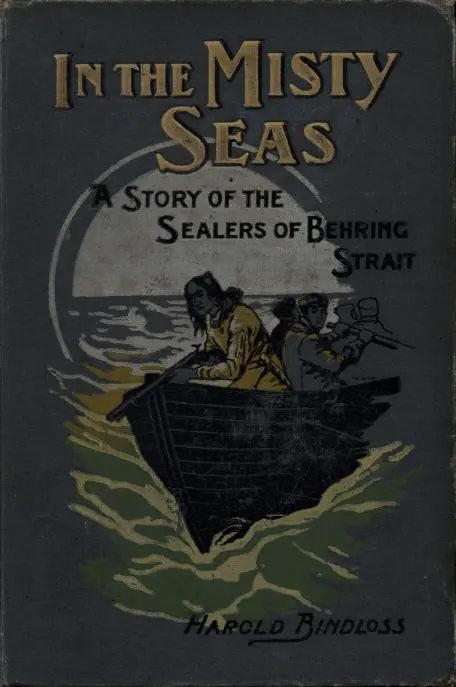
Harold Bindloss
Harold Bindloss
BEHIND THE BOOK
This eBook is for the use of anyone anywhere in the United States and most other parts of the world at no cost and with almost no restrictions whatsoever. You may copy it, give it away or re-use it under the terms of the Project Gutenberg License included with this eBook or online at www.gutenberg.org. If you are not located in the United States, you will have to check the laws of the country where you are located before using this eBook. Read the source licence.
The original source file, including credits and licence, is retained by this library. Request an original-format copy at no charge. Please include the book title and Project Gutenberg identifier #10930.
KEEP YOUR CURIOSITY GOING
Coulson Kernahan

Maurice Baring
Frances Wright
Cécile Tormay

Frederic Jesup Stimson

W. H. P. (William Henry Pope) Jarvis