THE CLASSIC COLLECTION✦Sunshine and snowCLASSIC FREE BOOKS
Sunshine and snow
Harold Bindloss
THE CLASSIC COLLECTION · 1918
"The Buccaneer Farmer" by Harold Bindloss is a novel written in the late 19th century. The story centers on Osborn, a country gentleman struggling to manage his estate and the challenges posed by greedy tenants and the burden of a complicated financial situation. The book explores themes of pride, familial duty, and the intricacies of rural life, as he navigates the expectations of both his family and his tenants. The opening of "The Buccaneer Farmer" introduces Osborn in his library, frustrated by mounting bills and the affairs of his estate that intrude on his leisure time. This chapter sets the stage for his character, revealing his overbearing nature and the tension within his family regarding their financial situation. His interactions with his son Gerald, who is caught between familial expectations and personal ambition, highlight the generational conflicts at play. As Osborn engages with his tenants, particularly regarding their struggles against a monopolistic coal merchant, the dynamics of power, economic hardship, and social duty begin to unfold, hinting at the larger conflicts that will arise throughout the novel.
Introduction adapted from the source catalogue; source summaries may be automatically generated.
Free to read · English · 98,129 words · No account needed
MAKE TIME FOR A GOOD BOOK
On by default. Untick to stop anonymous reading totals. Each page counts after 10 seconds in view. How this works.
Anonymous counting is on unless you have switched it off.
"It means much," Grace agreed, and after a pause resumed: "You had no doubt about taking up your uncle's engagement with the president, although you saw what it might cost?"
"Of course not," Kit replied. "There was nothing else to be done."
Grace smiled and got up. "No," she said, "there was nothing else you could do. Well, I must go home."
Kit went back with her for some distance. They talked but little on the way, but when she left him she gave him her hand and a look that made his heart beat.
Soon after Grace reached Tarnside, Osborn crossed the lawn to the tea-table where she and Mrs. Osborn sat beneath a spreading copper-beech. His face was thoughtful when Mrs. Osborn gave him a cup.
"I met the post as I was driving home," he said. "There's a letter
from Gerald."
"Has he any news?" Mrs. Osborn asked.
"Nothing important. He's well and says he's kept occupied, which is fortunate. In fact, the harder they work him, the better; I'd sooner Gerald did not have much time on his hands."
"Then, why did he write?" Grace asked, because Gerald's letters were by
no means regular.
"I hope he did not want money," Mrs. Osborn remarked.
"No," said Osborn. "That is, he did not want it for himself." He hesitated, and then resumed: "He states that if I could raise a moderate sum, he knows how we could make a very satisfactory profit in a short time. It seems he has got a useful hint."
Grace laughed. "About a racehorse? Gerald is always hopeful, but his confidence in his ability to spot the winner is dangerous. It has been so often misplaced."
"This has nothing to do with racing," Osborn rejoined angrily. "Gerald knows the consequences of indulging his folly again. There's a difference between betting and buying shares."
"I don't know if the difference is very marked," said Grace, with a curious feeling of annoyance, for there was a note in Osborn's voice that jarred. He was, like Gerald, a gambler, greedy for money he had not earned, and she thought about the story Kit had told. Its hero had risked and lost his life, and Kit had paid in health and fortune, because they put honor before gain. For all that, she knew she had said enough when she saw Osborn's frown.
"Gerald is young, but he holds a responsible post and has opportunities of meeting important stock-brokers and business men," Osborn went on, turning to his wife. "He is, of course, optimistic and has been rash, but after all he may have found out something useful. He declares the venture is absolutely safe."
Your reading position is saved on this browser. Take it to another device with a library code. Reading pages adapt to text, rather than matching a printed edition.
Harold Bindloss
Harold Bindloss
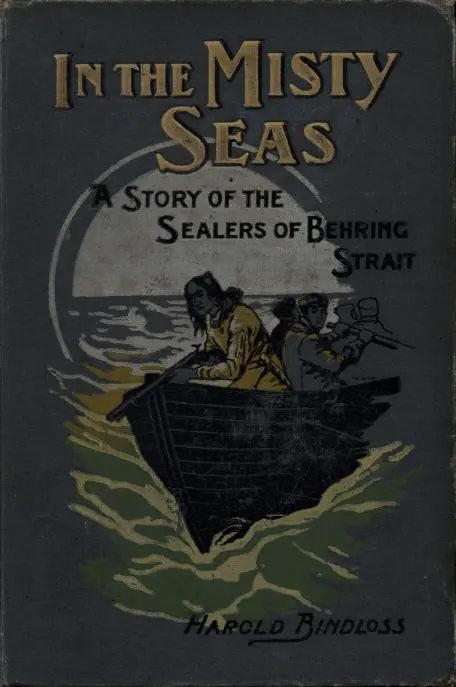
Harold Bindloss
Harold Bindloss
BEHIND THE BOOK
This eBook is for the use of anyone anywhere in the United States and most other parts of the world at no cost and with almost no restrictions whatsoever. You may copy it, give it away or re-use it under the terms of the Project Gutenberg License included with this eBook or online at www.gutenberg.org. If you are not located in the United States, you will have to check the laws of the country where you are located before using this eBook. Read the source licence.
The original source file, including credits and licence, is retained by this library. Request an original-format copy at no charge. Please include the book title and Project Gutenberg identifier #10930.
KEEP YOUR CURIOSITY GOING
Coulson Kernahan

Maurice Baring
Frances Wright
Cécile Tormay

Frederic Jesup Stimson

W. H. P. (William Henry Pope) Jarvis