THE CLASSIC COLLECTION✦Angel Unawares: A Story of Christmas EveCLASSIC FREE BOOKS
Angel Unawares: A Story of Christmas Eve
C. N. (Charles Norris) Williamson & A. M. (Alice Muriel) Williamson
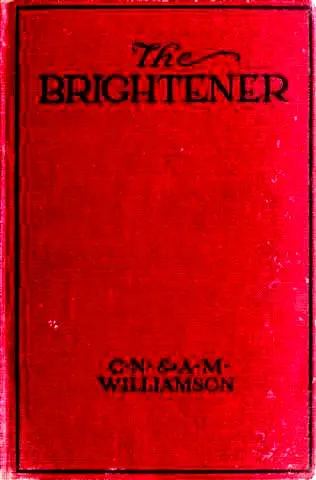
THE CLASSIC COLLECTION · 1921
"The Brightener" by A. M. Williamson and C. N. Williamson is a novel written in the early 20th century. The story revolves around Elizabeth, Princess di Miramare, who experiences a tragic double loss while preparing for a grand ball, which sets off a series of dramatic events. As she navigates her new life, Elizabeth discovers secrets, encounters mystery and intrigue, and eventually takes on a new identity as a "Brightener," a role that allows her to uplift the lives of those around her while seeking a path to her own happiness. At the start of the book, Elizabeth hides in a secret arbour during the ball, overhearing a conversation that reveals shocking news about her grandmother's death and her husband's tragic accident at war. Struggling with grief and the collapse of her former life, she is thrust into a world of unexpected challenges. As the narrative unfolds, she finds herself involved in a mysterious robbery at her ancestral home and faces the resurgence of a figure from her past, a woman linked to espionage. This opening sets the stage for a suspenseful tale, combining elements of romance, mystery, and personal growth as Elizabeth grapples with her identity and the uncertainties of her future.
Introduction adapted from the source catalogue; source summaries may be automatically generated.
Free to read · English · 89,557 words · No account needed
MAKE TIME FOR A GOOD BOOK
On by default. Untick to stop anonymous reading totals. Each page counts after 10 seconds in view. How this works.
Anonymous counting is on unless you have switched it off.
The treacherous old thing was in deep mourning, with a widow's cap, and her dress of black bombazine (or some equally awful stuff) was pinned up under a big apron. At sight of me she jumped, and almost dropped a pan of meal; but even the most innocent person is entitled to jump! She recovered herself quickly, and called up the ghost of a welcoming smile--such a smile as may decently decorate the face of a newly made widow.
"Why, Miss--Princess!" she exclaimed. "This is a surprise. If anything could make me happy in my sad affliction it would be a visit from you. My nephews are out fishing--they're very fond of fishing, poor boys!--but come in and let me give you a cup of tea."
"I will come in," I said, "because I must have a talk with you, but I don't want tea. And, really, Mrs. Barlow, I wonder you have the cheek to speak of your 'sad affliction.'"
By this time I was already over the threshold, and in the kitchen, for she had stood aside for me to pass. Just inside the door I turned on her, and saw the old face--once so freshly apple-cheeked--flush darkly, then fade to yellow. Her eyes stared into mine, wavered, and dropped; but no tears came.
"'Cheek?'" she repeated, as if reproving slang. "Miss--Princess--I don't
know what you mean."
"I think you know very well," I said, "because you have no 'sad affliction.' Your husband is as much alive as I am. The only loss you've suffered is the loss of the coffin in which he wasn't buried!"
The woman dropped, like a jelly out of its mould, into a kitchen chair. "My Heavens! Miss Elizabeth, you don't know what you're saying!" she gasped, dry-lipped.
"I know quite well," I caught her up. "And to show that I know, I'm going to reconstruct the whole plot." (This was bluff. But it was part of the Plan). "Barlow's nephews were expert thieves. They'd served a term for stealing at home, in Australia. They spent a short leave at Courtenaye Coombe, and you showed them over the Abbey. Then and there they got an idea. They bribed you and Barlow to help them carry it out and give them a letter of mine to tear into bits and turn suspicion on me. Probably they worked with rubber gloves and shoes--as you know the detectives have found no fingermarks or footprints. Every man is said to have his price. You two had yours! Just how much more than others you knew about old secret 'hidie-holes' in the Abbey I can't tell, but I'm sure you did know more than any of us. There was always the lodge, too, which was the same as your own, and full of your things! I'm practically certain there's a secret way to it, through the cellars. Ah, I thought so!" (As her face changed.) "Trusted as you were, a burglary in the night was easy as falling off a log--and all that binding and gagging business. The trouble was to get the stolen things out of the country--let's say to Australia, where Barlow's nephews could count upon a receiver, or a buyer, maybe some old associate of their pre-prison days. Among you all, you hit on quite a clever plan. Only a dear, kind creature like you, respected by everyone, could have hypnotized even old Doctor Pyne into believing Barlow was dead--no matter what strong drug you used! You wouldn't let any one come near the body afterward. You loved your husband so much you would do everything for him yourself--in death as in life. How pathetic--how estimable! And then you and the two 'boys' brought the coffin here, to have it buried in the old cemetery, with generations of other respectable Barlows. The night after the funeral the twins dug it up, as neatly as they dug trenches in France, and left the case underground as a precaution. Perhaps Barlow's 'ghost' watched the work. But that's of no importance. What was of importance was the next step. They took the coffin to a nice convenient cave (that's what made this house worth buying back, isn't it?) and tethered the thing there to wait an appointed hour. At that hour a boat would quietly appear, and bear it away to a smart little sailing ship. Then--ho! for Australia or some place where heirlooms from this country can be disposed of without talk or trouble. I would bet that Barlow is on that ship now, and you meant to join him, instead of waiting for a better world. But there came the storm, and a record wave or two ran into the cave. Alas for the schemes of mice and men--and Barlow's!"
Your reading position is saved on this browser. Take it to another device with a library code. Reading pages adapt to text, rather than matching a printed edition.
C. N. (Charles Norris) Williamson & A. M. (Alice Muriel) Williamson
C. N. (Charles Norris) Williamson & A. M. (Alice Muriel) Williamson
C. N. (Charles Norris) Williamson & A. M. (Alice Muriel) Williamson
C. N. (Charles Norris) Williamson & A. M. (Alice Muriel) Williamson
BEHIND THE BOOK
This eBook is for the use of anyone anywhere in the United States and most other parts of the world at no cost and with almost no restrictions whatsoever. You may copy it, give it away or re-use it under the terms of the Project Gutenberg License included with this eBook or online at www.gutenberg.org. If you are not located in the United States, you will have to check the laws of the country where you are located before using this eBook. Read the source licence.
The original source file, including credits and licence, is retained by this library. Request an original-format copy at no charge. Please include the book title and Project Gutenberg identifier #32428.
KEEP YOUR CURIOSITY GOING
Coulson Kernahan

Maurice Baring
Frances Wright
Cécile Tormay

Frederic Jesup Stimson

W. H. P. (William Henry Pope) Jarvis