THE CLASSIC COLLECTION✦Pan’s gardenCLASSIC FREE BOOKS
Pan’s garden
Algernon Blackwood
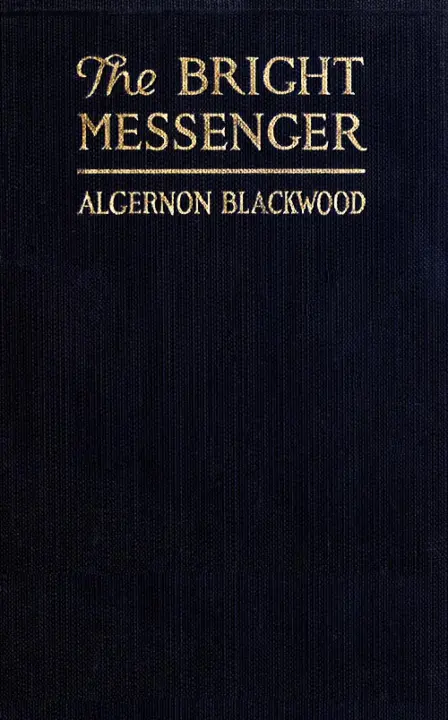
THE CLASSIC COLLECTION · 1922
"The Bright Messenger" by Algernon Blackwood is a novel written in the early 20th century. The story centers on Edward Fillery, a detached yet deeply sympathetic psychologist and doctor, who grapples with his identity shaped by his unconventional birth and upbringing. The book explores themes of human nature, consciousness, and the search for deeper understanding, particularly as it relates to a mysterious young man named LeVallon, who embodies both extraordinary abilities and a primordial connection to nature. At the start of the narrative, we are introduced to Edward Fillery, who reflects on his unique perspective on life stemming from the complex circumstances of his birth. The opening chapters delve into his upbringing, his father's passion for a foreign woman, and the psychological burdens that shaped him into a compassionate observer of humanity. As Fillery embarks on a journey to discover the potential of human consciousness, he receives a letter about LeVallon, a young man with unusual traits and a deep spiritual connection to nature. This letter hints at LeVallon being a unique case filled with potential for insight into the reality beyond ordinary human existence. The initial dynamics between Fillery, LeVallon, and the influences of their respective pasts set the stage for a deeper exploration of what it means to be human.
Introduction adapted from the source catalogue; source summaries may be automatically generated.
Free to read · English · 119,592 words · No account needed
MAKE TIME FOR A GOOD BOOK
On by default. Untick to stop anonymous reading totals. Each page counts after 10 seconds in view. How this works.
Anonymous counting is on unless you have switched it off.
I began to understand better. It was a game. And all games delighted me.
"You may put it roughly so, yes," he explained, "you're very quick. I'll give you a rule to guide you," he went on. I listened with an effort; this tinkling soon wearied me; I could not think long or much; my way, it seemed, was feeling. "Ask yourself always how what you do will affect another," Dr. Fillery concluded. "That's a safe rule for you."
"That is of children," I observed. We stared at each other a moment. "Both sides keep it?" I asked.
"Childish," he agreed, "it certainly is. Both sides, yes, keep it."
I sighed, and the sigh seemed to rise from my very feet, passing
through my whole being. He looked at me most kindly then, asking why I
sighed.
"I used to be free," I told him. "This is not liberty. And why are we
not all free together?"
"It is liberty for two instead of only for one," he said, "and so, in the long run, liberty for all."
"So that's where they are," I remarked, but to myself and not to him. "Not further than that." For what I had once known, but now, it seemed, forgotten, was far beyond such a foolish little game. We had lived without such tiny tricks. We lived openly and unafraid. We worked in harmony. We lived. Yes--but who was "we"? That was the part I had forgotten.
"It's the growth and development of civilization," I heard the little drift of wind go whistling thinly, "and it won't take you long to become quite civilized at this rate, more civilized, indeed, than most--with your swift intelligence and lightning insight."
"Civilization," I repeated to myself. Then I looked at his eyes which hid carefully in their depths somewhere that tiny cherished flame I loved. "Your ways are really very simple," I said. "It's all easy enough to learn. It is so small."
"A man studying ants," he tinkled, "finds them small, but far from simple. You may find complications later. If so, come to me."
I promised him, and the fire gleamed faintly in his eyes a moment. "He entrusted you to me. Your mother," he added softly, "was the woman he loved."
"Civilization," I repeated, for the word set going an odd new rhythm in me that I rather liked, and that tired me less than the other things he said. "What is it then? You are a Race, you told me."
"A Race of human beings, of men and women developing----"
"The comely ones?"
"Are the women. Together we make up the Race."
"And civilization?"
Your reading position is saved on this browser. Take it to another device with a library code. Reading pages adapt to text, rather than matching a printed edition.
Algernon Blackwood
Algernon Blackwood
Algernon Blackwood
Algernon Blackwood
BEHIND THE BOOK
This eBook is for the use of anyone anywhere in the United States and most other parts of the world at no cost and with almost no restrictions whatsoever. You may copy it, give it away or re-use it under the terms of the Project Gutenberg License included with this eBook or online at www.gutenberg.org. If you are not located in the United States, you will have to check the laws of the country where you are located before using this eBook. Read the source licence.
The original source file, including credits and licence, is retained by this library. Request an original-format copy at no charge. Please include the book title and Project Gutenberg identifier #43594.
KEEP YOUR CURIOSITY GOING
Coulson Kernahan

Maurice Baring
Frances Wright
Cécile Tormay
Francis Greenleaf Allinson & Anne C. E. (Anne Crosby Emery) Allinson

Frederic Jesup Stimson