THE CLASSIC COLLECTION✦Half a dozen boysCLASSIC FREE BOOKS
Half a dozen boys
Anna Chapin Ray
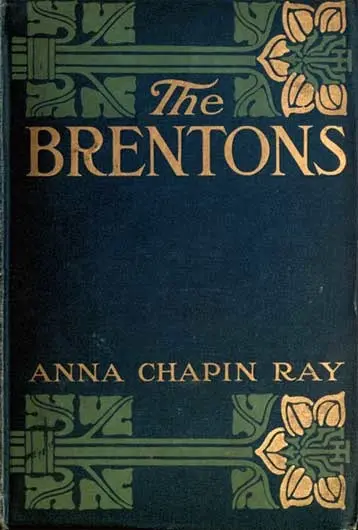
THE CLASSIC COLLECTION · 1912
"The Brentons" by Anna Chapin Ray is a novel written in the early 20th century. The story revolves around the young Scott Brenton, who is torn between pursuing a career in the ministry, as his mother desires, and following his passion for chemistry and scientific study. This conflict reflects the broader themes of ambition, parental expectations, and self-discovery that are central to the narrative. At the start of the novel, we find Scott returning home for the Christmas holidays during his junior year at college, where he faces a crisis of identity. His mother's prayer for his commitment to the ministry heavily weighs on him, especially after hearing commendations about his academic capabilities. The chapter details a tense breakfast conversation between Scott and his mother, showcasing their conflicting desires—her dream of him becoming a minister versus his burgeoning love for science. This initial exploration of their relationship sets the stage for Scott's internal struggles and the impact of familial expectations on individual choices.
Introduction adapted from the source catalogue; source summaries may be automatically generated.
Free to read · English · 108,178 words · No account needed
MAKE TIME FOR A GOOD BOOK
On by default. Untick to stop anonymous reading totals. Each page counts after 10 seconds in view. How this works.
Anonymous counting is on unless you have switched it off.
In the broadest sense, Brenton's old work, like his new, had been teaching. Now, however, the enthusiasm of his gospel was possessing him completely, a gospel, nowadays, solely of the science which, heretofore, threading through and through the fabric of his sermons, had of necessity been juggled to the likeness of the Book of Revelation. Now that he could set it forth in all its nakedness, it seemed to Brenton more than ever like the Book of Revelation. Day after day, his enthusiasm for his theme increased its pace, threw off the bridle of hard, concrete fact, ran to the speculative limits of its course, and then ran past them. By the first of May, Brenton's lectures had made themselves one of the features of the college world; but, by the same token, they had ceased to be lectures upon chemistry, and had become harangues upon every phase of the allied sciences, harangues which ran through the entire gamut of abstract investigation, and came to rest at last upon the pair of finite questions: Whence? and Whither?
And, by the first of May, the student world was all agog, seeking to answer those questions flatly and quite off-hand, instead of waiting for experience of life to give the answer for them. Brenton, meantime, was becoming ten times the force he had been at Saint Peter's; the only trouble lay in the fact that now his force was, not formative, but deformative.
"He's making himself a reputation, fast enough," Dolph Dennison said,
one day. "How much good he is accomplishing, though, is another
question."
To Dolph's surprise, Olive opposed him.
"Isn't there always good in simple, downright sincerity?" she queried.
"Not a bit of it," Dolph assured her bluntly, for a certain talk between them, weeks before, a talk disastrous to the best of Dolph's plans for life, had in no sense put an end to their good friendship. "Sincerity itself is nothing. It's the thing one gets sincere about." Then, without waiting for an answer, "What a woman you are, Olive!" he said.
"Because I stand up for Mr. Brenton?"
"Because, down in your secret heart, you rather admire him for his confounded weaknesses." Dolph spoke with increasing bluntness.
"Not for his weaknesses, Dolph. The man is plucky and sincere. For the sake of the things that he believes are true, he will give up, has given up, more than most of us will ever gain."
Dolph plunged his fists into his pockets.
"Hang it all, Olive! Do be concrete," he bade her.
"I will, if I can," she said fearlessly. "It's only that the things themselves aren't too concrete."
Your reading position is saved on this browser. Take it to another device with a library code. Reading pages adapt to text, rather than matching a printed edition.
Anna Chapin Ray
Anna Chapin Ray
Anna Chapin Ray
Anna Chapin Ray
BEHIND THE BOOK
This eBook is for the use of anyone anywhere in the United States and most other parts of the world at no cost and with almost no restrictions whatsoever. You may copy it, give it away or re-use it under the terms of the Project Gutenberg License included with this eBook or online at www.gutenberg.org. If you are not located in the United States, you will have to check the laws of the country where you are located before using this eBook. Read the source licence.
The original source file, including credits and licence, is retained by this library. Request an original-format copy at no charge. Please include the book title and Project Gutenberg identifier #21763.
KEEP YOUR CURIOSITY GOING
Coulson Kernahan

Maurice Baring
Frances Wright
Cécile Tormay

Frederic Jesup Stimson

W. H. P. (William Henry Pope) Jarvis