THE CLASSIC COLLECTION✦Half a dozen boysCLASSIC FREE BOOKS
Half a dozen boys
Anna Chapin Ray
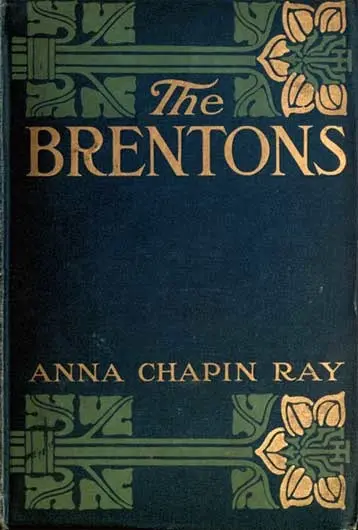
THE CLASSIC COLLECTION · 1912
"The Brentons" by Anna Chapin Ray is a novel written in the early 20th century. The story revolves around the young Scott Brenton, who is torn between pursuing a career in the ministry, as his mother desires, and following his passion for chemistry and scientific study. This conflict reflects the broader themes of ambition, parental expectations, and self-discovery that are central to the narrative. At the start of the novel, we find Scott returning home for the Christmas holidays during his junior year at college, where he faces a crisis of identity. His mother's prayer for his commitment to the ministry heavily weighs on him, especially after hearing commendations about his academic capabilities. The chapter details a tense breakfast conversation between Scott and his mother, showcasing their conflicting desires—her dream of him becoming a minister versus his burgeoning love for science. This initial exploration of their relationship sets the stage for Scott's internal struggles and the impact of familial expectations on individual choices.
Introduction adapted from the source catalogue; source summaries may be automatically generated.
Free to read · English · 108,178 words · No account needed
MAKE TIME FOR A GOOD BOOK
On by default. Untick to stop anonymous reading totals. Each page counts after 10 seconds in view. How this works.
Anonymous counting is on unless you have switched it off.
"Two lumps, Mr. Ross?" Olive queried, over the second cup of tea. She knew quite well that the question would stamp her once and for all as a careless hostess. Nevertheless, she asked it, as her only means of deflecting the talk from Brenton.
The curate gave a soft and patient sigh.
"No sugar, Miss Keltridge," he corrected her gently; "and, if you don't mind, please not quite so much lemon. There!" He lifted his hand appealingly.
But Olive, smiling brightly back at him, gave the uncut half of lemon another squeeze in her strong and supple fingers.
"Oh, but you will learn to like it in time, Mr. Ross. Then you will wonder how you even tolerated it in any other way."
"I dare say," the curate murmured meekly, as he took the cup.
"Indeed, I know," Olive assured him easily. "When I was young, I used to take it with all sorts of cream in it; but now--" She shook her head. Then she added suavely, "You are sure it is quite all right, Mr. Ross?"
The curate took a courteous taste. Then he strangled a little, not so much, though, at the tea as at the coming falsehood.
"Oh, very!" he said politely, and then he took to stirring his tea with
suspicious fervour.
"How strange it always seems to have the town fill up again!" Olive observed, still determined to keep the talk away from Brenton. "And yet, we miss the girls, when they are gone."
"We miss them at the church," the curate answered with unexpected energy. "They increase the offertory at least twenty-five per cent, and they keep the choir boys from flatting on their upper notes. I had never seen a girls' college, till I came here; but I can't help thinking it has its own disadvantages. I like them in the aggregate, Miss Keltridge; but I can't seem to get on with them individually. They are so distressingly young. I leave all that to Mr. Brenton."
"He has been most successful," Olive assented tamely.
"Yes. He has a way with women, as they say; he manages them by the ears. At least--I mean--" The curate, confounded by the hideous mental picture that he had evoked, was floundering helplessly.
"Exactly," Olive assented once more.
The curate rallied.
"And yet, they all adore him," he concluded. "That is the strange thing about Mr. Brenton, Miss Keltridge. He manages most women grandly," the curate, sure that he had retrieved his error, in his self-gratulation promptly slipped into a second one; "but that suffragette wife of his--"
"Mrs. Brenton is not a suffragette," Olive interposed hurriedly.
Your reading position is saved on this browser. Take it to another device with a library code. Reading pages adapt to text, rather than matching a printed edition.
Anna Chapin Ray
Anna Chapin Ray
Anna Chapin Ray
Anna Chapin Ray
BEHIND THE BOOK
This eBook is for the use of anyone anywhere in the United States and most other parts of the world at no cost and with almost no restrictions whatsoever. You may copy it, give it away or re-use it under the terms of the Project Gutenberg License included with this eBook or online at www.gutenberg.org. If you are not located in the United States, you will have to check the laws of the country where you are located before using this eBook. Read the source licence.
The original source file, including credits and licence, is retained by this library. Request an original-format copy at no charge. Please include the book title and Project Gutenberg identifier #21763.
KEEP YOUR CURIOSITY GOING
Coulson Kernahan

Maurice Baring
Frances Wright
Cécile Tormay

Frederic Jesup Stimson

W. H. P. (William Henry Pope) Jarvis