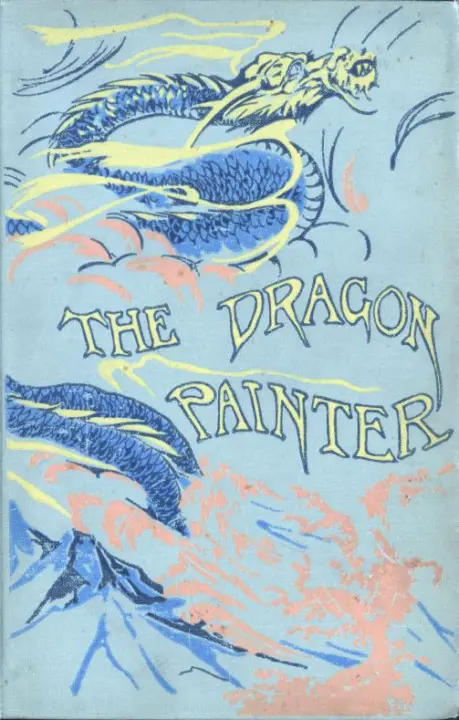
The Dragon Painter
Sidney McCall
THE CLASSIC COLLECTION · 1905
"The Breath of the Gods" by Sidney McCall is a novel written in the early 20th century. The book appears to explore themes of cultural identity and social expectations through its main characters, particularly Gwendolen Todd, the daughter of a senator, and her Japanese friend Yuki Onda. Set against the backdrop of an extravagant coming-out party, the narrative hints at the intertwining lives and complex relationships formed between American and Japanese characters in a politically charged environment. At the start of the novel, we are introduced to the bustling atmosphere of Senator Cyrus C. Todd’s home as it prepares for his daughter's debut into society. The vivid descriptions set the scene for a lavish celebration filled with light, flowers, and music. Gwendolen is portrayed as a beautiful yet somewhat spoiled young lady, excited about the party and her friend Yuki, who represents a different cultural background. As guests begin to arrive, Yuki's unease regarding societal norms and international tensions becomes palpable, particularly with her reaction to the Russian ambassador. The early chapters hint at the complex dynamics of friendship, cultural identity, and the looming influence of political issues on personal lives, setting the stage for further developments in their intertwined destinies.
Introduction adapted from the source catalogue; source summaries may be automatically generated.
Free to read · English · 151,068 words · No account needed
MAKE TIME FOR A GOOD BOOK
On by default. Untick to stop anonymous reading totals. Each page counts after 10 seconds in view. How this works.
Anonymous counting is on unless you have switched it off.
"Am I right in thinking this your first visit to Japan, Monsieur?"
Pierre, half dazed, answered, with instinctive politeness, "My first, yes. But I have for years been interested."
"May I venture to ask what special phase of our civilization has been honored with your interest?"
Pierre's demon nudged him. "It's woman," he said, with a short, ugly
laugh.
Hagané's smile grew almost fatherly. "In that you are no exception to the majority of your countrymen, Monsieur."
"To be accurate I should have said--a woman."
The nobleman took a long whiff at his cigarette before remarking thoughtfully, "It is an unending source of wonder to our students, Monsieur, that you of the West, even your greatest thinkers, take women so seriously. Now with us, apart from the one function of becoming the mothers of our sons, they are to men as playthings to children,--as flowers, or bright-colored birds."
"Am I to infer, then, that to your Highness one woman would be about as
desirable as another?"
"Ah, Monsieur! You are caustic. Not quite that, I protest. There is discrimination, even in playthings. And we must always take into account the effect of physique,--and character,--upon possible sons."
At repetition of this sickening thought Pierre's rage gave a convulsive bound. The veins in his temples burned the skin. His delicate hands clenched themselves into steel. He grasped the pistol, brandished it wildly, and putting his face close to Hagané hissed, "Leave out the name of Yuki, and your satyr's thoughts of her, if you expect to live!"
The prince's raised hand concealed an expression of amusement. Sadness, not altogether convincing, took its place. Pierre sank back to his chair sulkily, ashamed of his violence.
Hagané's eyes lowered themselves, as if in embarrassment, to the table. He toyed with the brittle stem of a wine-glass. "It is unfortunate you are so excitable. For it was just about--Yuki--no, never mind the pistol--that I was thinking to take you into my confidence."
Le Beau stared. The prince continued thoughtfully: "You have been her
friend--"
"I am her friend!"
"Exactly. I thought you ought to be told. After to-day there will be--no Princess Hagané. She leaves my roof and must publicly relinquish my name."
The prince spoke blandly. Pierre's eyes seemed to protrude. The shock of this menace counteracted the coffee. "She is innocent--" He corrected himself. "Why? What has she done?"
Hagané smiled pleasantly. "Her innocence, as you call it, is too
dangerous. My duties, you know. She distracts me, tires me. A mere
child!"
Your reading position is saved on this browser. Take it to another device with a library code. Reading pages adapt to text, rather than matching a printed edition.
Sidney McCall
BEHIND THE BOOK
This eBook is for the use of anyone anywhere in the United States and most other parts of the world at no cost and with almost no restrictions whatsoever. You may copy it, give it away or re-use it under the terms of the Project Gutenberg License included with this eBook or online at www.gutenberg.org. If you are not located in the United States, you will have to check the laws of the country where you are located before using this eBook. Read the source licence.
The original source file, including credits and licence, is retained by this library. Request an original-format copy at no charge. Please include the book title and Project Gutenberg identifier #42365.
KEEP YOUR CURIOSITY GOING
Coulson Kernahan

Maurice Baring
Frances Wright
Cécile Tormay

Frederic Jesup Stimson

W. H. P. (William Henry Pope) Jarvis