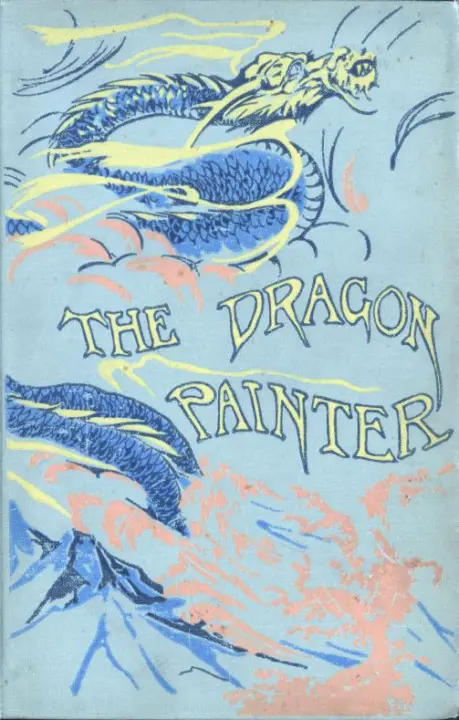
The Dragon Painter
Sidney McCall
THE CLASSIC COLLECTION · 1905
"The Breath of the Gods" by Sidney McCall is a novel written in the early 20th century. The book appears to explore themes of cultural identity and social expectations through its main characters, particularly Gwendolen Todd, the daughter of a senator, and her Japanese friend Yuki Onda. Set against the backdrop of an extravagant coming-out party, the narrative hints at the intertwining lives and complex relationships formed between American and Japanese characters in a politically charged environment. At the start of the novel, we are introduced to the bustling atmosphere of Senator Cyrus C. Todd’s home as it prepares for his daughter's debut into society. The vivid descriptions set the scene for a lavish celebration filled with light, flowers, and music. Gwendolen is portrayed as a beautiful yet somewhat spoiled young lady, excited about the party and her friend Yuki, who represents a different cultural background. As guests begin to arrive, Yuki's unease regarding societal norms and international tensions becomes palpable, particularly with her reaction to the Russian ambassador. The early chapters hint at the complex dynamics of friendship, cultural identity, and the looming influence of political issues on personal lives, setting the stage for further developments in their intertwined destinies.
Introduction adapted from the source catalogue; source summaries may be automatically generated.
Free to read · English · 151,068 words · No account needed
MAKE TIME FOR A GOOD BOOK
On by default. Untick to stop anonymous reading totals. Each page counts after 10 seconds in view. How this works.
Anonymous counting is on unless you have switched it off.
The two young men crossed glances of dismay. Quickly Hagané turned his eyes to Pierre's flushed face. Each moist curl burned it like a scar. "And similarly, I suppose, I am mistaken in thinking that Monsieur Le Beau has but just arrived in great haste."
Before an answer could be found, footsteps and a timid knock made interruption. Mouquin craned his neck around to the aperture of the door, altering but slightly the position of his body.
"A servant says, Excellency, that the American minister, Mr. Todd, telephones from his Legation that he must see you immediately."
"Go, Mouquin, and stop him," said Ronsard, glibly. "Say I am out. But if he is already started wait for him at the door, and be careful to usher him into the small drawing-room, and keep him there till I come. Conciliate him. Your conversation, you understand, is to be on the high C of flippancy."
In the short interval Pierre had regained self-control. "Lord Hagané, in what way can I serve you?" He made a great effort to be nonchalant.
Hagané leaned slightly toward Ronsard. "Perhaps you have heard, Excellency, that a few moments since, Monsieur Le Beau picked up, in my humble home, quite by accident, a private letter that I had carelessly let fall."
"A private letter!" Ronsard turned with well-feigned astonishment to his subordinate. "Oh, no! Monsieur Le Beau is the soul of honor!"
Pierre could not think how to weigh the naturalness of indignation against a gentlemanly magnanimity. "The prince is mistaken," he said weakly. "It must have been another man."
Without a flicker of anger or impatience Hagané, still facing the count, inquired, "Does the young man act with your authority?"
"Mon Dieu, your Highness! No. Monsieur Le Beau has a certain official connection--but in such a private matter"--Spread hands and a shrug completed the thought.
"Were you not at my villa this morning?" Hagané had turned suddenly to
Pierre.
What could the Frenchman say? "No," came the pliant lie.
"Come now, Prince Hagané!" began Ronsard, genially. "You see it's all a mistake. Forgive the boy his embarrassment. He is ill. To accuse him of purloining a private letter! Mother of God! In France it means a duel--"
"Not purloining, your Excellency," corrected Hagané. "Taking by accident,--quite by accident. That is different. If our young friend was suffering from delirium he may have forgotten. Ask him to feel in his pocket."
"It's a damnable lie, hatched for some personal reason," said Pierre.
Hagané slowly rose. It was as if bronze moved. Ronsard instinctively imitated him, watching closely. He was convinced, now, that Hagané knew; but could not guess his next move.
Your reading position is saved on this browser. Take it to another device with a library code. Reading pages adapt to text, rather than matching a printed edition.
Sidney McCall
BEHIND THE BOOK
This eBook is for the use of anyone anywhere in the United States and most other parts of the world at no cost and with almost no restrictions whatsoever. You may copy it, give it away or re-use it under the terms of the Project Gutenberg License included with this eBook or online at www.gutenberg.org. If you are not located in the United States, you will have to check the laws of the country where you are located before using this eBook. Read the source licence.
The original source file, including credits and licence, is retained by this library. Request an original-format copy at no charge. Please include the book title and Project Gutenberg identifier #42365.
KEEP YOUR CURIOSITY GOING
Coulson Kernahan

Maurice Baring
Frances Wright
Cécile Tormay

Frederic Jesup Stimson

W. H. P. (William Henry Pope) Jarvis