THE CLASSIC COLLECTION✦A dead man’s diaryCLASSIC FREE BOOKS
A dead man’s diary
Coulson Kernahan
THE CLASSIC COLLECTION · 1924
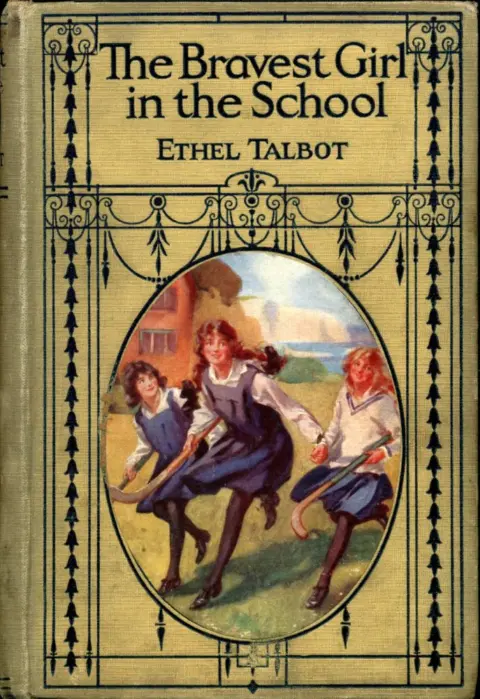
"The Bravest Girl in the School" by Ethel Talbot is a children's novel written in the early 20th century. The story centers around the experiences of young girls as they navigate school life, with a focus on themes of bravery, friendships, and personal growth. The narrative specifically introduces Gretta and Sybil, two sisters, as they embark on an exciting journey filled with new challenges and opportunities, including a mysterious cousin, an aunt, and the prospect of attending the Cliff School. At the start of the book, we are introduced to Gretta and her younger sister Sybil, who are caught off guard by the unexpected arrival of their Aunt Tib from Australia. The opening chapters detail the sisters’ mixed emotions about their new school life and reflect their distinct personalities—Gretta being cautious and responsible, while Sybil exhibits enthusiasm and eagerness for adventure. As they prepare for their new school year, an intriguing plot about a secret prize for bravery emerges, suggesting that the characters will face exciting challenges, and it sets the stage for their development as they adapt to school rules and form new friendships along the way.
Introduction adapted from the source catalogue; source summaries may be automatically generated.
Free to read · English · 40,799 words · No account needed
MAKE TIME FOR A GOOD BOOK
On by default. Untick to stop anonymous reading totals. Each page counts after 10 seconds in view. How this works.
Anonymous counting is on unless you have switched it off.
Her words, when she spoke, were hardly a surprise to the older girl. “You made a mistake, my dear,” she said, laying down her pen and holding out her hand to Margot, “in not knocking at the door. I am Miss Slater. I had quite intended to send for you, for I am very anxious to make the acquaintance of my new girls.” She rose as she spoke and advanced towards Gretta. “I expect you are Margaret Grey,” she said, “for I have already spoken to your little sister. I hope, my dear, that you will be happy at school.”
“Thank you,” replied Gretta shyly, “and I’m so sorry we----”
“So am I,” declared Margot, “for I suppose you’re awfully busy. But, you see, we couldn’t know where to go, could we?”
Miss Slater volunteered no direct answer to the question. “I think there’s no doubt that you are Margot Fleming--the little girl from Australia,” she said with a smile.
“Why, however can you guess that!” exclaimed Margot in mystification, then stopped to listen as the head mistress opened the heavy door that separated her rooms from the boarders’ quarters, and the sound of laughter and cheerful conversation met the children’s ears.
“I think you should have no difficulty in finding your way, now,” she said, smiling at the two girls. “But I will take you myself and introduce you; then you will feel at home very soon.”
She turned the handle as she spoke, and instantly, as though by magic, the noisy babel of conversation ceased, there was a scrambling as the girls jumped up hurriedly from their seats, and a whisper, deferential, yet delighted, ran round the room. “It’s Miss Slater!”
“I have brought two new girls, Helen,” said the head mistress, smiling at the group, and then turning to a tall and responsible-looking damsel with merry eyes and a thick plait of hair, who advanced as she was addressed. “Margaret Grey and her cousin, Margot Fleming; they will sleep in Dormitory 3, with Stella and Josy. Look after them, please, and do what you can to make them feel at home.”
“Yes, Miss Slater,” said the head girl. Then a scrap of a child, who seemed all pigtail, ran forward to hold the door, and to shut it as the head mistress withdrew. As it closed the uproar of merry voices broke out again with redoubled vigour.
“And she’s been practising strokes all the hols.,” announced someone
from the fireplace.
“We went to the meet on our bicycles twice,” screamed a shrill voice
from the corner.
Your reading position is saved on this browser. Take it to another device with a library code. Reading pages adapt to text, rather than matching a printed edition.
BEHIND THE BOOK
This eBook is for the use of anyone anywhere in the United States and most other parts of the world at no cost and with almost no restrictions whatsoever. You may copy it, give it away or re-use it under the terms of the Project Gutenberg License included with this eBook or online at www.gutenberg.org. If you are not located in the United States, you will have to check the laws of the country where you are located before using this eBook. Read the source licence.
The original source file, including credits and licence, is retained by this library. Request an original-format copy at no charge. Please include the book title and Project Gutenberg identifier #65205.
KEEP YOUR CURIOSITY GOING
Coulson Kernahan

Maurice Baring
Frances Wright
Cécile Tormay

Frederic Jesup Stimson

W. H. P. (William Henry Pope) Jarvis