READ · DISCOVER · ENJOYClassic literature · Always free
THE CLASSIC COLLECTION✦The boys’ book of buccaneersA. Hyatt (Alpheus Hyatt) VerrillCLASSIC FREE BOOKS

THE CLASSIC COLLECTION · 1923

The boys’ book of buccaneers

"The Boys' Book of Buccaneers" by A. Hyatt Verrill is a historical account written in the early 20th century. This book explores the intriguing world of buccaneers, highlighting their origins, exploits, and distinguishing them from common pirates. It delves into the lives of notable figures such as Sir Henry Morgan and provides insights into the adventurous, yet often brutal, naval history of the Caribbean. The opening of the book introduces us to Jack, a young boy who, curious about buccaneers, seeks clarification from his father, Mr. Bickford. As they discuss the difference between buccaneers and pirates, Mr. Bickford explains the historical context that led to the emergence of buccaneers during England's conflict with Spain. He recounts how settlers turned warriors began raiding Spanish ships and settlements, forming a crucial part of Caribbean history. The narrative sets the stage for further exploration of famous buccaneers and reveals the themes of bravery, adventure, and the harsh realities of their exploits.

Introduction adapted from the source catalogue; source summaries may be automatically generated.

Start reading ↓

Free to read · English · 51,074 words · No account needed

MAKE TIME FOR A GOOD BOOK

The boys’ book of buccaneers

On by default. Untick to stop anonymous reading totals. Each page counts after 10 seconds in view. How this works.

Anonymous counting is on unless you have switched it off.

The boys’ book of buccaneers

“And there is little wonder that they thought him insane. Imagine a lone ship—and a half-burned, far from seaworthy galleon at that—going pirating in the Pacific where every town, every man, every ship was an enemy; where there was not a friendly harbor in which to lie; where Spanish warships were numerous; where there was no buccaneers’ lair in which to refit or provision and secure men, and where the buccaneers were completely cut off, separated by thousands of miles, from their own countrymen. And then, even if the ship and its crew survived, think of the thousands of perils to be faced at every turn in attempting to navigate the almost unknown Antarctic seas and to round South America and sail for thousands of miles across the Atlantic to the West Indies. It was a scheme so wild, so dangerous and so unheard of that nearly one-third of the men refused to stand by Sharp, and nearly seventy men declared their intention of braving the perils and hardships of a return march through the jungles of Darien rather than attempt the voyage. Among these deserters was Dampier; Wafer, the surgeon; Jobson of the Greek Testament, and others. Ringrose himself freely admits in his ‘log’ that he was minded to accompany them and would have done so had he not been more afraid of the jungle and the Indians than of the proposed voyage. It is fortunate for us that he stuck to the ship, for otherwise we would have no record of that marvelous cruise.

“And the deserters had anything but an easy time of it, and often, ere they reached the Caribbean and their own ships, they heartily wished that they had remained with Captain Sharp.

“Bad as the crossing had been before, it was now a thousand times worse. It was the height of the rainy season; it poured incessantly day and night; the forest was little more than a vast morass and the rivers were swollen, raging torrents. The Indians refused to guide the men, owing partly to the weather conditions and partly as they were disgusted at having been cheated out of their revenge on the Dons and the joy of butchering them, and the buccaneers were in a sad plight. In vain they offered beads, cloth, hatchets and similar articles of trade for guides. They were in despair until one of the men, evidently familiar with women’s ways, dug a sky-blue petticoat from among his loot and slipped it quickly over the head of the chief’s wife. His ruse worked like a charm. The wife added her arguments to those of the buccaneers, and the chief, throwing up his hands in despair, agreed to lead the buccaneers across the Isthmus. But even with their Indian guide their plight was pitiable. They plunged through deep swamps, fought their way through wicked, thorn-covered jungles, hacked and hewed a pathway through the forest, swam swollen rivers, were drenched with rain, infested with ticks, tortured by mosquitoes and almost starved. For days at a time they could not light a fire; they had no shelters; the clothes were torn from their bodies; their sodden shoes fell from their blistered, bleeding feet. Sometimes a whole day’s labor would result in less than two miles of progress and their best time was but five or six miles a day. For twenty-three days they endured every hardship and torture, traveling one hundred and ten miles and losing their way a hundred times despite their Indian guide. On the morning of the eighth day they reached a river so wide and swift none dared to attempt it, and after a deal of argument it was decided to choose a man by lot to swim the torrent with a line. The lot fell upon one George Gayney. Unfortunately for him he was an avaricious fellow and insisted on carrying his share of loot—three hundred pieces of eight—in a bag lashed to his back. When midway across he was whirled about by the current, he became entangled in the rope and was carried under and drowned. But another took his place, the rope was gotten across and, half-drowned, the party reached the opposite bank. A few days later they found poor Gayney’s body with the bag of coins still lashed to his back, but so miserable and spent were the men that they did not even bother to secure the silver but left the corpse there upon the river’s bank, money and all. Another unfortunate was the surgeon, Wafer. By an accidental discharge of some powder he received a serious wound in the leg and, unable to walk, was left with some Indians to recover. While convalescing he used his skill for the Indians’ benefit, and the redmen, impressed by what they considered magic, treated him like a god. To show their gratitude and esteem they stripped him of his ragged garments, painted him from head to foot with every color of the rainbow and enthroned him in a regal hut. But Wafer had no mind to pass his remaining days as an Indian witch doctor or medicine man. Watching his opportunity he stole away, and garbed only in his coat of paint, sneaked off through the forest towards the coast. Months later, after untold hardships, he came in sight of the sea, and, without thinking of his appearance, rushed toward a party of buccaneers who fortunately were at hand nearby. For an instant the buccaneers gaped in amazement, utterly at a loss to understand who the nude, gorgeously painted creature was, and not until he shouted to them in English did they realize that it was the long-lost surgeon, Wafer. Never had buccaneer appeared before in such guise; they roared with laughter, and many were the rude jests and coarse jokes passed at the doctor’s expense. But poor Jobson, the divinity student, was less fortunate. He too had been overcome and left behind, and while he eventually managed to rejoin his comrades he was too far spent to recover and a few days later he died, his Greek Testament still clasped in his hand. But aside from Gayney and Jobson no lives were lost, and a few days after reaching the Caribbean shores the buccaneers were rescued by a French buccaneer, Captain Tristian, along with the loot they had carried throughout their awful journey, and Dampier’s ‘joyente of bamboo’ which the naturalist-buccaneer had preserved unharmed and within which was the closely written journal wherein he had daily set down every event of interest or note.

Your reading position is saved on this browser. Take it to another device with a library code. Reading pages adapt to text, rather than matching a printed edition.

More from this author

BEHIND THE WORDS

About A. Hyatt (Alpheus Hyatt) Verrill

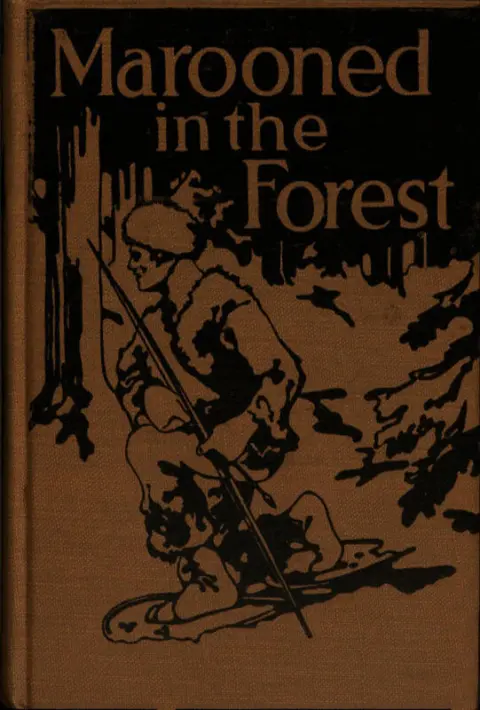
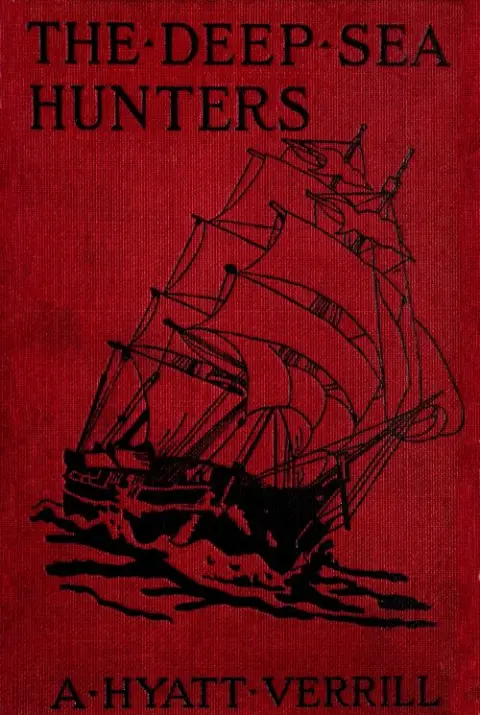
A. Hyatt (Alpheus Hyatt) Verrill (1871–1954). Explore The boys’ book of buccaneers, The Deep Sea Hunters: Adventures on a Whaler, Marooned in the Forest: The Story of a Primitive Fight for Life and other works in this collection. These books span adventure, children’s books, history.
Explore this author’s books →

THE READERS’ VERDICT

How did this story stay with you?

Not rated yet
Your rating for The boys’ book of buccaneers

Be the first to share your verdict.

One rating per browser, which you can change or remove. A necessary browser identifier remembers your vote. How ratings work

A GOOD STORY DESERVES COMPANY

Pass this book along.

A great read is even better when it’s shared.

SEND A LITTLE INSPIRATION

Share this book

BEHIND THE BOOK

Edition & source details.

Title
The boys’ book of buccaneers
Author
A. Hyatt (Alpheus Hyatt) Verrill
Publication year
1923
Digital edition publisher
Project Gutenberg
Gutenberg release date
2022-09-09
Language
English
Source edition imprint
$aUnited States :$bDodd, Mead and company,$c1923.
Source identifier
Project Gutenberg #68949
Contributors
No additional named contributors in source metadata

Public-domain source & licence

This eBook is for the use of anyone anywhere in the United States and most other parts of the world at no cost and with almost no restrictions whatsoever. You may copy it, give it away or re-use it under the terms of the Project Gutenberg License included with this eBook or online at www.gutenberg.org. If you are not located in the United States, you will have to check the laws of the country where you are located before using this eBook. Read the source licence.

Full source licence and obtaining an original copy

The original source file, including credits and licence, is retained by this library. Request an original-format copy at no charge. Please include the book title and Project Gutenberg identifier #68949.

the full Project Gutenberg License must appear
prominently whenever any copy of a Project Gutenberg work (any work
on which the phrase “Project Gutenberg” appears, or with which the
phrase “Project Gutenberg” is associated) is accessed, displayed,
performed, viewed, copied or distributed:

This eBook is for the use of anyone anywhere in the United States and most
other parts of the world at no cost and with almost no restrictions
whatsoever. You may copy it, give it away or re-use it under the terms
of the Project Gutenberg™ License included with this eBook or online
at www.gutenberg.org. If you
are not located in the United States, you will have to check the laws
of the country where you are located before using this eBook.

1.E.2. If an individual Project Gutenberg electronic work is
derived from texts not protected by U.S. copyright law (does not
contain a notice indicating that it is posted with permission of the
copyright holder), the work can be copied and distributed to anyone in
the United States without paying any fees or charges. If you are
redistributing or providing access to a work with the phrase “Project
Gutenberg” associated with or appearing on the work, you must comply
either with the requirements of paragraphs 1.E.1 through 1.E.7 or
obtain permission for the use of the work and the Project Gutenberg
trademark as set forth in paragraphs 1.E.8 or 1.E.9.

1.E.3. If an individual Project Gutenberg electronic work is posted
with the permission of the copyright holder, your use and distribution
must comply with both paragraphs 1.E.1 through 1.E.7 and any
additional terms imposed by the copyright holder. Additional terms
will be linked to the Project Gutenberg License for all works
posted with the permission of the copyright holder found at the
beginning of this work.

1.E.4. Do not unlink or detach or remove the full Project Gutenberg
License terms from this work, or any files containing a part of this
work or any other work associated with Project Gutenberg.

1.E.5. Do not copy, display, perform, distribute or redistribute this
electronic work, or any part of this electronic work, without
prominently displaying the sentence set forth in paragraph 1.E.1 with
active links or immediate access to the full terms of the Project
Gutenberg License.

1.E.6. You may convert to and distribute this work in any binary,
compressed, marked up, nonproprietary or proprietary form, including
any word processing or hypertext form. However, if you provide access
to or distribute copies of a Project Gutenberg work in a format
other than “Plain Vanilla ASCII” or other format used in the official
version posted on the official Project Gutenberg website
(www.gutenberg.org), you must, at no additional cost, fee or expense
to the user, provide a copy, a means of exporting a copy, or a means
of obtaining a copy upon request, of the work in its original “Plain
Vanilla ASCII” or other form. Any alternate format must include the
full Project Gutenberg License as specified in paragraph 1.E.1.

1.E.7. Do not charge a fee for access to, viewing, displaying,
performing, copying or distributing any Project Gutenberg works
unless you comply with paragraph 1.E.8 or 1.E.9.

1.E.8. You may charge a reasonable fee for copies of or providing
access to or distributing Project Gutenberg electronic works
provided that:

• You pay a royalty fee of 20% of the gross profits you derive from
the use of Project Gutenberg works calculated using the method
you already use to calculate your applicable taxes. The fee is owed
to the owner of the Project Gutenberg trademark, but he has
agreed to donate royalties under this paragraph to the Project
Gutenberg Literary Archive Foundation. Royalty payments must be paid
within 60 days following each date on which you prepare (or are
legally required to prepare) your periodic tax returns. Royalty
payments should be clearly marked as such and sent to the Project
Gutenberg Literary Archive Foundation at the address specified in
Section 4, “Information about donations to the Project Gutenberg
Literary Archive Foundation.”

• You provide a full refund of any money paid by a user who notifies
you in writing (or by e-mail) within 30 days of receipt that s/he
does not agree to the terms of the full Project Gutenberg™
License. You must require such a user to return or destroy all
copies of the works possessed in a physical medium and discontinue
all use of and all access to other copies of Project Gutenberg™
works.

• You provide, in accordance with paragraph 1.F.3, a full refund of
any money paid for a work or a replacement copy, if a defect in the
electronic work is discovered and reported to you within 90 days of
receipt of the work.

• You comply with all other terms of this agreement for free
distribution of Project Gutenberg™ works.


1.E.9. If you wish to charge a fee or distribute a Project
Gutenberg™ electronic work or group of works on different terms than
are set forth in this agreement, you must obtain permission in writing
from the Project Gutenberg Literary Archive Foundation, the manager of
the Project Gutenberg™ trademark. Contact the Foundation as set
forth in Section 3 below.

1.F.

1.F.1. Project Gutenberg volunteers and employees expend considerable
effort to identify, do copyright research on, transcribe and proofread
works not protected by U.S. copyright law in creating the Project
Gutenberg™ collection. Despite these efforts, Project Gutenberg™
electronic works, and the medium on which they may be stored, may
contain “Defects,” such as, but not limited to, incomplete, inaccurate
or corrupt data, transcription errors, a copyright or other
intellectual property infringement, a defective or damaged disk or
other medium, a computer virus, or computer codes that damage or
cannot be read by your equipment.

1.F.2. LIMITED WARRANTY, DISCLAIMER OF DAMAGES - Except for the “Right
of Replacement or Refund” described in paragraph 1.F.3, the Project
Gutenberg Literary Archive Foundation, the owner of the Project
Gutenberg™ trademark, and any other party distributing a Project
Gutenberg™ electronic work under this agreement, disclaim all
liability to you for damages, costs and expenses, including legal
fees. YOU AGREE THAT YOU HAVE NO REMEDIES FOR NEGLIGENCE, STRICT
LIABILITY, BREACH OF WARRANTY OR BREACH OF CONTRACT EXCEPT THOSE
PROVIDED IN PARAGRAPH 1.F.3. YOU AGREE THAT THE FOUNDATION, THE
TRADEMARK OWNER, AND ANY DISTRIBUTOR UNDER THIS AGREEMENT WILL NOT BE
LIABLE TO YOU FOR ACTUAL, DIRECT, INDIRECT, CONSEQUENTIAL, PUNITIVE OR
INCIDENTAL DAMAGES EVEN IF YOU GIVE NOTICE OF THE POSSIBILITY OF SUCH
DAMAGE.

1.F.3. LIMITED RIGHT OF REPLACEMENT OR REFUND - If you discover a
defect in this electronic work within 90 days of receiving it, you can
receive a refund of the money (if any) you paid for it by sending a
written explanation to the person you received the work from. If you
received the work on a physical medium, you must return the medium
with your written explanation. The person or entity that provided you
with the defective work may elect to provide a replacement copy in
lieu of a refund. If you received the work electronically, the person
or entity providing it to you may choose to give you a second
opportunity to receive the work electronically in lieu of a refund. If
the second copy is also defective, you may demand a refund in writing
without further opportunities to fix the problem.

1.F.4. Except for the limited right of replacement or refund set forth
in paragraph 1.F.3, this work is provided to you ‘AS-IS’, WITH NO
OTHER WARRANTIES OF ANY KIND, EXPRESS OR IMPLIED, INCLUDING BUT NOT
LIMITED TO WARRANTIES OF MERCHANTABILITY OR FITNESS FOR ANY PURPOSE.

1.F.5. Some states do not allow disclaimers of certain implied
warranties or the exclusion or limitation of certain types of
damages. If any disclaimer or limitation set forth in this agreement
violates the law of the state applicable to this agreement, the
agreement shall be interpreted to make the maximum disclaimer or
limitation permitted by the applicable state law. The invalidity or
unenforceability of any provision of this agreement shall not void the
remaining provisions.

1.F.6. INDEMNITY - You agree to indemnify and hold the Foundation, the
trademark owner, any agent or employee of the Foundation, anyone
providing copies of Project Gutenberg™ electronic works in
accordance with this agreement, and any volunteers associated with the
production, promotion and distribution of Project Gutenberg™
electronic works, harmless from all liability, costs and expenses,
including legal fees, that arise directly or indirectly from any of
the following which you do or cause to occur: (a) distribution of this
or any Project Gutenberg work, (b) alteration, modification, or
additions or deletions to any Project Gutenberg work, and (c) any
Defect you cause.

Section 2. Information about the Mission of Project Gutenberg

Project Gutenberg is synonymous with the free distribution of
electronic works in formats readable by the widest variety of
computers including obsolete, old, middle-aged and new computers. It
exists because of the efforts of hundreds of volunteers and donations
from people in all walks of life.

Volunteers and financial support to provide volunteers with the
assistance they need are critical to reaching Project Gutenberg’s
goals and ensuring that the Project Gutenberg collection will
remain freely available for generations to come. In 2001, the Project
Gutenberg Literary Archive Foundation was created to provide a secure
and permanent future for Project Gutenberg and future
generations. To learn more about the Project Gutenberg Literary
Archive Foundation and how your efforts and donations can help, see
Sections 3 and 4 and the Foundation information page at www.gutenberg.org.

Section 3. Information about the Project Gutenberg Literary Archive Foundation

The Project Gutenberg Literary Archive Foundation is a non-profit
501(c)(3) educational corporation organized under the laws of the
state of Mississippi and granted tax exempt status by the Internal
Revenue Service. The Foundation’s EIN or federal tax identification
number is 64-6221541. Contributions to the Project Gutenberg Literary
Archive Foundation are tax deductible to the full extent permitted by
U.S. federal laws and your state’s laws.

The Foundation’s business office is located at 41 Watchung Plaza #516,
Montclair NJ 07042, USA, +1 (862) 621-9288. Email contact links and up
to date contact information can be found at the Foundation’s website
and official page at www.gutenberg.org/contact

Section 4. Information about Donations to the Project Gutenberg
Literary Archive Foundation

Project Gutenberg™ depends upon and cannot survive without widespread
public support and donations to carry out its mission of
increasing the number of public domain and licensed works that can be
freely distributed in machine-readable form accessible by the widest
array of equipment including outdated equipment. Many small donations
($1 to $5,000) are particularly important to maintaining tax exempt
status with the IRS.

The Foundation is committed to complying with the laws regulating
charities and charitable donations in all 50 states of the United
States. Compliance requirements are not uniform and it takes a
considerable effort, much paperwork and many fees to meet and keep up
with these requirements. We do not solicit donations in locations
where we have not received written confirmation of compliance. To SEND
DONATIONS or determine the status of compliance for any particular state
visit www.gutenberg.org/donate.

While we cannot and do not solicit contributions from states where we
have not met the solicitation requirements, we know of no prohibition
against accepting unsolicited donations from donors in such states who
approach us with offers to donate.

International donations are gratefully accepted, but we cannot make
any statements concerning tax treatment of donations received from
outside the United States. U.S. laws alone swamp our small staff.

Please check the Project Gutenberg web pages for current donation
methods and addresses. Donations are accepted in a number of other
ways including checks, online payments and credit card donations. To
donate, please visit: www.gutenberg.org/donate.

Section 5. General Information About Project Gutenberg electronic works

Professor Michael S. Hart was the originator of the Project
Gutenberg concept of a library of electronic works that could be
freely shared with anyone. For forty years, he produced and
distributed Project Gutenberg eBooks with only a loose network of
volunteer support.

Project Gutenberg eBooks are often created from several printed
editions, all of which are confirmed as not protected by copyright in
the U.S. unless a copyright notice is included. Thus, we do not
necessarily keep eBooks in compliance with any particular paper
edition.

Most people start at our website which has the main PG search
facility: www.gutenberg.org.

This website includes information about Project Gutenberg,
including how to make donations to the Project Gutenberg Literary
Archive Foundation, how to help produce our new eBooks, and how to
subscribe to our email newsletter to hear about new eBooks.


KEEP YOUR CURIOSITY GOING

Your next chapter awaits.