THE CLASSIC COLLECTION✦An outlaw’s diary: the CommuneCLASSIC FREE BOOKS
An outlaw’s diary: the Commune
Cécile Tormay
THE CLASSIC COLLECTION · 1885
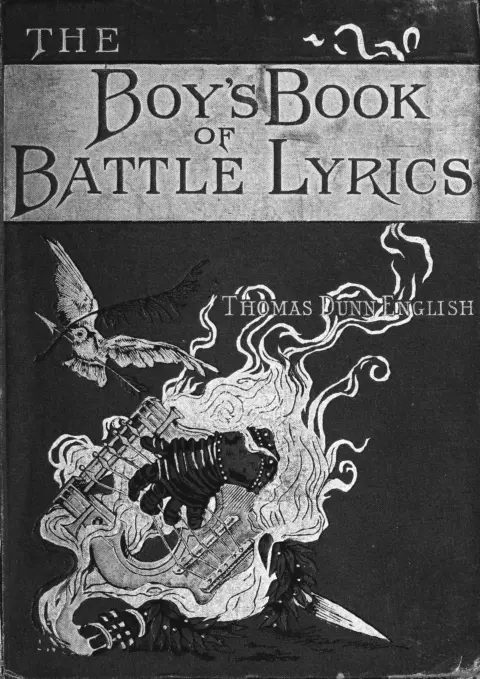
"The Boy’s Book of Battle-Lyrics" by Thos. Dunn English is a collection of verses written in the late 19th century, focusing on significant battles and historical events in the history of the United States from the colonial era up to the outbreak of the sectional war. The text aims to present metrical narratives that highlight the courage and patriotism of those involved in these conflicts, making it an engaging blend of poetry and history. The opening of the collection introduces the author and provides context for the work, outlining his intentions to immortalize notable events through lyrical storytelling. Themes of bravery and loss are prevalent, as demonstrated in accounts from battles such as De Soto's expedition, Bacon's Rebellion, and the Siege of Trenton. The author emphasizes both the valor of the soldiers and the harrowing experiences of those affected by the wars, setting a dramatic tone that underpins the entire collection. The groundwork laid in these verses establishes a sense of reverence for the sacrifices made by soldiers and civilians alike throughout American history.
Introduction adapted from the source catalogue; source summaries may be automatically generated.
Free to read · English · 45,708 words · No account needed
MAKE TIME FOR A GOOD BOOK
On by default. Untick to stop anonymous reading totals. Each page counts after 10 seconds in view. How this works.
Anonymous counting is on unless you have switched it off.
“Ay!” I answered, “but I tell you, should you try it, you would see We have many a hundred women that in need were stout as she.
“On the mountains of Virginia, in Kentucky’s bloody ground, In the forests of Ohio, scores of such are to be found—
“Women tender, trusting, tearful; yet if peril forced among, They can fight as stern and fiercely as a pantheress for her young.”
Quoth the chieftain, “If so many like that woman you can find, You should send them forth to battle, while your men remained behind.
“I have met your braves in combat when the skies were red with fire, And the sabres of your horsemen flashed the lightning of their ire—
“When your brazen-bodied cannon spoke their wrath to those around, And the trampling of your legions shook the awed and trembling ground.
“Where the waters of Kanawha rush to join a clearer tide, I was there with stout old Cornstalk, when you broke our power and pride.
“With the Mingoes, under Girty, at Fort Henry I was one, When your forty kept four hundred baffled there from sun to sun.
“By Tecumthe’s side I battled at the Thames the day he fell, Where continual flash kept lighting forest, river, swamp, and dell.
“But I never knew a terror, and a fear I never felt, Save that midnight when the woman so upon my comrades dealt.
“And if I were young and likely, then, whatever dames I saw, I would wed none save the equal of that daring long-knife squaw.”
There is no event in American history which seems to be so misunderstood, especially in details, as the battle fought in New Orleans after the close of the war of 1812. The commander of the Americans at that notable repulse became afterwards a prominent politician, or, rather, resumed his political career, and was twice elected President of the United States by the Democratic party, which his course in office aided to disintegrate. The contest during the three times he was a candidate was extremely bitter, and while he was lauded by his friends as a hero, patriot, and statesman, he was denounced by his foes as an illiterate ruffian, ignorant alike of military science and state-craft. The battle upon which his fame mainly rested, was said to have been won entirely by the folly of the British, who stupidly marched upon impregnable works, and were shot down easily by expert marksmen intrenched behind cotton-bales. This last error is amusing, and nothing will ever correct it. The embankment behind which most of the militia lay was formed of swamp-mud mainly, the best material possible for earthworks. A few cotton-bales had been used at one point, but one of them being fired, the dense smoke made it an annoyance, and it was speedily removed. That my readers may comprehend the affair, I give a brief account of the operations leading up to the fight.
Your reading position is saved on this browser. Take it to another device with a library code. Reading pages adapt to text, rather than matching a printed edition.
BEHIND THE BOOK
This eBook is for the use of anyone anywhere in the United States and most other parts of the world at no cost and with almost no restrictions whatsoever. You may copy it, give it away or re-use it under the terms of the Project Gutenberg License included with this eBook or online at www.gutenberg.org. If you are not located in the United States, you will have to check the laws of the country where you are located before using this eBook. Read the source licence.
The original source file, including credits and licence, is retained by this library. Request an original-format copy at no charge. Please include the book title and Project Gutenberg identifier #70415.
KEEP YOUR CURIOSITY GOING
Cécile Tormay

Moritz Busch
John L. Ransom
Frances Wright
Cécile Tormay

Mabel Potter Daggett