THE CLASSIC COLLECTION✦An outlaw’s diary: the CommuneCLASSIC FREE BOOKS
An outlaw’s diary: the Commune
Cécile Tormay
THE CLASSIC COLLECTION · 1885
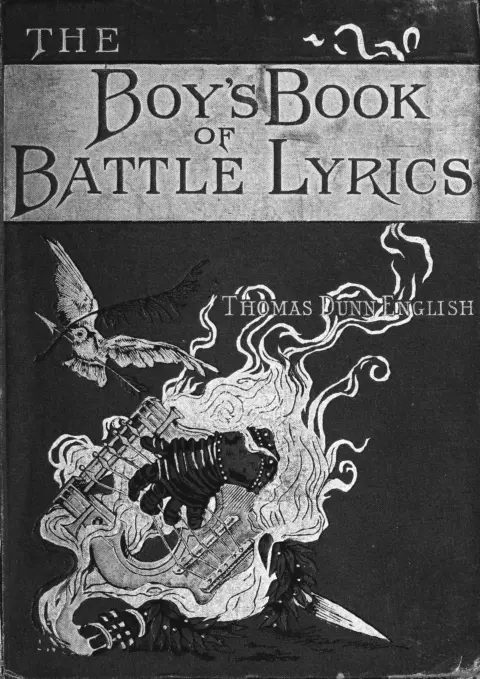
"The Boy’s Book of Battle-Lyrics" by Thos. Dunn English is a collection of verses written in the late 19th century, focusing on significant battles and historical events in the history of the United States from the colonial era up to the outbreak of the sectional war. The text aims to present metrical narratives that highlight the courage and patriotism of those involved in these conflicts, making it an engaging blend of poetry and history. The opening of the collection introduces the author and provides context for the work, outlining his intentions to immortalize notable events through lyrical storytelling. Themes of bravery and loss are prevalent, as demonstrated in accounts from battles such as De Soto's expedition, Bacon's Rebellion, and the Siege of Trenton. The author emphasizes both the valor of the soldiers and the harrowing experiences of those affected by the wars, setting a dramatic tone that underpins the entire collection. The groundwork laid in these verses establishes a sense of reverence for the sacrifices made by soldiers and civilians alike throughout American history.
Introduction adapted from the source catalogue; source summaries may be automatically generated.
Free to read · English · 45,708 words · No account needed
MAKE TIME FOR A GOOD BOOK
On by default. Untick to stop anonymous reading totals. Each page counts after 10 seconds in view. How this works.
Anonymous counting is on unless you have switched it off.
The incidents of the fight are so minutely given in the ballad that no further explanation is needed. The Americans remained masters of the field, but at a fearful loss, of which that of Herkimer was not the least. Had the original plan been followed, much of the slaughter would have been spared.
There is no portrait of Herkimer in existence; all that we learn of his appearance was that he was short, stout, and full-faced. He was a man of ability, and, had he survived, from his character and courage he would doubtless have figured creditably in the partisan warfare waged in Eastern and Northern New York, if not in a wider sphere of action.
On the fifth of August, in the morn,
I was ploughing between the rows of corn,
When I heard Dirck Bergen blow his horn.
I let the reins in quiet drop;
I bade my horse in the furrow stop,
And the sweet green leaves unheeded crop.
Down at the fence I waited till
Dirck galloped down the sloping hill,
Blowing his conch-horn with a will.
“Ho, neighbor! stop!” to Dirck I cried,
“And tell me why so fast you ride—
What is the news you scatter wide?”
He drew the rein, and told me then
How, with his seventeen hundred men,
St. Leger vexed the land again.
A fiendish crew around him stood—
The Tory base, the Hessian rude,
The painted prowler of the wood—
The savage Brant was in his train,
Before whose hatchet, quick to brain,
Fell patriot blood in scarlet rain—
How all this force, to serve the crown,
And win in civil strife renown,
Before Fort Schuyler settled down,
Where Gansevoort close with Willett lay—
Their force too weak for open fray—
Bristling like hunted bucks at bay.
And Dirck, by Herkimer the stout,
Was sent to noise the news about,
And summon all to arm and out.
Far must he spread the word that day,
So, bidding me come to join the fray,
And blowing his horn, he rode away.
I had been married then a year;
My wife to me was doubly dear,
For a child had come our home to cheer.
I had not mingled in the strife
That swept the land; my aim in life
To tend my farm and cheer my wife.
I watched my flocks and herds increase,
And ploughed my land and held my peace:
Men called me the Tory Abner Reece.
Yet now the country needed all
Her manly sons to break her thrall;
Could I be deaf to her piteous call?
Your reading position is saved on this browser. Take it to another device with a library code. Reading pages adapt to text, rather than matching a printed edition.
BEHIND THE BOOK
This eBook is for the use of anyone anywhere in the United States and most other parts of the world at no cost and with almost no restrictions whatsoever. You may copy it, give it away or re-use it under the terms of the Project Gutenberg License included with this eBook or online at www.gutenberg.org. If you are not located in the United States, you will have to check the laws of the country where you are located before using this eBook. Read the source licence.
The original source file, including credits and licence, is retained by this library. Request an original-format copy at no charge. Please include the book title and Project Gutenberg identifier #70415.
KEEP YOUR CURIOSITY GOING
Cécile Tormay

Moritz Busch
John L. Ransom
Frances Wright
Cécile Tormay

Mabel Potter Daggett